The Physics of Survival: Why Your Old Furnace is a Boat Anchor
My old mentor, a man who smelled like burnt contactors and stale coffee, used to scream at me until his face turned the color of a primary limit switch: ‘You can’t cool what you can’t touch, and you can’t heat what you don’t understand!’ He wasn’t just being a cranky old bastard; he was talking about the fundamental laws of thermodynamics. In the HVAC world, we aren’t ‘making’ cold or heat—we are moving energy. As we stare down the barrel of the 2026 winter, the technology behind moving that energy has hit a breaking point that most homeowners aren’t ready for. The old days of just burning gas and hoping for the best are dying. If you’re still clinging to a standard high-efficiency furnace installation without considering the ‘juice’ moving through a modern heat pump, you’re basically trying to heat your house with a campfire in a windstorm.
“The most expensive equipment in the world cannot overcome a bad duct system.” – Industry Axiom
I’ve spent thirty years crawling through spider-infested crawlspaces and baking in 140-degree attics, and I can tell you this: the transition to cold climate heat pumps isn’t some ‘green’ fad. It’s a mechanical evolution. By 2026, the regulatory cliff regarding A2L refrigerants (the ‘mildly flammable’ stuff like R-454B) and the SEER2 compliant upgrades will make your old R-410A system look like a steam engine. We’re moving toward systems that don’t just ‘turn on,’ but modulate their frequency to match the heat load of the house with surgical precision. This is where dual fuel heat pump systems come into play, combining the raw power of a gas furnace with the surgical efficiency of an electric heat pump.
1. Thermodynamic Zooming: The Death of the ‘Defrost’ Fear
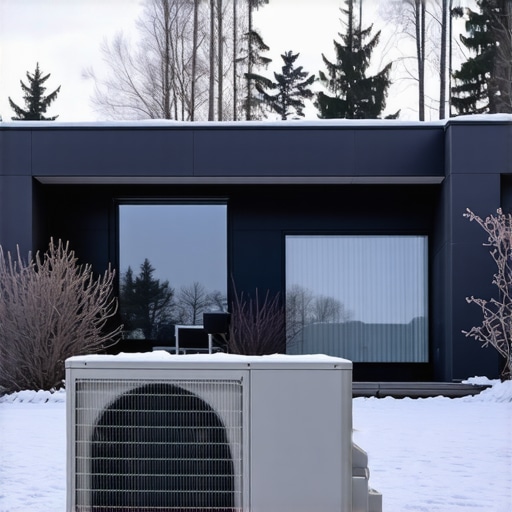
In the Northern states, the big fear was always that a heat pump would turn into an ice cube once the mercury hit 30 degrees. That was true when I started in the 90s, but 2026 technology is different. Modern cold climate units use vapor injection and variable-speed inverters. When the ambient temperature drops, the system increases the mass flow of the refrigerant (the ‘gas’). It’s like a turbocharger on an engine. We’re seeing units that maintain 100% capacity down to 5°F. [IMAGE_PLACEHOLDER_1] This isn’t magic; it’s physics. By dropping the pressure in the evaporator coil to a point where its temperature is significantly lower than the freezing outdoor air, we can still ‘steal’ heat from a snowstorm. If your current setup is struggling, you need to understand how to identify when furnace repair is urgent and why, especially before the deep freeze sets in.
2. The Regulatory Cliff and SEER2 Reality
The EPA and the Department of Energy didn’t just move the goalposts; they changed the whole game. SEER2 compliant upgrades are now the baseline. If you’re looking at a cheap unit a ‘Sales Tech’ is trying to offload, check the date. They’re likely trying to dump old R-410A stock before the 2026 mandates make those parts as rare as a ‘Sparky’ who cleans up after himself. The new systems are designed for higher static pressure, meaning your ‘Tin Knocker’ (the duct guy) better have sized your return air drops correctly. If you try to shove 4 tons of air through a 2-ton duct, you’ll kill the compressor before the first frost. This is a common issue I discuss in heating service innovations transforming 2025 climate control.
3. Dual Fuel: The Hybrid Muscle Car of HVAC
For those in the coldest zones like Chicago or the Northeast, a dual fuel heat pump system is the only way to fly. You run the heat pump down to the ‘balance point’—usually around 20-30 degrees—where it’s cheaper to move heat than to make it. Once it gets ‘stupid cold’ outside, the system flips over to the gas furnace. This protects your contactors and prevents the ‘suction line’ from getting slugged with liquid refrigerant. It’s the ultimate insurance policy against a polar vortex. While you’re at it, don’t ignore the rest of your mechanical room; heating service hacks for comfort and savings in 2025 often start with simple logic over expensive parts.
“Heat is not created; it is moved. The efficiency of a heat pump is directly proportional to the surface area of its heat exchangers.” – ASHRAE Principles
4. Indoor Air Quality: Beyond the Air Filter
Cold air is thirsty air. When you heat it up, the relative humidity craters, which is why your skin feels like parchment paper in January. A 2026-ready system isn’t complete without whole-home humidifiers and HEPA filter systems. I’m tired of seeing people buy a $15,000 system and then put a $2 fiberglass filter in it. That’s like putting bald tires on a Ferrari. A HEPA system integrated into a variable-speed blower allows for constant filtration without the massive static pressure drop that kills motors. If your house feels like a cold swamp or a dusty desert, the ‘Pookie’ (mastic) on your ductwork might be failing, or your filtration is a joke.
5. The Financial Logic of the 2026 Transition
Why switch now? Because the cost of contactor repair, boiler maintenance services, and evaporative cooler services on legacy systems is skyrocketing. Parts for older R-22 or even early R-410A systems are being phased out. An annual heating inspection might tell you your heat exchanger is cracked today, and by 2026, that replacement part might cost half as much as a new unit. Investing in a high-efficiency furnace installation paired with a cold-climate heat pump today locks in current labor rates before the 2026 rush. You don’t want to be the guy calling for spa heater services or emergency repairs when the ‘Tin Knockers’ are booked six weeks out. Check out these ac installation secrets that hvac pros won’t tell you to see how the pricing game is really played.
The Verdict: Airflow is King
At the end of the day, I don’t care what brand name is on the box. Whether it’s Trane, Carrier, or Goodman, if the person installing it doesn’t understand static pressure and subcooling, you’re throwing money down the condensate drain. Most ‘bad units’ are just victims of bad installs. Ensure your tech performs a real Manual J load calculation, uses ‘Pookie’ on every joint, and verifies that your ‘suction line’ is beer-can cold in the summer and properly pressurized in the winter. Comfort is physics, not magic. Stop listening to the Sales Techs and start listening to the equipment.