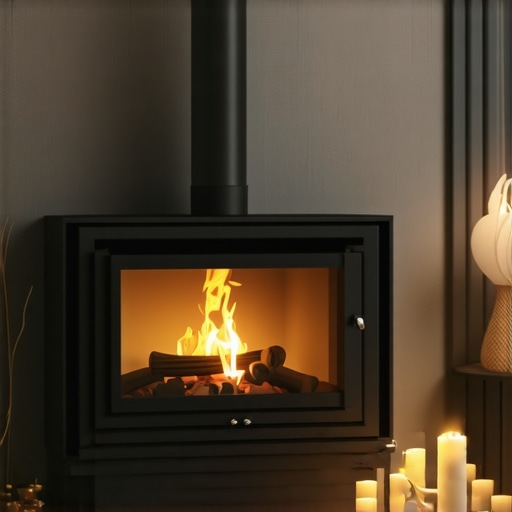
The Airflow Manifesto: Why Your Warm Room Still Feels Cold
You’ve seen it a thousand times: the homeowner sitting three feet from a roaring fireplace wearing a parka because their feet are freezing. As a technician who has spent thirty years crawling through spider-infested crawlspaces and balancing church heating systems that haven’t been touched since the Eisenhower administration, I can tell you one thing for certain: heat is useless if you can’t control the air. My old mentor used to scream at me until his face was the color of a cherry-red heat exchanger: ‘You can’t cool what you can’t touch, and you can’t heat what you can’t move!’ That is the fundamental law of the HVAC universe. If you think a fireplace insert is just a box of fire, you’re missing the thermodynamic boat. In the frigid North, where furnace tune-up services are a lifeline and biomass boiler services keep the rural homesteads from turning into ice cubes, efficiency isn’t a luxury—it’s survival physics. Most people treat their fireplace like a campfire in the living room, but if you want to actually survive 2026 without a four-digit utility bill, you need to understand the ‘Airflow Manifesto.’ If your manual J calculations don’t account for the infiltration caused by a poorly drafted hearth, your 18-SEER heat pump installation is just an expensive paperweight. Let’s look at how to stop the bleed.
“The most expensive equipment in the world cannot overcome a bad duct system or an unmanaged thermal envelope.” – Industry Axiom
Upgrade 1: The High-Static Variable Speed Blower Kit
Most factory blowers in fireplace inserts are cheap, noisy junk. They are designed by ‘tin knockers’ who care more about the aesthetic than the static pressure. If your blower sounds like a jet engine but you can’t feel heat six feet away, your static pressure is too high and your CFM (cubic feet per minute) is too low. In 2026, the upgrade you need is a high-static, variable-speed blower. Why? Because thermodynamics dictates that we need to drop the temperature of the heat exchanger enough to prevent cracking while maximizing the ‘sensible heat’ transfer to the room. When we perform control board diagnostics on modern systems, we’re looking for that sweet spot where the air is moving slow enough to pick up heat but fast enough to throw it across the room. Think of it like this: the air is a sponge. If you run it under a faucet (the heat source) too fast, it doesn’t soak up anything. You need that ‘beer can cold’ equivalent for heating—where the temperature rise is perfectly modulated. This is why efficient HVAC repairs often involve re-evaluating how air is distributed, not just how it’s generated. If you’re considering a heat pump replacement, a high-efficiency insert with a proper blower can act as the perfect ‘dual-fuel’ backup for those nights when the polar vortex makes the compressor groan.
Upgrade 2: The Outside Combustion Air Intake (The Vacuum Killer)
Here is the cynical truth: most fireplaces actually make your house colder. It’s called the ‘chimney effect.’ As the fire burns, it sucks air out of the room to feed the flames. That air has to come from somewhere, so it pulls freezing 20-degree air through your window seals, door sweeps, and electrical outlets. You’re essentially heating air just to throw it up the chimney. This is a nightmare for church heating systems where massive volumes of air are at play. The 2026 efficiency gold standard is a dedicated outside air intake. By piping oxygen directly from the outdoors into the firebox, you stop the ‘vacuum effect.’ You aren’t competing with your whole-home humidifiers or your furnace tune-up services for the same air. It’s the same logic we use in restaurant kitchen exhaust repair: if you don’t have ‘make-up air,’ the building goes into negative pressure, and your mechanicals start failing. I’ve seen commercial furnace repair jobs where the only problem was a lack of combustion air. Don’t let your fireplace starve your furnace of oxygen; give it its own dedicated ‘breathing’ line.
“Infiltration of unconditioned air due to improper combustion venting can increase residential heating loads by up to 30%.” – ACCA Manual J Standards
Upgrade 3: The Thermal Gasket & Ceramic Glass Overhaul
If your insert doors don’t seal like a submarine hatch, you’re losing the war. Most ‘Sales Techs’ will try to sell you a whole new $8,000 unit when all you need is a $50 roll of high-density fiberglass gasket and some ‘Pookie’ (mastic) to seal the seams. In 2026, we’re moving toward ceramic glass that allows for higher ’emissivity.’ Standard tempered glass is a thermal barrier; ceramic glass is a thermal conductor. It allows infrared heat to radiate into the room while keeping the flue gases contained. This is the ‘sensible heat’ we want. If your gaskets are frayed, you’re losing the ‘draft’—the low pressure that keeps smoke going up and heat coming out. It’s no different than a cracked heat exchanger in a commercial furnace repair scenario; if the seal is gone, the safety and efficiency are gone with it. When I do a heat pump installation, I always tell the homeowner to check their hearth seals. Why? Because a leaky fireplace is like leaving a window open while the AC is running. For those looking for the top HVAC repair strategies, sealing the thermal envelope is always step one. If you want to know how to identify when furnace repair is urgent, look at your fireplace first; if it’s back-drafting, you have a pressure problem that could kill your furnace’s inducer motor.
Manual J and the Physics of 2026 Comfort
You can’t just slap an insert in and hope for the best. You need manual J calculations to understand the BTU requirements of your space. Oversizing is a crime. If the unit is too big, it ‘short cycles’ the room—getting it hot too fast so the blower shuts off before the far corners of the house ever get warm. This creates ‘stratification’ where your head is sweating and your feet are blocks of ice. It’s the same reason we tell people that AC installation secrets aren’t about the brand, but the sizing. Whether you are dealing with biomass boiler services or a standard heat pump replacement, the math doesn’t lie. Proper airflow requires ‘pookie’ on every duct joint and a deep understanding of static pressure. If you’re tired of the ‘Sales Tech’ routine, remember that furnace repair myths often ignore the simplest fix: airflow. Before the 2026 winter hits, get a real tech out for furnace tune-up services and ask them to check your hearth’s draft. Comfort isn’t magic; it’s physics. And in this business, physics always wins.