Listen, I’ve spent thirty years in the trenches—mostly basement trenches in the Northeast where the smell of heating oil is practically the state perfume. But let’s be real: that 275-gallon rust bucket in your basement isn’t just an eyesore; it’s a liability waiting to bleed your bank account dry. My old mentor, a guy who could tell a burner’s CO output just by the color of the flame, used to scream at me, ‘You can’t cool what you can’t touch, and you can’t heat what you can’t vent!’ This is why airflow matters more than horsepower. When you move from oil to gas, you’re moving from a sledgehammer to a scalpel, and if you don’t manage the removal of that old tank properly, you’re asking for a thermodynamic and environmental nightmare.
The Forensic Diagnosis: Why the Oil Era is Dying
In the North, we deal with the real cold—the kind of cold that turns oil into a viscous sludge that’ll choke a nozzle faster than a cheap air filter. I’ve seen cracked heat exchangers in oil furnaces that looked like they’d been hit with a pickaxe because the flame was hitting the metal wrong. If you are still running on oil, you are fighting physics. Oil burns hotter, sure, but it’s dirty, expensive, and requires a storage system that is essentially a ticking time bomb. If you’re wondering how to identify when furnace repair is urgent and why, just look at the floor under your oil line. If there’s a damp spot, your clock is ticking.
“The most expensive equipment in the world cannot overcome a bad duct system.” – Industry Axiom
The transition to natural gas or propane is one of those heating service innovations transforming 2025 climate control. It’s about efficiency, but more importantly, it’s about control. Gas allows for modulating valves and variable speed blowers that don’t just blast air; they manage the latent heat. In the dead of a Chicago or Boston winter, you don’t just want heat; you want managed heat. When I walk into a house with a conversion, I’m looking at the chimney liner first. Gas exhaust is acidic. If you don’t line that old masonry chimney, the condensate will eat the mortar from the inside out until your chimney looks like a pile of loose LEGOs.
The Anatomy of the Tank Removal: Don’t Let the ‘Gas-and-Go’ Guys Touch This
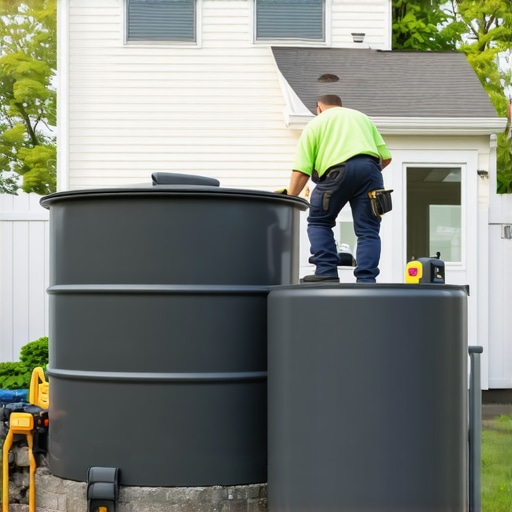
Removing an oil tank isn’t just about hauling metal. It’s about managing the residual sludge—the ‘black gold’ that’s actually a mix of water, bacteria, and degraded fuel. If a ‘Sales Tech’ tells you they can just ‘abandon it in place’ without a proper cleaning, throw them out of your house. I’ve seen guys leave tanks in the ground that eventually collapsed, creating sinkholes that cost thirty grand to remediate. In a proper conversion, the tank must be pumped dry, cleaned of all sludge, and then cut into manageable pieces. This isn’t a job for a Sparky or a generic handyman; it requires someone who knows the EPA regs. While you’re at it, check your furnace repair myths debunked by industry experts to realize that ‘topping off’ doesn’t apply to heating fuel.
The Physics of the New System: Boilers and Beyond
If you are doing multi-family heating upgrades, you’re likely looking at a high-efficiency boiler. Here’s the technical zoom: Old oil boilers were huge thermal masses. They stayed hot forever. New gas boilers are low-mass. They heat up instantly. This means your boiler maintenance services need to be more precise. We aren’t just cleaning soot anymore; we’re checking the pH of the condensate and the integrity of the heat exchanger. You also need to consider the thermocouple replacement on older gas units or the flame sensors on new ones. If that sensor gets a microscopic layer of oxidation, your unit will ‘lock out’ right when the polar vortex hits. That’s where priority service memberships and warranty service plans save your skin. You don’t want to be the guy calling a tech at 3 AM on a Tuesday when the wind chill is -20°F.
“Proper vent sizing is critical to prevent the accumulation of corrosive condensate in the chimney.” – NFPA 54 / ANSI Z223.1
The IAQ Problem: Tightening the Envelope
Once you swap that oil beast for a high-efficiency gas furnace, you’ve probably sealed up your house. Now you have a new problem: you’re breathing the same stale air over and over. This is where IAQ improvement services come in. Because gas units (especially Category IV furnaces) use plastic PVC pipes for venting, they don’t ‘draft’ air out of the house like the old oil units did. The old units actually provided accidental ventilation. Now, your house is a sealed Tupperware container. You need heat recovery ventilators (HRVs) to bring in fresh air without losing your expensive heat. I also recommend UV light installation for HVAC to kill the biologicals that grow in the dark, damp corners of your evaporator coils during the summer. And let’s talk about the winter itch. Gas heat is dry. Without whole-home humidifiers, your wood floors will shrink and your nose will bleed. You need to maintain about 35% humidity to feel comfortable, even if the thermostat says 72°F. It’s all about the psychrometrics.
The Math: Repair vs. Replace in the 2025 Regulatory Cliff
I get asked all the time: ‘Can I just keep the old oil burner going another year?’ Sure, if you like throwing money into a fire pit. Between the rising cost of heating oil and the environmental risk of an aging tank, the ROI on a gas conversion is usually under five years. If you’re running a business, commercial furnace repair on an old oil system is a nightmare for the bottom line. It’s better to invest in a modern system with priority service memberships to ensure the Tin Knockers (duct guys) and Pookie (mastic) seal everything up right. Remember, airflow is king. If your ducts are leaking, you’re just heating your attic or crawlspace. I’ve seen ‘professionals’ use duct tape—which is ironically the one thing you should never use on ducts. You want mastic. You want it airtight. You want that ‘beer can cold’ suction line in the summer and a ‘blue flame’ efficiency in the winter. Don’t let a sales-hungry tech talk you into an oversized unit either; if it’s too big, it’ll short-cycle and kill your heat exchanger in half the time.
The Narrative of the Cold Snap
I remember a job back in ’98, mid-January. Customer had an old oil tank in a crawlspace that finally gave up the ghost. The smell was like a chemical factory exploded in a swamp. We had to remediate the soil before we could even think about the new gas line. The homeowner was panicked, thinking they’d need to sell the house. I told them what my mentor told me: ‘The fire doesn’t care about your feelings, only the draft.’ We got the tank out, got the gas line run, and installed a modulating gas furnace with a whole-home humidifier. Two weeks later, she called me and said her skin didn’t feel like parchment paper for the first time in twenty years. That’s the difference between ‘fixing a heater’ and ‘managing an environment.’ Whether you’re looking for commercial furnace repair or a simple thermocouple replacement, the goal is always the same: thermodynamic balance. Stop fighting physics and start managing it. Transitioning from oil to gas is the first step toward a house that actually works with you instead of against you.