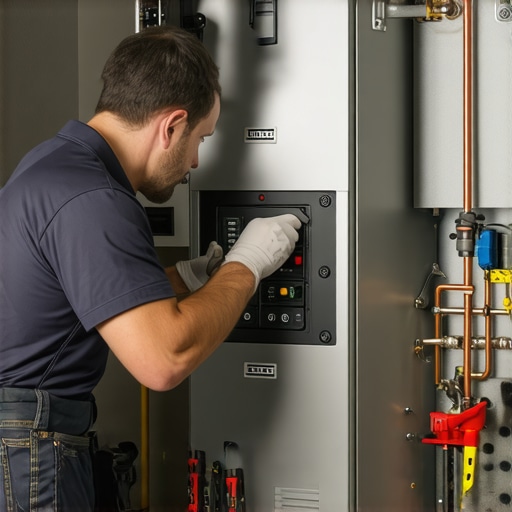
The Anatomy of a Cold House: Why Your Furnace Is Ghosting You
There is a specific kind of silence that happens at 3 AM in the middle of a sub-zero January night. It is the silence of a furnace that has tried—and failed—to ignite for the third time, entering a hard lockout. You hear the inducer motor spin up, that whirring mechanical moan of a small fan prepurging the combustion chamber, but the ‘click-click-click’ of the igniter or the soft roar of the main burners never follows. Instead, you get a blinking LED code on the control board that looks like Morse code for ‘your bank account is about to hurt.’ As a tech who has spent three decades sniffing out gas leaks and crawling through crawlspaces that would make a rat claustrophobic, I can tell you that ignition failure isn’t just a nuisance; it is a diagnostic puzzle that separates the real mechanics from the part-changers.
The Sales Tech Scam: The Case of the ‘Cracked’ Heat Exchanger
Last winter, I pulled up to a house where a ‘comfort consultant’ (that is what the big corporate shops call their sales guys now) had just left. He had quoted the homeowner $14,000 for a new dual fuel heat pump system because he claimed the furnace was ‘dead on arrival’ due to a cracked heat exchanger. I walked down to the basement, pulled the burner cover, and saw the real culprit. It was a $15 thermocouple replacement and a dirty burner orifice. The sales guy didn’t even put his gauges on the unit; he just saw a 12-year-old furnace and smelled a commission. This is why I tell people to choose the right HVAC fixes based on physics, not a sales pitch. In 2026, with the push toward high-efficiency 90%+ AFUE furnaces, the complexity has scaled up, but the basic thermodynamics of fire, fuel, and air remain the same.
“The installation and service of gas-fired furnaces shall be performed by a qualified agency in accordance with the National Fuel Gas Code, NFPA 54.” — ASHRAE Standards
1. The Ionization Ghost: Flame Sensor Fouling
The most common reason a furnace ‘won’t click’ and stay lit is the flame sensor. This is a simple stainless steel rod that sits in the path of the fire. When the burners ignite, the flame creates a bridge for a tiny microamp current—a process called flame ionization. If that rod is coated in a microscopic layer of carbon or silica (from nearby laundry detergent fumes or dust), the control board can’t sense the flame. It thinks the gas is flowing without fire, and for safety, it slams the gas valve shut. In my world, we call this the ‘three-second lockout.’ You can have the best app-controlled heating systems on the planet, but if that sensor is dirty, your high-tech thermostat is just a digital paperweight. We often see this when homeowners skip their preventative maintenance contracts. A simple cleaning with a scotch-brite pad saves a midnight service call.
2. The Pressure Switch Paradox: Why Airflow is King
If your furnace won’t even click to start the spark, the problem is likely ‘upstream’ in the safety circuit. A furnace is a logic engine. Before it allows the gas valve to open, it must prove that the exhaust flue is clear. The inducer motor creates a vacuum, and a small rubber tube carries that negative pressure to a diaphragm switch. If you have a bird’s nest in the chimney, a cracked collector box, or even a heavy build-up of lint from a neglected dryer vent (which is why dryer vent cleaning is vital for home safety), that switch won’t close. No switch, no click, no heat. In the North, we also deal with ice blockages on high-efficiency PVC vents. When the ‘polar vortex’ hits, that moisture freezes at the outlet, and the system chokes. Thermodynamic zooming tells us that gas needs a specific air-to-fuel ratio to combust; if the ‘tin knocker’ who installed the venting didn’t size the pipes for the equivalent length, the pressure switch will be your eternal enemy.
3. The Igniter’s Last Stand: Resistance and Wear
Most modern furnaces use a Silicon Nitride or Silicon Carbide Hot Surface Igniter (HSI). Think of it like a lightbulb filament that gets white-hot—upwards of 2,500°F—to light the gas. Every time your furnace cycles, that material expands and contracts. Eventually, it develops a hairline fracture. If you look closely, you will see a small white ‘burn mark’ on the black element. In 2026, we are seeing more dual fuel heat pump systems where the furnace only kicks in during extreme lows. Ironically, this infrequent use can lead to moisture buildup on the igniter, causing it to fail prematurely when it finally is needed. If you hear the gas valve ‘clack’ but no fire follows, your igniter is likely ‘open.’ You can’t fix these; they are a swap-out item. I always tell my juniors: check the ohms. If it’s over 100 ohms on an older carbide model, it’s a ticking time bomb.
“Gas furnace heat exchangers must be inspected for cracks or openings that may allow products of combustion into the circulating air stream.” — ACCA Manual J / Maintenance Standards
The 2026 Shift: Smart Tech and Safety
We are moving into an era of occupancy sensor installation and air purification integration where the furnace is part of a larger ‘lung’ for the home. With heating service innovations, we now use HEPA filter systems that are so thick they can actually cause furnace ignition issues by restricting the return air, leading to a high-limit trip. If the internal heat exchanger gets too hot because the air can’t get through the filter, the ‘limit switch’ breaks the circuit to the gas valve. It’s a safety dance designed to keep your house from burning down, but it feels like a broken furnace to you. Always check your filters before calling the ‘Sparky’ or the HVAC guy. A $20 filter is a lot cheaper than a $300 ‘no-heat’ diagnostic fee. Don’t fall for the furnace repair myths that tell you to just keep resetting the board. Every time you reset a lockout without fixing the root cause, you are stressing the metal of that heat exchanger. If you’re tired of the gas bill, maybe it’s time for expert installation of a new variable-speed unit, but only after you’ve verified the old one is truly ‘pushed to the limit.’ Comfort is about physics: the right CFM, the right manifold pressure, and a clean ‘Pookie’ seal on the plenum. Anything else is just hot air.