The Physics of the Unheated Room
My old mentor, a man who smelled like PVC glue and cheap coffee, used to scream at me in the middle of half-finished basements: ‘You can’t heat what you can’t touch!’ He was talking about airflow. This is the fundamental truth that every homeowner ignores when they decide to knock out a wall and add an extra 400 square feet to their home. They think they can just slap an extra vent onto the existing trunk line and call it a day. That is a recipe for a frozen addition and a dead blower motor. When you add a new room, you aren’t just adding space; you are adding a massive load to a system that was sized for a specific volume of air. You mess with the static pressure, and the whole house suffers. This is why I always point people toward the mini-split. It is not some ‘magic’ fix; it is a dedicated thermal solution that respects the laws of thermodynamics.
“The most expensive equipment in the world cannot overcome a bad duct system.” – Industry Axiom
Why Your Main Furnace Hates Your Addition
In a cold climate like the Northeast or Midwest, we deal with extreme temperature differentials. When the mercury drops below zero, your furnace is fighting to keep up. If you’ve tapped into your existing ductwork to heat an addition, you’ve essentially created a massive leak in your system’s efficiency. The blower has to push air further, fighting friction and heat loss through uninsulated ‘pookie’-sealed joints. By the time that ‘juice’ reaches the new room, it’s lost its punch. This is where choosing the right HVAC fixes becomes critical. A mini-split, or ductless heat pump, bypasses this entire mechanical nightmare by placing the evaporator coil right in the room. No duct loss, no static pressure issues. Just pure, unadulterated thermal transfer.
Thermodynamic Zooming: How the Mini-Split Actually Works
People ask me, ‘How does it get heat from outside when it’s thirty degrees out?’ It sounds like a scam until you understand the refrigeration cycle. The outdoor unit contains a compressor that manipulates the pressure of the refrigerant (the gas). By dropping the pressure of the liquid refrigerant in the outdoor coil, we lower its boiling point to well below the outdoor temperature. Even at 10°F, that outdoor air is ‘hotter’ than the freezing refrigerant. The liquid absorbs that thermal energy, turns into a gas, and is pumped inside to the indoor head. There, the compressor squeezes it, raising its temperature significantly. The indoor fan blows air across that hot coil, and suddenly you have 110°F air dumping into your bedroom. It is the same reason you should look into heating service hacks for comfort and savings in 2025 to understand how modern inverters maintain this cycle without the constant ‘on-off’ hammering of a traditional contactor. When that contactor repair becomes a recurring nightmare on your main unit, a mini-split starts looking like a genius move.
Infrared Heaters vs. Mini-Splits: The Zonal War
For some, an infrared heater installation is the quick fix. Infrared doesn’t heat the air; it heats the objects in the room (including you). It’s great for a workshop, but for a living space, you want ambient comfort. If you are doing multi-family heating upgrades, you need something more robust. Mini-splits are now coming with Energy Star heating certification, making them eligible for tax credits that lower the sting of the initial ‘Sparky’ (electrician) bill for the 220V circuit. Plus, modern heads offer app-controlled heating systems and voice control setup Alexa Google, allowing you to scream at your wall to turn the heat up when you’re under the covers. This isn’t just about convenience; it’s about managing the ‘setback’ temperatures to save on biomass boiler services or high-utility gas bills.
“Standard 62.1 requires specific ventilation rates to ensure indoor air quality is not sacrificed for thermal comfort.” – ASHRAE Standards
The Installation Reality: Don’t Let a Sales Tech Do It
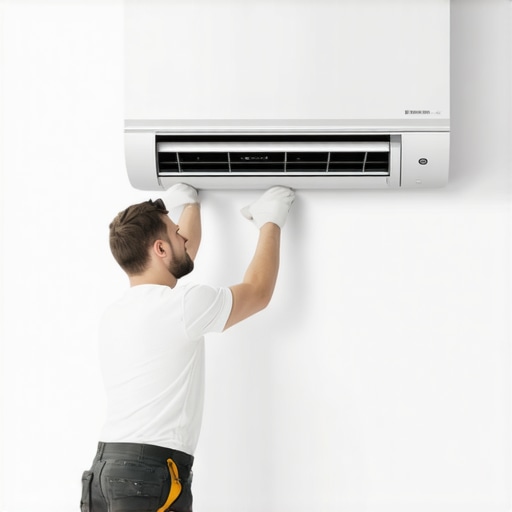
I’ve seen ‘Sales Techs’ try to sell a 36,000 BTU unit for a 200-square-foot room. That is malpractice. An oversized mini-split will ‘short cycle,’ meaning it hits the temperature too fast and shuts off. In a cold climate, this is a disaster because it never gets the chance to properly circulate the air, and in the summer, it won’t run long enough to pull the humidity out. You’ll end up with a ‘cold swamp’ feel. You want a unit that modulates. You also need to ensure your line sets are vacuumed down to 500 microns. If a tech doesn’t pull out a vacuum pump and a micron gauge, kick them off your property. Moisture in the lines reacts with the oil and creates acid. That acid eats the compressor from the inside out. This is why top HVAC repair strategies always emphasize the ‘cleanliness’ of the install over the brand of the box.
Maintenance and Long-Term Reliability
Once the unit is in, you aren’t done. These units have tiny fins and tight tolerances. You need a dedicated preventative HVAC repair plan. This includes cleaning the filters every month—not every year. If you have a bypass humidifier repair needed on your main system, don’t expect the mini-split to handle the moisture balance for the whole house; it’s a localized tool. Also, consider warranty service plans. Modern boards in these units are essentially computers. If a power surge fries the inverter board and you aren’t covered, you’re looking at a $1,200 bill just for the part. Whether you are dealing with furnace repair myths or new heat pump tech, the rule is the same: treat the equipment like a high-performance engine, not a toaster. Don’t forget about ac installation secrets that most contractors hide, like the importance of proper drainage. A clogged condensate line on a mini-split will dump a gallon of water down your new drywall faster than you can find a bucket. If you’re ready to stop shivering in your new addition, contact us for a real load calculation, not a ‘thumb-in-the-wind’ guess.