The Invisible Thief and the Mentor’s Logic
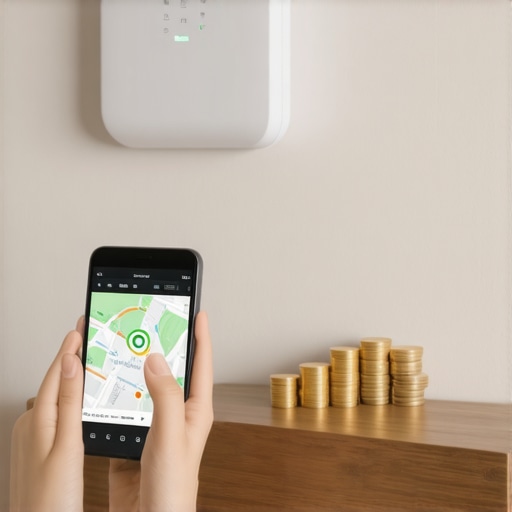
My old mentor, a guy who had more sheet metal scars than fingers, used to scream at me whenever I’d reach for a manifold gauge without checking the return air first. ‘You can’t cool what you can’t touch!’ he’d bellow, his voice echoing through some freezing crawlspace in a drafty Midwestern Victorian. He wasn’t just talking about the physical evaporator coil; he was talking about the physics of energy transfer. In the North, where the wind bites through brick and your furnace ignition repair bill can rival a mortgage payment, energy is a moving target. We spend thousands of dollars heating air just to let it leak into the attic through unsealed top plates and shoddy HVAC duct sealing. This is where the concept of the ‘Invisible Thief’ comes in—the heating of empty rooms. Geofencing temperature control isn’t some silicon valley toy; it is a thermodynamic gatekeeper. If your furnace is cycling to maintain 72 degrees while you’re five miles away at the office, you aren’t just wasting ‘juice’ (electricity and gas); you are putting unnecessary cycles on your thermocouple replacement interval and wearing out your blower motor bearings. The logic is simple: why pay to heat a ghost? [image] By the time I’m done explaining the delta-T of a high-efficiency system, you’ll understand why geofencing, paired with a proper zoning system installation, isn’t just a convenience—it’s a financial recovery strategy that pays for itself within three months of a brutal winter.
The Physics of the Thermal Envelope
In our climate, the enemy is the thermal gradient. When it’s 10°F outside and you’re trying to keep it 70°F inside, that 60-degree ‘Delta T’ is a massive pressure imbalance. Heat wants to move to cold. It’s relentless. If you aren’t using HVAC maintenance plans to ensure your heat exchanger is clean and your AFUE (Annual Fuel Utilization Efficiency) is actually hitting its rated numbers, you’re already behind. But the real waste happens in the ‘setback’ periods. Old-school thermostats used ‘recovery times’ that were basically guesses. You’d tell the thing to wake up at 6 AM, and it would start the heat pump installation or furnace blast at 5 AM, often overshooting the target and wasting energy. Geofencing changes the math by using your phone’s GPS to calculate your distance and travel time. If you’re ten minutes away, the system kicks on precisely when needed. It doesn’t guess; it calculates. This level of precision is how we see customers stop throwing money into the ‘void’ of an empty house. Combined with leak detector integration and refrigerant leak detection for those running dual-fuel systems, you’re looking at a system that finally works for you instead of you working for the utility company.
“The most expensive equipment in the world cannot overcome a bad duct system.” – Industry Axiom
I’ve seen guys install a $15,000 high-efficiency unit only to hook it up to 40-year-old tin that’s leaking like a sieve. They don’t use ‘Pookie’ (mastic), they use that cheap silver tape that dries up in three years. If your ducts aren’t sealed, geofencing is just putting a more expensive band-aid on a sucking chest wound. You need HVAC duct sealing to ensure the air you’re paying to heat actually reaches the registers. When we talk about warehouse heating solutions, the scale is larger, but the physics is the same. Large-scale thermal management requires knowing exactly when a space is occupied. If you’re managing a 20,000-square-foot facility and you aren’t using geofencing or advanced occupancy sensors, you’re burning thousands of dollars a month. That’s why heating service innovations transforming 2025 climate control are focusing so heavily on these precision controls.
The 90-Day ROI Calculation
Let’s talk brass tacks. How does a $300 thermostat and some smart programming pay for itself in 90 days? In a typical Northern home, the furnace is the biggest energy hog. If you reduce your run-time by just two hours a day—the time you’re commuting or running errands—you’re looking at a 15-20% reduction in fuel consumption. In a climate where a monthly heating bill can hit $400, that’s $80 back in your pocket every month. Add in the avoided cost of a premature furnace ignition repair or a thermocouple replacement due to excessive cycling, and the numbers add up fast. You also have to consider the ‘latent heat’ factor. In the winter, our air is dry. If you’re over-heating a house while you’re gone, you’re driving the relative humidity down to 10%, which makes the air feel colder than it is. This leads people to crank the thermostat even higher when they get home. Geofencing allows for a gradual, controlled recovery that maintains a better balance of sensible heat. This is the same reason a top HVAC repair strategies to extend your system’s life always includes a control upgrade. It’s about reducing the mechanical stress on the ‘Sparky’ (the electrical components) and the inducer motor.
“Design conditions for heating shall be based on the 99% or 97.5% column in the ASHRAE Fundamentals Handbook.” – ACCA Manual J Standards
This industry standard is what I use to tell people their systems are usually oversized. An oversized system ‘short-cycles’—it turns on, blasts the house with heat, and shuts off before the air has a chance to circulate. This is murder on your equipment. When you combine an oversized unit with a lack of zoning system installation, you get hot and cold spots that drive homeowners crazy. Geofencing helps mitigate this by ensuring the system only runs when it’s absolutely necessary to hit the comfort window by the time you walk through the door. It’s about ‘Suction Line’ logic—getting the most out of every BTU. If you’re also looking at a wood burning stove installation as a secondary heat source, the integration of smart controls becomes even more vital to ensure your primary furnace isn’t fighting the stove.
The Airflow Manifesto: Why Geofencing Fails Without Good Tin
You can have the smartest thermostat in the world, but if your ‘Tin Knocker’ (duct guy) didn’t know what he was doing, you’re still losing. Static pressure is the silent killer of HVAC efficiency. If your return air drop is too small, the blower motor has to work twice as hard, drawing more amps and heating up the windings. This is why I tell people that HVAC maintenance plans should always include a static pressure test. If we find that your ducts are restricted, geofencing will actually show you how bad the problem is because your ‘recovery time’ will be abysmal. This leads us to efficient HVAC repairs: the blueprint for cooler summers and warmer winters. It’s all connected. You fix the airflow, you seal the leaks with Pookie, you install a zoning system installation to direct the heat where it’s needed, and then you use geofencing to manage the timing. That is the holy trinity of HVAC performance. Even in a warehouse heating solutions context, managing the stratified air near the ceiling is key. Without proper controls, you’re just heating the roof deck while the workers on the floor are shivering. If you’re wondering how to identify when furnace repair is urgent, look at your cycle times. If the geofencing says you’re home but the furnace is running for 40 minutes and only gaining 2 degrees, you’ve got a combustion or airflow problem that needs immediate attention.
The Regulatory Shift: 2025 and Beyond
We are entering a new era of HVAC. With the phase-out of R-410A and the move toward A2L refrigerants, the cost of equipment is only going up. Buying a cheap, bare-bones unit now is a sucker’s bet. The new systems are designed for high-precision communication. They want to talk to your thermostat. If you’re doing a heat pump installation today, you’re likely getting a variable-speed compressor that can modulate its output from 25% to 100%. Using a ‘dumb’ thermostat on a variable-speed unit is like putting a lawnmower carburetor on a Ferrari. Geofencing allows these high-end machines to operate in their most efficient ‘sweet spot’ for longer periods. This isn’t just about saving a few bucks; it’s about protecting a $10,000 investment. For more on this, check out the ultimate guide to AC installation expert tips for 2025 success. We are moving away from the ‘on/off’ world and into a world of constant, low-level modulation. Geofencing provides the ‘schedule’ that these machines need to optimize their algorithms. If you’re tired of furnace repair myths debunked by industry experts, then listen to the physics: less cycling equals less wear. Less wear equals fewer 2 AM service calls. And that, my friend, is the real ROI. If you’re ready to stop the bleeding, it might be time to contact us and get a real ‘Tin Knocker’ to look at your system.