
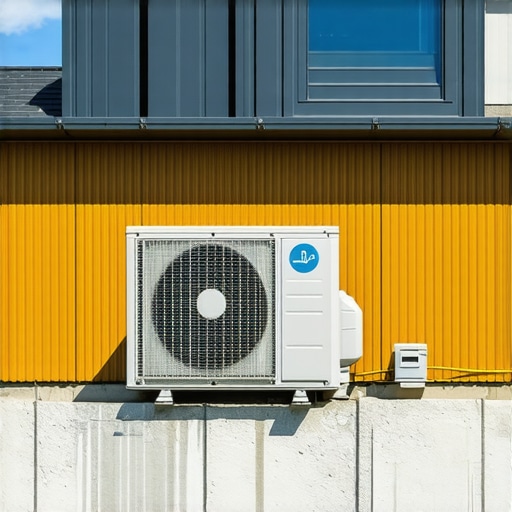
Listen, if you think SEER2 is just some bureaucratic acronym designed to squeeze another few grand out of your wallet, you’re only half right. Yeah, the equipment costs more, but the physics behind it is the only thing standing between you and a utility bill that looks like a mortgage payment. I’ve spent thirty years crawling through blown-in insulation and dragging my knuckles across sharp tin, and I’ve seen every ‘innovation’ the industry has thrown at us. Most of it is fluff. But the shift to SEER2? That’s about the reality of the air in your ducts, not just the sticker on the side of the condenser.
The Mentor’s Mantra: Airflow Over Horsepower
My old mentor, a guy who had silver solder in his veins and a permanent squint from staring into furnace flames, used to smack the side of a dirty return air drop and scream, ‘You can’t cool what you can’t touch!’ This was his way of teaching us that the suction line being ‘beer can cold’ didn’t mean a damn thing if the air wasn’t moving across the evaporator. He understood that a 5-ton unit on a 3-ton duct system is just a very expensive way to freeze a coil and kill a compressor. This is the heart of why SEER2 matters. Unlike the old SEER ratings, which were tested under ‘perfect’ laboratory conditions that don’t exist in the real world, SEER2 accounts for static pressure testing and the actual resistance of your home’s ductwork. It’s a rating for the real world, where ducts are crushed, undersized, or sealed with pookie by a tin knocker who was in a hurry to get to lunch.
“The most expensive equipment in the world cannot overcome a bad duct system.” – Industry Axiom
The Regulatory Cliff: Why 2025 Changes Everything
We are standing on the edge of a massive shift. The transition from R-410A to mildly flammable A2L refrigerants like R-454B and R-32 is the biggest thing to hit this trade since we stopped using R-22. If you’re nursing an old system along with frequent capacitor replacement services, you’re playing a dangerous game. The cost of the old juice is skyrocketing because it’s being phased out. When you upgrade to a SEER2 compliant system, you aren’t just getting a higher number; you’re getting a system designed to handle higher external static pressures, which means the motor isn’t working twice as hard to move half the air. I’ve seen ‘Sales Techs’ try to push a new unit without checking the ducts, and it’s a crime. You need to understand expert tips for 2025 success before you sign that check. A SEER2 unit requires more surface area on the coils to move heat efficiently. It’s basic thermodynamics: to remove latent heat (that swampy humidity that makes your skin crawl), the evaporator coil has to drop below the dew point, but it has to do it without turning into a block of ice. SEER2 systems use advanced modulating furnace repair technologies and variable-speed blowers to find that sweet spot.
Thermodynamic Zooming: How SEER2 Saves the ‘Gas’
In a cold climate like the Northeast or Chicago, where we deal with everything from wall furnace installation to chimney liner installation, the cooling season might be shorter, but it’s intense. When that humidity hits, your AC isn’t just a cooling machine; it’s a giant dehumidifier. A SEER2 upgrade usually includes an ECM (Electronically Commutated Motor). While a standard PSC motor is either on or off, an ECM can ramp down. This allows the coil to stay cold longer, pulling gallons of water out of your air without the compressor cycling on and off like a heartbeat after a marathon. This ‘short cycling’ is what kills your bill. Every time that compressor starts, it draws a massive amount of ‘inrush’ current. By staying in a low-stage, the unit sips electricity. This is where heating service hacks for comfort and savings overlap with cooling—efficient airflow is universal.
“Proper sizing and installation are the primary keys to system efficiency and longevity. Over-sizing can lead to poor humidity control and shortened equipment life.” – ACCA Manual J
The Anatomy of Efficiency: Beyond the Condenser
If you want to lower your monthly expenses, you can’t just swap the box outside. You need to look at the whole system. Energy recovery ventilators (ERVs) are a godsend in tight, modern homes. They bring in fresh air but use the outgoing stale air to ‘pre-cool’ or ‘pre-heat’ the incoming stream. It’s like recycling the energy you already paid for. Combine that with UV light installation for HVAC to keep the mold off your high-efficiency coil, and you’ve got a system that breathes. Even something as simple as dryer vent cleaning affects the pressure balance of your home. If your dryer is struggling to push air out, it’s creating a vacuum that pulls hot, humid air in through every crack in your siding. I’ve seen thermocouple replacement jobs on old furnaces where the real issue was just a lack of combustion air because the house was under too much negative pressure. It all ties back to the physics of the building envelope.
[IMAGE_PLACEHOLDER]
The Preventive Maintenance Defense
I can’t tell you how many times I’ve been called out for a modulating furnace repair only to find that the preventative maintenance contracts the homeowner skipped would have caught the problem months ago. A SEER2 system is a high-performance machine. You wouldn’t buy a Ferrari and then never change the oil, right? Why do it with your HVAC? Regular static pressure testing ensures that as your filters get dirty or your ducts settle, the system isn’t overworking. Check out preventative hvac repair tips to see what I mean. If a sparky didn’t tighten a lug or a capacitor starts to bulge, a tech who actually cares—not a Sales Tech—will find it before it blows the high-limit switch or fries the control board. For those with older setups, knowing when furnace repair is urgent can save your heat exchanger from cracking during a polar vortex.
Final Verdict: Is SEER2 Worth It?
Is the upfront cost higher? Yes. Are the parts more complex? Absolutely. But the math doesn’t lie. Between the lower amp draw and the superior humidity removal, a SEER2 upgrade pays for itself in reduced utility bills and fewer emergency calls to guys like me at 3 AM. Just make sure you aren’t being sold a ‘magic box’ by someone who doesn’t own a manometer. If they aren’t checking your static pressure, they aren’t doing their job. Don’t fall for furnace repair myths or AC installation ‘deals’ that sound too good to be true. Real efficiency is earned through physics, proper pookie application on the plenum, and a deep respect for airflow. If you’re ready to stop lighting money on fire every July, it’s time to look at top hvac repair strategies and make the jump to a system that actually respects your bank account.
“,”image”:{“imagePrompt”:”A professional HVAC technician in a dark blue uniform using a digital manometer to perform a static pressure test on a modern galvanized steel duct system in a well-lit basement. The technician is focused, holding a probe, with a high-efficiency SEER2 air handler in the background. Photorealistic, 8k, industrial lighting.”,”imageTitle”:”Professional HVAC Static Pressure Testing”,”imageAlt”:”HVAC technician testing ductwork static pressure for SEER2 compliance”},”categoryId”:0,”postTime”:””}