The High-Pitched Scream of Static Pressure: More Than Just a Noise
That shrill, piercing whistle coming from your register isn’t a ghost in the machine, and it isn’t just a minor annoyance you should ignore while watching TV. In the HVAC trade, we call that the ‘scream of a suffocating system.’ After thirty years of crawling through spider-infested crawlspaces and baking in 140-degree attics, I can tell you one thing for certain: your air conditioner or furnace is trying to tell you that it can’t breathe. My old mentor, a grizzly veteran who could diagnose a bad compressor by the smell of the refrigerant alone, used to scream at me, ‘You can’t cool what you can’t touch!’ This is why airflow matters more than raw horsepower. If the air can’t move across the evaporator coil efficiently, you aren’t just losing comfort; you are killing your equipment. We see this often in the humid South, where dehumidification services are critical because if the air velocity is too high through a tiny vent, the latent heat—that sticky moisture—never gets a chance to condense properly on the coil. Instead of a crisp, dry home, you end up with a cold, damp swamp and a whistle that sounds like a tea kettle.
“The most expensive equipment in the world cannot overcome a bad duct system.” – Industry Axiom
When you hear that whistle, you are hearing high-velocity air being forced through a restricted opening. Think of it like a flute. If you blow gently, there is no sound. If you force air through a narrow aperture, you get a note. In your home, that ‘note’ is usually caused by a combination of high static pressure and poor duct design. If you’ve recently had a variable speed furnace services technician out to upgrade your blower but didn’t adjust your ‘tin,’ you’ve likely increased the air volume without increasing the exit path. This is a classic rookie mistake made by ‘Sales Techs’ who just want to swap boxes without doing the math. Real comfort requires proper HVAC load calculation services to ensure the CFM (cubic feet per minute) matches the duct capacity. If you want to fix this without paying a service fee, we need to look at the mechanical anatomy of your airflow path, starting with the simplest friction points.
The Forensic Diagnosis: Why Your Vents Are Screaming
First, let’s talk about the ‘Pookie’ and the ‘Tin Knocker.’ A Tin Knocker is the guy who builds your ducts, and Pookie is the mastic sealant we use to make them airtight. If a piece of Pookie has dried and fallen into a position where it’s vibrating against the metal, or if a piece of flex duct has a ‘kink,’ the air creates turbulence. To diagnose this, start by removing the vent cover (the register) entirely while the system is running. If the whistling stops instantly, the problem is the register itself. Often, the louvers are bent at an aggressive angle, or the register is simply too small for the amount of air the blower is pushing. This happens a lot in new construction heating design where builders cut corners and install 8-inch grilles on 10-inch runs. If the whistle persists without the grille, the restriction is deeper in the ‘juice’ lines—no, I’m talking about the ductwork itself. You might have a damper that has shaken shut. Check the manual dampers in the attic; if they aren’t locked down, they can vibrate and create that high-pitched frequency.
“Airflow is the lifeblood of the thermodynamic cycle; resistance is its primary enemy.” – ASHRAE Standards
If you find that the whistle is coming from the return air side—the big grate where the filter lives—the issue is almost always a lack of surface area. In humid climates, we see homeowners use those high-MERV ‘pleated’ filters that claim to stop everything down to a virus. Those filters are essentially ‘duct bricks.’ They increase static pressure so much that the blower motor has to ramp up, creating a vacuum whistle at the edges of the filter frame. This is why preventative maintenance contracts are so valuable; a pro will measure the ‘Total External Static Pressure’ and tell you if that fancy filter is actually burning out your motor. If your return is undersized, you might need a ‘return air drop’ or an additional intake. I’ve seen wall furnace installation projects where people boxed in the unit so tight it sounded like a jet engine because it was starving for air. You can’t just shove a 3-ton blower into a 2-ton duct system and expect it to be quiet.
Thermodynamic Zooming: The Hidden Cost of Resistance
Let’s get technical for a second. When you restrict airflow to stop a whistle by closing other vents, you are committing HVAC suicide. Closing vents does not save energy; it increases the pressure in the plenum. This causes the air that *does* escape to move even faster, making the whistle louder. Furthermore, in cooling mode, low airflow means the refrigerant (the gas) in the evaporator coil doesn’t absorb enough heat. The coil temperature drops below freezing, the condensate turns to ice, and suddenly you have a frozen block of metal and no cooling at all. This is where you might think you need a transformer replacement or a new capacitor because the system won’t start, but the reality is you just choked it to death. If you’re dealing with hydronic heating systems or even biomass boiler services, the principles are different but the ‘flow’ remains king. Whether it’s water or air, resistance equals heat, noise, and premature failure.
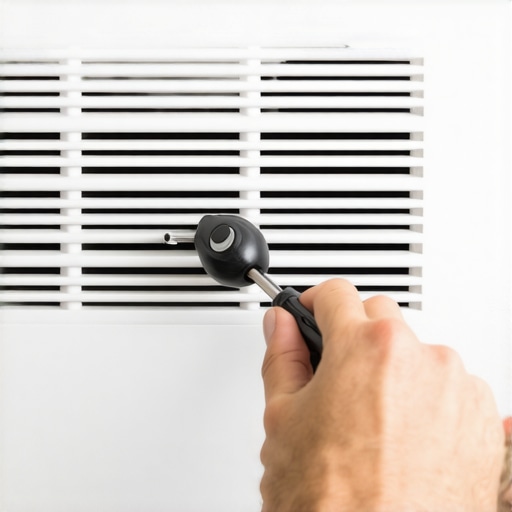
For those of you with specialized equipment like a pool heater repair need or a wall furnace installation, remember that these units have very specific venting requirements. A whistle in a gas-fired unit can sometimes indicate a ‘flame rollout’ or a blockage in the flue, which is a massive carbon monoxide risk. If the whistle is coming from inside the furnace cabinet and sounds like a mechanical screech, that’s a bearing in the inducer motor or the blower motor going bad. That’s not a ‘fix it yourself’ job—that’s a ‘shut it down before it catches fire’ job. You can check out how to identify when furnace repair is urgent to see if your noise is a nuisance or a danger. If it’s just the wind whistling through the vanes of the register, take a pair of needle-nose pliers and slightly open the louvers. Increasing the ‘free area’ of the grille by just 10% can often silence the whistle and improve your efficient HVAC repairs strategy by reducing the load on the motor.
The Ductwork Manifesto: Long-Term Fixes
If the pliers didn’t work, we need to look at the duct-to-boot connection. Often, a ‘Sparky’ (electrician) or a plumber will move a duct to get their lines through, causing a sharp 90-degree turn right before the vent. This creates a ‘dead zone’ and high-pressure turbulence. To fix this, you might need to crawl up there and straighten the run. Use Pookie (mastic) or high-quality foil tape—never duct tape, which is ironically the worst thing for ducts—to seal any leaks. Leaks in the return duct can pull in unconditioned attic air, which in a humid climate, will spike your latent load and make your house feel like a sauna. For more on this, read our top HVAC repair strategies to keep your system breathing. Don’t let a ‘Sales Tech’ convince you that a whistle means you need a $15,000 replacement. It’s usually just a $0.50 piece of metal vibrating or a dirty filter that you forgot to change six months ago. Comfort isn’t magic; it’s physics. Treat your airflow with respect, and your equipment will treat your wallet with respect.