Listen closely, because the sound of a floor joist groaning under six hundred pounds of cast iron is a noise you never want to hear at 3 AM. I’ve spent thirty years in the guts of residential heating systems, from crawling through spider-infested basements to diagnostics on complex control board diagnostics for high-end boilers. I’m not a sales tech looking to push a shiny new heat pump when your current one just needs a $20 capacitor. I’m a guy who respects the physics of heat. When we talk about wood burning stove installation, we aren’t just talking about fire; we are talking about structural load and thermal transfer. My old mentor used to scream, ‘You can’t cool what you can’t touch!’ and while he was talking about evaporator coils, the logic applies to wood stoves: you can’t safely heat a home if your floor can’t handle the physics of the unit.
“The most expensive equipment in the world cannot overcome a bad duct system.” – Industry Axiom
In the North, where the polar vortex turns your backyard into a frozen wasteland, a wood stove isn’t a decoration—it’s a survival tool. But before you drop a heavy Vermont Castings or Lopi onto your subfloor, you need to perform a forensic diagnosis of your home’s skeletal system. Most modern homes are built to a live load spec of 40 pounds per square foot. A heavy wood stove, plus the hearth pad, plus the chimney pipe, can easily concentrate 800 pounds into a 3×3 foot area. That is a structural failure waiting to happen. If you’re also running a furnace, you might need furnace repair services or system performance testing to ensure your home’s overall airflow isn’t compromised by the massive localized heat of a stove. Check out our furnace repair myths debunked for more on how different heating sources interact.
The Anatomy of a Solid Foundation
The first thing I do is get into the crawlspace with a high-intensity light. I’m looking for the ‘bones.’ If your stove is sitting between joists, you’re asking for a sag. I tell my apprentices to look for ‘the bounce.’ If I jump and the china in the dining room rattles, the floor is too weak. You need to sister those joists or add a lally column. This isn’t just about weight; it’s about vibration and settling. While I’m down there, I usually check for refrigerant leak detection issues if there’s an A-coil nearby, because a settling floor can pinch a copper suction line faster than a tin knocker can crimp a piece of 26-gauge galvanized. Every part of the house is connected. If you change the weight distribution, you change the stresses on your gas lines and your juice lines.
Thermal Protection and R-Value Physics
Now, let’s talk about Thermodynamic Zooming. A wood stove doesn’t just heat the air; it radiates infrared energy. This heat conducts through the stove legs into the floor. If you don’t have a hearth pad with a sufficient K-factor or R-value, you are literally slow-cooking your subfloor. This is why system performance testing is crucial for the whole house. You want a hearth pad that acts as a thermal break. It’s the same reason we use Pookie (mastic) on duct joints—to keep the energy where it belongs. If you’re planning for 2025, you might even consider voice control setup Alexa Google to monitor the room temperature and trigger your shop heater services or central air if the stove gets too hot. Learn more about heating service innovations to see how smart tech is changing the game.
“Proper clearance to combustibles is the non-negotiable baseline for all solid-fuel appliances.” – NFPA 211 Standard
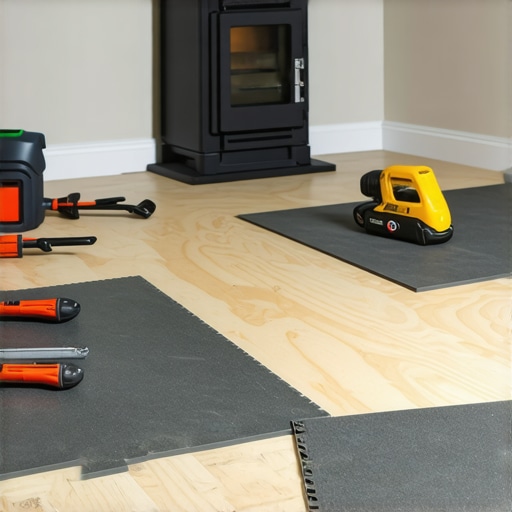
I’ve seen ‘Sales Techs’ tell people they can just throw a piece of tile down and be fine. That’s a lie. You need a non-combustible protector that meets the specific manufacturer’s requirements. If the manual calls for an R-value of 1.5, and you put down a 0.5 R-value stone, you’re risking a structural fire. This is as serious as boiler maintenance services; you don’t skip the details. I always recommend priority service memberships for homeowners because once that stove is in, your entire home’s humidity profile changes. In the cold North, the stove will dry out the air, which can shrink your hardwood floors and affect your HVAC repair needs. Always ensure you have a professional check the control board diagnostics of your existing furnace to make sure it can handle the ‘fan only’ mode to circulate that wood heat.
[image_placeholder]
If you’re unsure about your floor’s capacity, don’t guess. Contact a pro. Whether you need shop heater services for a garage wood stove or a full structural assessment, getting it right the first time is cheaper than fixing a collapsed floor. Check out our contact page for expert advice. Remember, a wood stove is a beautiful thing, but only if the physics are on your side. Don’t be the guy I visit in January because his house is freezing and his floor is buckled. Keep your system performance testing up to date and respect the load.