The Ghost in the Ductwork: Why Your Central Air is Lying to You
I remember my old mentor, a guy who had been pulling vacuums since the R-12 days, used to scream at me in the middle of a 130-degree attic: “You can’t cool what you can’t touch!” This wasn’t some Zen proverb; it was a physics lesson. He was talking about airflow. If the air coming off your evaporator coil isn’t reaching the actual living space because it’s leaking into your crawlspace or getting strangled by undersized returns, you’re just burning money to heat the outdoors. That is the fundamental tragedy of most central air systems. We see it every day—a perfectly good compressor pumping its heart out while the homeowner swelters because the ‘Tin Knockers’ who built the house 30 years ago didn’t understand static pressure. When the central air dies in the middle of a Southern humidity spike, you aren’t just losing a machine; you’re losing a battle against latent heat. This is where the mini-split, or ‘ductless’ system, stops being a luxury and starts being a survival tool. It bypasses the ‘bad ductwork’ epidemic entirely by putting the cooling exactly where you need it.
“Equipment shall be sized to satisfy the calculated loads. Over sizing of heating and cooling equipment shall be avoided.” – ACCA Manual S
The Physics of the Swamp: Latent Heat and the Ductless Advantage
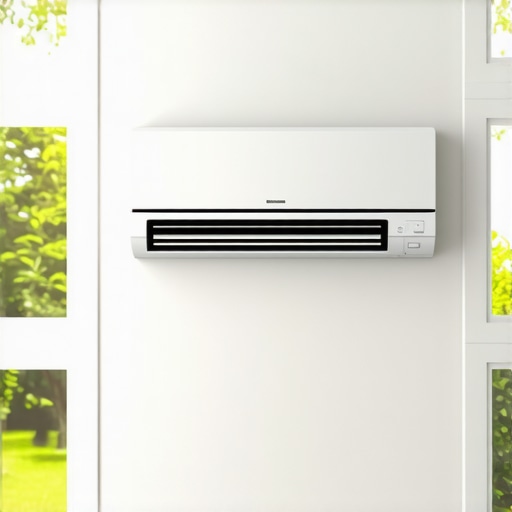
If you live in a humid climate, the ‘heat’ isn’t just the temperature on the thermometer; it’s the water in the air. We call this latent heat. A standard central AC is often a blunt instrument. It kicks on, hammers the house with cold air, and then shuts off once the thermostat is happy. The problem? It didn’t run long enough to pull the moisture out of the air. You end up with a house that’s 72 degrees but feels like a damp cave. This ‘short cycling’ is the enemy of comfort. Mini-splits use inverter-driven compressors that don’t just turn on and off. They ‘throttle’ like a car engine. They slow down to a whisper, maintaining a constant temperature and, more importantly, constantly wicking moisture off the coil. This is ac installation secrets that hvac pros wont tell you: you don’t always need more ‘tons’ of cooling; you need more ‘run time’ at lower speeds. This is how you survive a summer without a massive central plant. You place a head in the master bedroom, one in the kitchen, and one in the living room. You’ve created a zoned fortress. No more ‘Pookie’ (mastic) leaks in the attic, just direct, ‘beer can cold’ copper lines feeding pure comfort into your room.
The Airflow Manifesto: Why Static Pressure is Killing Your Comfort
In the world of HVAC, static pressure is the ‘blood pressure’ of your home. Most central systems are suffering from stage-four hypertension. When you try to force 1,200 CFM of air through a duct system designed for 800, the blower motor works overtime, the heat exchange fails, and the system dies young. By switching to mini-splits for summer survival, you are essentially performing a bypass surgery on your home. You’re ignoring the clogged arteries of your old ductwork. This is critical for top hvac repair strategies to extend your systems life. When we integrate mini-splits, we often look at efficient hvac repairs the blueprint for cooler summers and warmer winters to ensure the rest of the shell is tight. We aren’t just talking about residential spaces either; warehouse heating solutions and cooling require the same precision. You can’t just throw a massive RTU on a roof and hope for the best. You need targeted delivery. This is why shop heater services and cooling often utilize these ductless units—they provide localized control that a centralized system could never achieve without a massive budget for dampers and VAV boxes.
The 2025 Transition: R-454B and the Death of R-410A
We are currently standing on a regulatory cliff. The EPA is phasing out R-410A, the ‘juice’ we’ve been using for decades, in favor of A2L refrigerants like R-454B. These new gases are ‘mildly flammable,’ which sounds scary but really just means we have to be better technicians. If you’re looking at ultimate guide to ac installation expert tips for 2025 success, you need to know that the hardware is changing. New sensors are required to detect leaks, and the cost of the units is ticking up. This is why rebate application assistance and financing for heat pump installs are becoming mandatory parts of the conversation. If you wait until your central air catastrophically fails in July, you might be stuck paying a premium for a transition-era system. A mini-split installation now, utilizing modern heat pump technology, can bridge that gap. These units aren’t just for cooling; they are variable speed furnace services in a different form factor, providing high-efficiency heat when the ‘polar vortex’ eventually rolls back around. We even see folks using infared heater installation for specific spot heating in shops, but for the home, the mini-split is the undisputed king of versatility.
“The ventilation system shall be designed to provide no less than the minimum outdoor air requirements.” – ASHRAE Standard 62.1
Maintenance: Don’t Let Your Investment Turn into a Biohazard
I’ve seen mini-split blowers that look like they were pulled from a shipwreck—covered in black mold because the homeowner forgot they have a filter. Because these units handle so much latent heat (moisture), the condensate drains must be kept clear. This is why HVAC maintenance plans are non-negotiable. You need a pro to come in and ‘drop the pan’ once a year. We check the limit switch replacement needs on furnaces in the winter, but in the summer, we’re checking those mini-split drains. If that drain clogs, that ‘juice’ (refrigerant) is going to keep cooling the coil until it turns into a block of ice, and then you’ve got a waterfall behind your drywall. This is also the perfect time for air purification integration. Since the air is being processed right there in the room, adding a high-end plasma ionizer or HEPA-grade filter to a ductless head is more effective than any whole-house UV light buried in a dusty attic plenum. It’s about localizing the cure. Whether it’s portable heater safety checks for the winter or keeping the ‘gas’ levels right in the summer, preventative hvac repair tips for year round efficiency always start with the user being proactive. Don’t wait for the screech of a failing bearing to call a ‘Sparky’ or a tech; by then, the bill has already doubled.
The Final Verdict: Is Ductless Right for You?
If you have a room that’s always five degrees hotter than the rest of the house, stop trying to ‘fix’ the central air. The ‘Tin Knockers’ failed you, and no amount of duct tape or ‘Pookie’ is going to fix a fundamental volume-to-static ratio error. Survival in a humid summer means taking control of your zones. It means leveraging financing for heat pump installs to get a system that actually works. It means understanding that limit switch replacement and variable speed furnace services are part of a larger ecosystem of comfort. You don’t need a 5-ton monster in the backyard; you need a smart, modulated, ductless approach that respects the laws of thermodynamics. Comfort isn’t magic; it’s physics. And physics doesn’t care about your ‘Sales Tech’s’ commission. It only cares about airflow. Check out choosing the right hvac fixes what homeowners need to know before you sign any contracts this summer. Stay cool, stay dry, and keep your coils clean.