
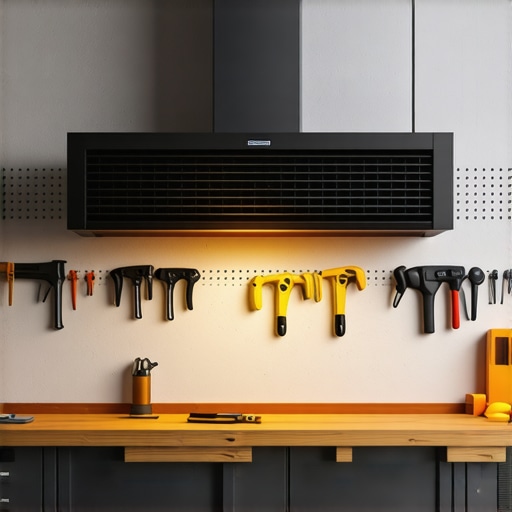
My old mentor used to scream, ‘You can’t cool what you can’t touch!’ and he’d holler the same about heating. I spent twenty years watching guys slap a 50,000 BTU unit in the corner of a garage, bolt it to a rafter, and wonder why the owner is still shivering at the drill press while the ceiling is a balmy 95 degrees. This isn’t just about ‘throwing heat’ at a room; it’s about fluid dynamics in a box. In the HVAC trade, we call it stratification, and in a workshop, it’s the enemy that kills productivity and sends your gas bill into the stratosphere. If you’re looking for real comfort, you don’t need a bigger unit; you need a better plan.
The Physics of the ‘Hot Head, Cold Feet’ Syndrome
In the North where the polar vortex likes to park itself, workshops face a brutal reality. Heat rises—period. Without proper duct design services or strategic heater placement, you create a thermal sandwich where the only thing warm is the dust on your top shelf. When we talk about gas line installation for furnaces in a shop environment, we aren’t just looking for the shortest run from the meter. We’re looking for the ‘Throw’ and the ‘Spread.’ Every heater has a rated distance the air will travel before it loses its velocity. If your workbench is thirty feet away and your heater only throws twenty, you’re just heating the empty air in the middle of the room. This is why HVAC duct sealing is vital even in a shop; if that hot air leaks out of the plenum before it hits the registers, you’re losing the battle before it starts. Use the good stuff—’Pookie’ (mastic)—not that cheap silver tape that peels off the second the temperature hits forty degrees.
“The most expensive equipment in the world cannot overcome a bad duct system.” – Industry Axiom
The Blueprint: Where the Heat Actually Goes
Stop thinking about where the heater fits and start thinking about how the air moves. You want to create a circular ‘race track’ of air. If you have a rectangular shop, the heater should be placed in a corner, angled to blow along the long wall. This uses the ‘Coanda effect,’ where the air hugs the wall, travels further, and eventually circles back to the return. Speaking of returns, if your return air isn’t pulling from the floor, you’re doing it wrong. A high return just sucks up the hottest air in the room and tries to heat it again, while the cold air stays anchored to your boots. This is where wiring repair for heating systems often comes in—moving thermostats or adding low-level returns requires a pro who knows how to navigate the ‘Sparky’ side of the job without burning out a transformer.
Ducting and IAQ: More Than Just Moving Air
Workshops are dirty. Sawdust, metal shavings, and solvent fumes are a nightmare for any heat exchanger. If you’re serious about IAQ improvement services, you need to integrate demand-controlled ventilation. This isn’t a luxury; it’s a safety requirement. When you’re running a CNC or a paint booth, the air needs to exchange, but you don’t want to dump all your expensive heated air outside every five minutes. A proper setup uses sensors to ramp up ventilation only when pollutants are detected. If your current system is just a fan in a window, you’re literally throwing money into the wind. This is why many owners are moving toward programmable thermostat programming that syncs with their shop hours, ensuring the heat is there when the tools are turning, but the system isn’t fighting a losing battle at 3 AM. For those who travel or have detached shops, remote thermostat access is a lifesaver. There’s nothing worse than driving to the shop only to realize you left the heat on ‘Blast’ over the weekend.
The Maintenance Trap: Why ‘Good Enough’ Isn’t
I’ve seen too many shops nearly burn down because of a ‘shop heater’ that was actually just an old residential furnace someone salvaged. Residential units aren’t built for the static pressure or the dust load of a shop. If you’re considering a new AC installation or heating upgrade, don’t cut corners. Get a unit rated for the environment. And for the love of the trade, get on preventative maintenance contracts. A shop heater works ten times harder than a house furnace. The filters clog in a week, and the burners get coated in fine dust that can lead to flame rollout or a cracked heat exchanger. I’ve crawled into enough tight spots to know that a $200 tune-up is better than an $8,000 replacement in the middle of February. You can find more about why these fixes matter in our guide on choosing the right HVAC fixes.
“Properly sized equipment is essential, but proper air distribution is the key to occupant comfort.” – ACCA Manual J
If you’re noticing that your heater is cycling on and off every five minutes, you might have a ‘short cycling’ issue caused by poor placement. If the heater is too close to the thermostat, it tricks the sensor into thinking the whole room is warm. This is a classic rookie mistake. You need a ‘Tin Knocker’ who understands how to balance the air so every corner of the shop stays within a five-degree variance. Check out these heating service hacks for 2025 to see how modern tech is changing the game for shop owners. If you ignore the physics of airflow, you’re just paying to heat the roof shingles. Do it right, seal your ducts, place your units for maximum throw, and stop ‘topping off the gas’ on a leaking system. Airflow is king, and in the workshop, it’s the difference between a masterpiece and a miserable day.