The Physics of the Void: Why Standard Heating Fails Large Spaces
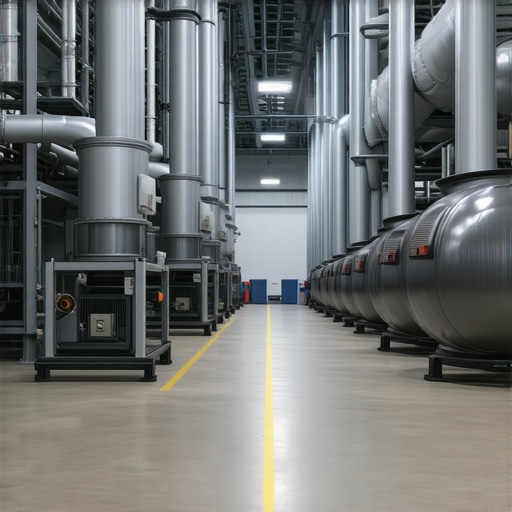
My old mentor used to scream, ‘You can’t cool what you can’t touch!’ but when the mercury dropped in the Northeast, he’d pivot his rage: ‘You can’t heat what you can’t hold!’ He was right. I’ve spent thirty years watching warehouse managers throw 1.5 million BTUs at a space and still see their employees’ breath in the shipping lane. The problem isn’t the ‘juice’ or the size of the box; it’s the physics of the void. Most warehouses are just massive thermal chimneys. You pump hot air in, and it immediately heads for the roof deck, leaving the floor at a crisp 45 degrees. If your facility is relying on off-the-shelf unit heaters, you’re basically burning cash to keep your roof joists warm while your steam boiler repair bills climb every season.
“The most expensive equipment in the world cannot overcome a bad duct system.” – Industry Axiom
The Airflow Manifesto: Stratification and the ‘Tin Knocker’ Secret
In a facility with 30-foot ceilings, the air at the top can be 20 degrees warmer than the air at the floor. This is stratification, and it’s the enemy of every facility manager from Chicago to Boston. You don’t need more ‘gas’; you need airflow architecture. Custom solutions often involve high-volume, low-speed fans or specialized ducting that pushes that heat back down. When I see a warehouse relying on those little electric cubes under desks, I know we have a problem. Those require portable heater safety checks constantly because they are literal fire hazards in an industrial setting. Real comfort comes from energy recovery ventilators (ERVs) that swap out stale, contaminated air for fresh intake without losing the sensible heat you’ve already paid for. If your ‘tin knocker’ (duct specialist) isn’t talking about static pressure and thermal destratification, he’s just selling you metal boxes.
The Mechanical Anatomy: Why Steam Boilers and Baseboards Matter
Many older facilities in the North still rely on steam. It’s a beautiful, violent way to move heat, but it’s often neglected until a pipe hammers so loud it sounds like a gunshot. Steam boiler repair isn’t something you leave to a ‘Sales Tech’ with a shiny truck and a clipboard. You need someone who understands the latent heat of vaporization. If your admin offices are freezing, the baseboard heater repair might be as simple as bleeding air or as complex as a failed zone valve. I’ve seen facilities waste thousands because they didn’t realize their solar thermal heating integration was fighting their primary boiler due to a bad sensor. You have to look at the whole system as a single organism.
“Standard 62.1-2019: Ventilation for Acceptable Indoor Air Quality requires specific rates of outdoor air to dilute contaminants.” – ASHRAE Standards
The Hidden Infrastructure: Transformers, Wiring, and Controls
I can’t count how many times I’ve been called out for a ‘dead unit’ only to find a $40 transformer replacement was all that was needed. Why did it blow? Because someone tried to wire in a fancy new thermostat without checking the VA rating. Thermostat wiring upgrades are the backbone of modern facility management. If you’re running 18/2 wire from the 70s, you aren’t going to get the communication needed for variable speed blowers or multi-stage heating. In those drafty loading dock offices, crawl space heating solutions are often the only way to keep pipes from bursting and floors from feeling like ice rinks. It’s not just about the furnace; it’s about the nervous system of the building.
Air Quality and the MERV Trap
In a warehouse, dust is a constant. I see guys putting in high-restriction filters thinking they’re doing a favor for the air quality, but they’re actually choking the blower motor. MERV filter upgrades are great, but they require a ‘Thermodynamic Zoom’ on your motor’s capabilities. If you increase the resistance (static pressure), you decrease the volume of air. If the air doesn’t move, the heat doesn’t move. You end up with a cracked heat exchanger because the unit is overheating internally. It’s a vicious cycle that leads to expensive 2 AM emergency calls. This is why furnace repair myths debunked by industry experts often center around the idea that ‘more filtration is always better’—it isn’t, not if your blower can’t handle the load.
The Humidity Factor: More Than Just Comfort
In the North, the winter air is bone-dry. This isn’t just about itchy skin; it’s about static electricity and material integrity. In facilities handling paper, electronics, or fine wood, whole-home humidifiers (scaled for industrial use) are mandatory. Dry air actually feels colder than moist air at the same temperature. By managing your humidity, you can often drop the thermostat by two degrees and feel exactly the same. That’s a massive energy saving over 100,000 square feet. If you’re looking for heating service hacks for comfort and savings in 2025, humidity control and destratification are the two biggest ‘wins’ you can find.
When to Pull the Plug: Repair vs. Replace
I despise Sales Techs who walk in and see a bit of rust and start writing a $50,000 quote. But there is a point where the math doesn’t lie. If you’re constantly replacing contactors and transformers, or if your heat exchanger looks like a piece of Swiss cheese, it’s time. Knowing how to identify when furnace repair is urgent and why can save you from a catastrophic mid-winter shutdown. We use ‘Pookie’ (mastic) to seal up the leaks in the short term, but a custom-designed system for your specific square footage and ceiling height will pay for itself in three seasons through reduced ‘gas’ bills alone. Don’t let a ‘Sparky’ or a ‘Tin Knocker’ give you a partial fix. Demand a custom thermal audit that treats your warehouse like the unique engineering challenge it is. Ready to stop heating the clouds? Contact us today to get a real tech on your roof, not a salesman.