The Invisible Lung: Why Your Filter Isn’t Saving You
I’ve spent thirty years crawling through crawlspaces and dragging my bones across joists in freezing attics, and if there is one thing I know, it is this: your fancy high-MERV filter is a glorified screen door if your ductwork is a sieve. Homeowners think they can just shove a $20 pleated filter into a slot and suddenly breathe clean air. They’re wrong. My old mentor, a grizzled old tin knocker who could smell a gas leak from a block away, used to scream at me, ‘You can’t cool what you can’t touch, and you can’t clean what you aren’t controlling!’ He was talking about static pressure and the ‘vortex of filth’ created by leaky returns. This is why airflow matters more than horsepower, and it is the single biggest reason your allergies act up the second the blower kicks on.
“The most expensive equipment in the world cannot overcome a bad duct system.” – Industry Axiom
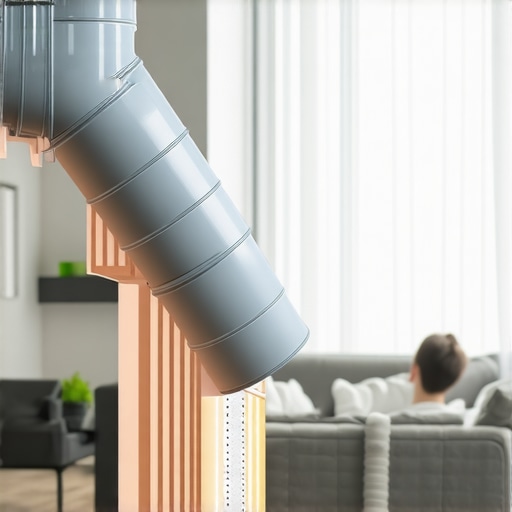
In our northern climate, where we deal with massive temperature swings, your ductwork is under constant stress. When your furnace repair technician tells you the unit is fine but you’re still sneezing, they aren’t looking at the whole picture. When a return duct leaks in a basement or a wall cavity, it creates a localized zone of negative pressure. This isn’t just physics on a chalkboard; it’s a vacuum cleaner for dust bunnies, fiberglass insulation, and rodent dross. It sucks that garbage directly into the airstream, bypasses the filter entirely, and blasts it into your bedroom. This is why furnace repair myths often ignore the ‘pookie’ (mastic) and focus only on the heat exchanger. But a pro knows that sealing those joints is more effective than any ‘air purifier’ you can buy at a big-box store.
Thermodynamic Zooming: The Physics of the Sealing
Let’s talk about the inverter-driven compressors and modulating furnace repair. These high-tech machines are designed to run at lower speeds for longer periods to maintain a precise temperature. However, they rely on a constant, predictable static pressure. If your ducts are leaking, that pressure drops. When the pressure drops, the velocity of the air slows down. This is where the allergy nightmare begins. Slow-moving air doesn’t have the kinetic energy to push particulates all the way to the filter. Instead, the dust settles inside the ductwork. Then, when the system ramps up to full capacity, it launches a ‘dust bomb’ into your living room.
We also have to look at energy recovery ventilators (ERVs). In a sealed home, you need fresh air, but you want it filtered and tempered. If your ducts are leaking, you are getting ‘unmanaged’ fresh air from the attic or the garage—places you definitely don’t want to be breathing from. This unmanaged air brings in moisture, which leads to mold growth on the evaporator coil. When we perform a combustion analysis on a furnace, we aren’t just checking for carbon monoxide; we’re checking the health of the entire burn cycle. A leaky duct system can actually pull combustion gases back into the home if the pressure imbalance is severe enough. This is why pilot light relighting is often just a symptom of a much larger pressure problem that a real tech needs to diagnose.
“Duct leakage can account for as much as 25 percent of total house energy loss, and in many cases has a greater impact on indoor air quality than the filtration system itself.” – ASHRAE Standard 62.2
The Static Pressure Deep Dive: Pookie vs. Tape
If you see a sparky or a general handyman trying to fix your ducts with silver ‘duct tape,’ fire them on the spot. Duct tape is for everything except ducts. In the trade, we use ‘pookie’—that thick, gray mastic sealant that hardens like rock. We use it to seal the plenum, the take-offs, and every boot in the house. Why? because thermostat installation won’t save you from a leaky boot. If you’re paying for fireplace insert services to keep your living room cozy, but your return ducts are sucking in cold, dusty air from the crawlspace, you’re literally burning money. Sealing those ducts ensures that 100% of the air being conditioned is actually the air inside your home, not the ‘juice’ (refrigerant) trying to overcome the heat gain from an attic leak.
For those with severe allergies, we often recommend a bypass humidifier repair or installation alongside duct sealing. In the winter, dry air makes your mucous membranes more sensitive to allergens. By sealing the ducts and maintaining proper humidity, you create an environment where dust clumps together and falls out of the air rather than floating into your lungs. It’s about controlling the environment, not just reacting to it. This is one of the top HVAC repair strategies to keep your family healthy and your system running for twenty years instead of ten.
The Math: Repair vs. Replace
When I go out on a call for portable heater safety checks or a furnace repair, I often find homeowners terrified that they need a $15,000 new system. The ‘Sales Techs’ love to tell them their compressor is ‘acidic’ or their coil is ‘pitted.’ But many times, the unit is struggling because it’s ‘choking.’ It can’t breathe because the return air drop is undersized or leaking. Sealing the ducts and cleaning the blower wheel can often restore the system to its original factory specifications. You have to know how to identify when furnace repair is urgent, and a massive leak in your return duct is an emergency for your health, even if the house is still ‘kind of’ warm.
Comfort isn’t magic; it’s physics. If you want to stop sneezing, stop looking at the air purifier and start looking at the ‘tin.’ Seal the leaks, balance the static pressure, and let your HVAC system do the job it was actually designed to do. If you’re ready to stop breathing your attic’s insulation, it’s time to get a real tech out there to check your static pressure and seal those leaks for good.