The Sound of a Looming Cold Front: Why That Squeal Matters
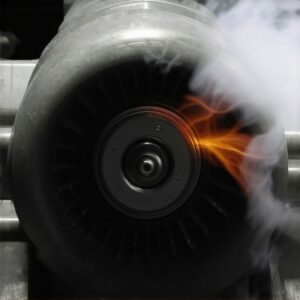
You hear it in the dead of a Tuesday night in February, somewhere up in the Maine woods where the mercury is struggling to stay above zero. It’s a high-pitched, metallic screech that cuts through the hum of the blower fan. Most homeowners try to ignore it, turning up the television or pulling the blankets higher. In the HVAC world, we call that the sound of money leaving your wallet. That squeal is the death rattle of a pellet stove auger motor, specifically the sintered bronze bushings trying to survive without lubrication. If you ignore it, you aren’t just risking a cold night; you’re looking at a cascading mechanical failure that could have been solved with a bit of foresight. When the auger stops, the heat stops, and suddenly you are looking for a 24/7 heating emergency response while the pipes in your crawlspace start to sweat and then freeze. I’ve spent thirty years in the trade, and if there is one thing I’ve learned, it’s that machines always give you a warning before they quit. This squeal is your warning.
The Physics of Friction: A Lesson from the Old School
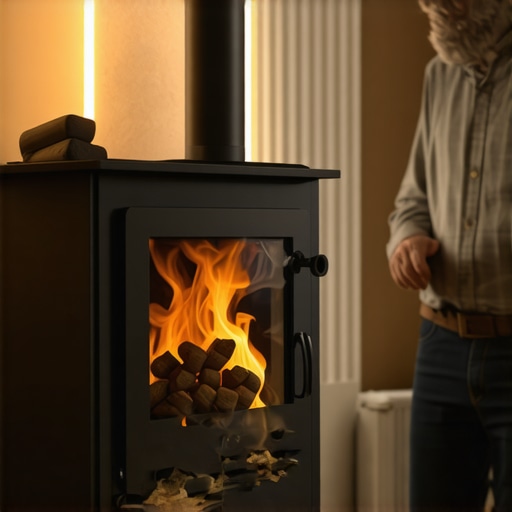
My old mentor, a man we called ‘Iron Lung’ Pete, used to scream at me in the back of his shop, ‘You can’t cool what you can’t touch, and you can’t heat if the fuel is stuck!’ This was his way of teaching me the The Airflow Manifesto. He believed that airflow and fuel delivery were two sides of the same thermodynamic coin. He’d point to a seized motor and say, ‘That’s not a part failure, kid. That’s a physics failure.’ In a pellet stove, the auger motor is a high-torque, low-speed beast. It has to crush through ‘fines’—that sawdust that accumulates at the bottom of the hopper—and force compressed wood pellets up a flighting tube into the burn pot. When those bushings go dry, the friction creates sensible heat that the motor isn’t designed to dissipate. The motor’s windings start to cook, the insulation on the wire melts, and eventually, the internal thermal overload trips. But by then, you’ve usually stressed the control board too. People think they can just ‘top off the gas’ in an AC or just ‘kick the stove’ to get it moving, but physics doesn’t care about your feelings. As an industry axiom states:
‘The most expensive equipment in the world cannot overcome a bad duct system—or a jammed fuel delivery mechanism.’ – Industry Axiom
The Forensic Anatomy of an Auger Failure
Let’s zoom in on the thermodynamics of a failing motor. Most pellet stoves use a shaded-pole or a permanent split capacitor (PSC) motor. These are simple machines, but they rely on tight tolerances. When the auger motor begins to squeal, it’s usually because the gearbox—a collection of plastic or metal gears that reduces the 3,000 RPM of the motor down to a crawl of 1 or 2 RPM—is losing its grease. As the resistance increases, the motor draws more amperage. This is where the ‘Sparky’ (our term for an electrician) gets involved. This increased amp draw generates heat in the copper windings. If you have a smart building management system, it might catch the spike in energy, but most residential stoves just keep pushing until the limit switch replacement becomes your next expensive reality. The limit switch is a safety device designed to shut everything down if the stove gets too hot, but if the auger jams and the fire dies while the fan keeps running, you’re just blowing cold air. It’s a total system breakdown that mimics the complexity of hospital HVAC zoning, just on a smaller, grittier scale. If you’re at this point, you’re often better off looking into a heat pump replacement or a two-stage furnace installation to provide a more reliable primary heat source, because relying on a squealing stove in a polar vortex is a recipe for disaster. Understanding how to identify when furnace repair is urgent is the difference between a $150 service call and a $4,000 equipment replacement.
The Cascading Cost: Beyond the Motor
Ignoring the motor doesn’t just kill the motor. It kills the experience of home ownership. When that auger seizes, the fuel in the flighting can sometimes undergo ‘backburn’ if the vacuum pressure isn’t perfect. This is where a simple mechanical issue becomes a safety hazard. I’ve seen hoppers full of pellets start to smolder because a homeowner didn’t want to spend the money on a wood burning stove installation or a proper repair. You also have to consider the peripheral systems. If you have a pool heater repair or spa heater services on the same property, you know that specialized heating elements require precision. A pellet stove is no different. It requires a balanced stoichiometry—the right amount of fuel and the right amount of air. When the motor slows down due to friction, you get an ‘oxygen-rich’ burn that is too hot and can warp the burn pot. This is why top hvac repair strategies always include a full mechanical inspection, not just a quick vacuuming of the ash. Most ‘Sales Techs’ will tell you the whole stove is shot and try to sell you a new heat pump installation on the spot. Don’t believe them. A squeal is a repairable offense if you catch it early.
Climate Context: The North/Cold Reality
In the North, we don’t play with heating. When the temperature drops, the ‘Latent Heat’ isn’t our enemy like it is in Houston; it’s the sheer sensible heat loss of the building envelope. A pellet stove is often the heartbeat of a workshop or a cabin. If that auger fails, the transition from ‘comfortable’ to ’emergency’ happens in about four hours. This is why I always tell folks that a two-stage furnace installation is the gold standard for backup. It allows the system to run at a lower, more efficient capacity most of the time, much like how a properly functioning auger motor should operate. ASHRAE standards remind us of the stakes:
‘Maintenance of combustion equipment is essential for the prevention of carbon monoxide infiltration and ensures the longevity of the heat exchange surfaces.’ – ASHRAE Standards
If you’re hearing that noise, you’re already violating the basic tenets of preventative maintenance. You should be looking into preventative hvac repair tips before the ice starts hanging off your eaves.
Repair vs. Replace: The Cold Hard Math
Here is the breakdown. An auger motor costs about $150 to $250. A technician like me, a ‘Tin Knocker’ with a penchant for airflow, will charge you another $200 for the house call and the labor. Total: $450. If you ignore it and the motor shorts out the control board, you’re looking at another $300 to $600 for the board, plus the risk of the fire going out and your pipes bursting. A burst pipe can do $20,000 in damage in a single afternoon. The math is simple, yet I see people gamble every year. They think they can ‘Pookie’ (use mastic) their way out of a mechanical failure. Mastic is for duct leaks; it won’t fix a gear with a stripped tooth. Whether you are managing a residential stove or hospital HVAC zoning, the principle is the same: address the noise before it becomes a silence. If your stove is over fifteen years old and the auger is acting up, that might be the time to consider a heat pump replacement, especially with the 2025 transition to A2L refrigerants making newer systems more efficient than ever. But if the stove is your soul, fix the motor. Check the furnace repair myths to make sure you aren’t falling for the ‘just spray some WD-40 on it’ trap—that’s a fire hazard, not a fix. Keep your ‘gas’ (refrigerant) in your AC and your grease in your gearboxes, and you’ll survive the winter. If not, I’ll see you at 3 AM for that emergency call, and I won’t be cheap.