The Click of Death: When Your Smart Thermostat Fails at 3 AM
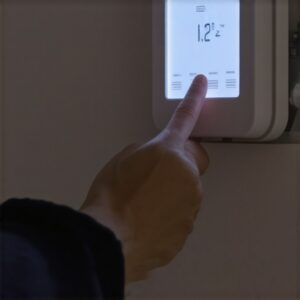
I remember my old mentor, a grizzled 40-year veteran we called ‘Iron Lung’ Pete, used to scream at me in the back of a freezing van: ‘You can’t cool what you can’t touch, and you can’t control what you can’t power!’ He was talking about duct design services and the physics of heat transfer, but his wisdom applies perfectly to the modern headache of geofencing temperature control. If you’re staring at a blank screen on your high-tech thermostat or wondering why it’s chewing through AA batteries like a kid with a new toy, you aren’t looking at a battery problem. You’re looking at a power delivery failure. Most homeowners think these ‘smart’ devices are magic, but they are just sophisticated switches that need a constant diet of 24-volt ‘juice’ to stay alive. In the HVAC world, we call this the ‘Power Stealing’ trap.
“The most expensive equipment in the world cannot overcome a bad duct system or an improperly wired control circuit.” – Industry Axiom
The Forensic Diagnosis: Why Your Circuit Board is Winning the War
When we talk about electric heater services or complex warehouse heating solutions, we focus on the transformer. In a typical furnace, there is a small transformer that steps your 120V house power down to 24V. Your old, ‘dumb’ thermostat was basically a mercury switch or a simple bimetal coil. It didn’t need power; it just closed a circuit. But your new smart thermostat has a Wi-Fi radio, a backlit screen, and geofencing capabilities. It is a mini-computer. If your flue pipe installation was done right and your gas line installation for furnaces is solid, your system is ready to run, but your thermostat is starving. Without a ‘C-wire’ (Common wire), the thermostat tries to ‘steal’ power from the heating or cooling circuit. This works fine until the system actually turns on. Once the furnace kicks in, that power path is occupied, and the thermostat starts draining its internal battery to stay connected. Eventually, the battery dies, the Wi-Fi drops, and you’re left in a cold house.
The Thermodynamic Reality of Control Voltage
In cold climates like the Northeast or Chicago, where we deal with furnace flame sensor cleaning every season, a fluttering thermostat can be a disaster. When a thermostat ‘power steals,’ it can cause the contactor or the control board to chatter. This isn’t just a noise issue; it’s a mechanical failure waiting to happen. If the voltage drops too low because the thermostat is trying to charge its battery while the furnace is running, the flame sensor might not get a clean signal. This leads to ‘lockout’—the furnace thinks it’s unsafe and shuts down entirely. You can read more about these common pitfalls in our guide on furnace repair myths debunked by industry experts. We see this often in restaurant kitchen exhaust repair scenarios too, where the control logic for the make-up air unit gets confused by erratic voltage from a ‘smart’ setup that wasn’t properly integrated into the IAQ improvement services plan.
The Physics of the C-Wire and Proper Wiring
If you want to stop the battery drain, you need a dedicated return path for the electricity. Think of the ‘R’ wire as the supply line and the ‘C’ wire as the return. Without the ‘C,’ the electricity has no place to go unless the system is ‘off.’ It’s like trying to fill a bucket with a hole in the bottom while someone else is trying to drink from it. This is why we insist on professional air purification integration and control wiring. If your ‘Tin Knocker’ (duct guy) did a great job but your ‘Sparky’ (electrician) or DIY-er skipped the extra wire, your warehouse heating solutions will never be efficient. You might even need a ‘power extender kit,’ which is a band-aid, but a real pro will pull a new 18/5 or 18/8 thermostat wire through the walls to do it right. This is one of those ac installation secrets that hvac pros won’t tell you: the control wiring is the nervous system of your HVAC unit. If it’s weak, the heart won’t beat.
“Proper sizing of control transformers is essential to ensure all peripheral devices, including smart thermostats and IAQ sensors, receive adequate voltage under full load conditions.” – ASHRAE Standard 62.1
When to Call the Pros vs. When to DIY
If you’ve cleaned your flame sensor, checked your flue pipe installation, and your batteries are still dying, it’s time to stop guessing. Repairing a fried control board because of a shorted ‘power stealing’ thermostat will cost you $500 to $800, whereas a proper wiring job is a fraction of that. If your system is over 15 years old, you might be facing the ‘Regulatory Cliff’ where older transformers just can’t handle the load of modern air purification integration. In those cases, you need to decide if you are throwing good money after bad. Check out our ultimate guide to ac installation expert tips for 2025 success to see if a system upgrade makes more sense than constantly fighting 24V power issues. Remember, a thermostat is just a tool; if the duct design services weren’t done correctly, no amount of geofencing will make your bedroom feel less like a meat locker. For urgent issues, you should understand how to identify when furnace repair is urgent and why. Don’t let a $20 battery problem turn into a $10,000 equipment failure because of ‘smart’ tech that was installed with ‘dumb’ wiring. We always recommend preventative hvac repair tips, and the number one tip for 2025 is: Get a C-wire. It’s not just about convenience; it’s about protecting the ‘Gas’ (refrigerant) and the mechanical integrity of your compressor and blower motor. Reach out to us at our contact us page if your smart home is acting more like a haunted house.