The Sound of the Damp Winter
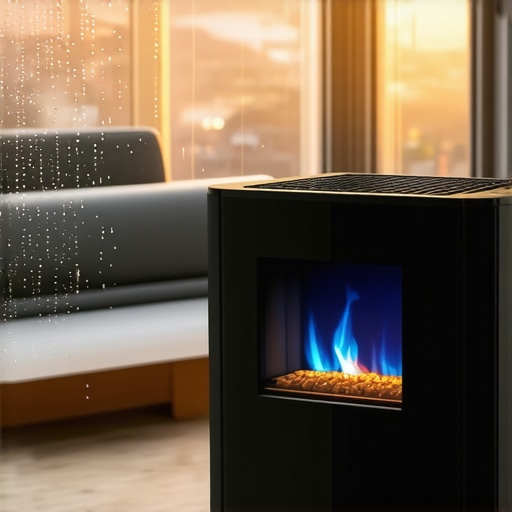
You wake up in a house that feels heavy. It’s not just the cold biting at the windows of your Chicago bungalow; it’s the suffocating moisture. You look at your ventless gas heater, that blue-flame marvel you bought to save a few bucks, and you see the windows crying. Condensation is dripping down the glass, pooling on the sill, and threatening to rot the wood. This isn’t just a comfort issue; it’s a physics problem that most ‘Sales Techs’—those guys in crisp white shirts who wouldn’t know a manifold gauge from a tire iron—won’t tell you about. They’ll sell you a unit and run, leaving you to deal with the mold. My old mentor, a man who spent forty years as a master tin knocker and lead tech, used to scream at me, ‘You can’t heat what you can’t vent safely! Combustion isn’t magic, it’s chemistry.’ This is why airflow matters more than raw BTU horsepower.
“Unvented combustion appliances shall not be used as a primary heat source. The water vapor produced by these appliances can lead to structural damage and indoor air quality degradation.” – ASHRAE Standard 62.2
The Thermodynamic Zoom: Why Ventless is a Humidity Bomb
When you strike a match or fire up a gas burner, you aren’t just creating heat. You are initiating a hydrocarbon combustion reaction. In a standard gas furnace repair scenario, we deal with a heat exchanger that keeps the nasty stuff—carbon monoxide, nitrogen dioxide, and water vapor—inside a metal box and shoves it out a flue. But a ventless heater? It dumps everything into your living room. For every 100,000 BTUs of natural gas you burn, you’re dumping about a gallon of water directly into your air. In a tightly sealed home, that latent heat doesn’t just vanish. It finds the coldest surface—usually your windows or the corners of your exterior walls—and turns back into liquid. If you’ve seen how to identify when furnace repair is urgent and why, you know that moisture is often the first sign of a system failure or a dangerous setup.
The Forensic Diagnosis: Anatomy of a Wet House
Let’s look at the mechanical anatomy of your comfort. If you’re relying on a wall furnace installation that lacks a chimney, you’re fighting a losing battle against psychrometrics. Your HVAC load calculation services probably didn’t account for a humidifier that you can’t turn off. I’ve walked into basements where the ‘Sparky’ or a fly-by-night installer put in a ventless unit and didn’t check the transformer replacement needs or the total moisture load. The result? The insulation is soaked, the blower motor replacement is imminent because the high humidity is corroding the windings, and the homeowner is wheezing. If your house feels like a cold swamp, it’s because your sensible heat is up, but your latent heat is off the charts. Sometimes, the fix isn’t more heat; it’s better technology like a ductless mini-split installation that provides dry, controlled warmth without the ‘juice’ of combustion byproducts.
“The most expensive equipment in the world cannot overcome a bad duct system or an improper venting strategy.” – ACCA Manual J Axiom
The Physics of the North: Polar Vortex Survival
Up here in the cold zones, we face the ‘Monsoon Effect’ in reverse. When the temp hits ten below, your ventless heater is working overtime. That’s when the Energy Star heating certification becomes more than just a sticker; it’s a survival metric. I’ve seen hot water heater repair calls that were actually just ventless heaters causing so much moisture that the pilot light on the nearby water heater kept getting snuffed out by a lack of oxygen. If you’re seeing flame rollout or a yellow flame instead of a crisp blue one, you’re looking at a CO death trap. Don’t trust a guy who just wants to swap a transformer replacement and leave. You need a tech who understands that your steam humidifiers should be the only thing adding moisture, and only when the air is actually dry, not as a byproduct of a cheap heater. You might even need an occupancy sensor installation to ensure these units aren’t running in empty rooms, compounding the moisture problem.
When to Pull the Plug: Repair vs. Replace
Is your ventless heater a $500 fix or an $8,000 mistake? If you’re constantly dealing with blower motor replacement due to moisture damage, or if your walls are growing a fuzzy green beard of mold, it’s time to move on. Check out these furnace repair myths debunked by industry experts to see why ‘topping off’ or ‘making do’ with a ventless unit is a sucker’s game. True comfort comes from a balanced system where Pookie (mastic) seals the ducts and a real furnace vents the garbage outside. If you’re tired of the damp, maybe it’s time to look into contacting us for a real load calc and a system that won’t rot your house from the inside out. Don’t let a ‘Sales Tech’ tell you that a ventless unit is ‘just as good.’ Physics doesn’t lie, and neither does the mold on your drywall.