The Physics of the Invisible Leash: Why Geofencing Fails on a Dead Battery
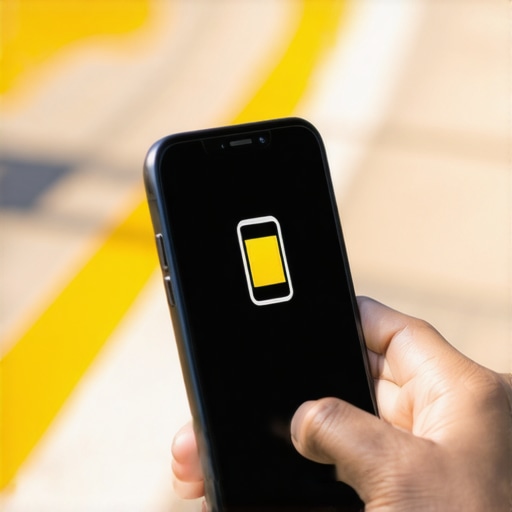
My old mentor used to scream at me in the back of a freezing van, ‘You can’t heat what you can’t touch!’ He was talking about airflow and the way a heat exchanger needs to move molecules to move energy, but his logic applies to the digital world just as much. In the HVAC trade, we see people obsessed with ‘horse power’ and ‘BTUs,’ but they forget that the brain of the system is only as smart as the data it gets. If your phone is at 5% battery and enters ‘Low Power Mode,’ your geofencing temperature control isn’t just inaccurate—it’s a ghost. You’re essentially trying to steer a ship with a broken compass. I’ve seen homeowners spend thousands on a ductless mini-split installation only to complain the house is cold because their smartphone stopped talking to the indoor head. It’s not the machine; it’s the logic chain.
“Automatic control systems shall be capable of starting and stopping systems based on occupancy, but reliability is contingent upon the integrity of the sensing device.” – ASHRAE Standards
When we talk about troubleshooting geofencing when your phone battery is low, we have to look at the ‘Forensic Diagnosis’ of the system. Your phone is a beacon. It uses a combination of GPS, Wi-Fi triangulation, and cellular tower pings to tell your thermostat where you are. When that battery hits the red zone, the operating system starts killing background processes to save ‘juice.’ The first thing to go? High-accuracy location tracking. If your phone stops reporting its position, your two-stage furnace installation is sitting idle in stage one—or worse, not running at all—while you’re five minutes from the driveway in a blizzard. You walk into a house that’s 58 degrees because the ‘smart’ system thought you were still at the office. This isn’t a mechanical failure; it’s a breakdown in the digital handshake.
The Anatomy of the Modulating Furnace and Smart Integration
In a modern modulating furnace repair, we aren’t just looking at the gas valve or the flame sensor. We’re looking at how the control board interprets the call for heat. A modulating furnace is a beautiful piece of engineering. Unlike a standard ‘on-off’ box, it can adjust its burner output in tiny increments, maybe 1% at a time. But this precision requires a steady stream of data. If the geofencing signal is lagging because of a low battery, the system doesn’t know whether to ramp up to 100% or maintain a 40% cruise. This leads to ‘hunting,’ where the furnace ramps up and down rapidly, wearing out the draft inducer motor prematurely. If you hear a high-pitched screeching from your attic, that’s the sound of a draft inducer motor repair waiting to happen, often caused by erratic control signals. This is why identifying when furnace repair is urgent involves looking at your controls as much as your hardware.
If you’re in a cold climate like the Northeast or Midwest, you know the sound of a furnace kicking on in the dead of night. It’s a rhythmic, mechanical pulse. But when you introduce geofencing, you’re trying to optimize that pulse for your arrival. If you’ve had a wall furnace installation in a smaller space or a guest house, the recovery time is even more critical. These units don’t have the ‘thermal mass’ to catch up quickly. If your phone dies and the geofence doesn’t trigger ‘Home’ mode until you manually unlock your door, you’re going to be shivering for an hour while that wall unit struggles to overcome the sensible heat loss of the structure. It’s not magic; it’s thermodynamics. You can’t cheat the physics of heat transfer.
The 2025 Shift: Low-GWP Refrigerants and New Sensors
As we move into the era of low-GWP refrigerant retrofits, the stakes for smart controls are getting higher. Systems using R-454B or R-32 are being equipped with leak detector integration to meet safety codes for ‘mildly flammable’ A2L refrigerants. These sensors are tied into the same control logic as your thermostat. When a system is short-cycling or behaving erratically because of a bad geofencing signal, it puts unnecessary stress on the entire cooling or heating loop. I’ve seen ‘Tin Knockers’—the guys who run the ductwork—do a perfect job, only to have a ‘Sparky’ or a DIY homeowner mess up the low-voltage wiring that handles these complex signals. If the communication line is noisy, and then your phone battery dies, the system defaults to ‘Safety Mode’ or ‘Away Mode,’ which can lead to frozen coils in the summer or burst pipes in the winter.
“The most expensive equipment in the world cannot overcome a bad duct system or a failed control logic.” – Industry Axiom
We also need to talk about the chimney liner installation. You might wonder what a chimney has to do with a dead phone battery. When you upgrade to a high-efficiency two-stage furnace installation, the exhaust gases are much cooler than the old ’80-percenter’ units. These gases can condense inside an unlined chimney, creating acidic ‘juice’ that eats your mortar. If your geofencing is constantly toggling the unit on and off because of a weak GPS signal from a dying phone, you’re creating more condensation cycles. This is how a software glitch on your iPhone leads to a structural failure in your masonry. Everything is connected. That’s why furnace repair myths debunked by industry experts often center on the idea that ‘it’s just a simple fix.’ It’s never just one thing.
The Forensic Solution: Fix the Logic, Save the Hardware
So, how do we fix a geofencing system that’s acting like a drunk sailor? First, stop blaming the ‘gas.’ Most ‘Sales Techs’ will tell you that you need a new heat exchanger cleaning or a total system replacement when the app fails. Don’t fall for it. Check your phone’s ‘Battery Optimization’ settings. You need to ‘Whitelabel’ or ‘Exclude’ your HVAC app from power-saving modes. This ensures the GPS continues to poll even when the battery is low. Second, look at your ‘Radius.’ If your geofence is set too tight—say, 500 feet—and your phone is lagging, you’ll be in the garage before the furnace even clears its pre-purge cycle. Set that radius to at least two miles. This gives the draft inducer motor time to spin up and the heat exchanger time to reach steady-state temperature before you walk through the door.
If you’re dealing with a ductless mini-split installation, the geofencing is even more finicky because these units are designed to run almost constantly at low speeds. They hate being shut off. If your phone’s low battery is forcing the unit to hard-restart every time you enter or leave the zone, you’re killing the inverter board. That’s an expensive ‘brain’ to fry because you didn’t have a car charger. For those with older homes, ensuring you have efficient HVAC repairs means looking at the total system, from the ‘Pookie’ on the duct joints to the software version on your tablet.
In the field, I’ve found that the best backup for geofencing is a simple ‘Hold’ schedule. Use the geofencing for the 90% of the time it works, but set a floor temperature—say 64 degrees—that the system never drops below, regardless of where your phone thinks you are. This prevents the ‘Polar Vortex’ effect where a dead battery leads to a frozen house. Remember, comfort is a result of physics, not just a pretty app interface. If you’re struggling with these high-tech systems, don’t hesitate to contact us for a real diagnostic, not a sales pitch. We’ll check the flame rollout, the static pressure, and the Wi-Fi signal strength, because in 2025, they all matter equally.