Living in a basement apartment often feels like a constant battle against the elements. If you aren’t shivering because the concrete floors are leeching the sensible heat out of your bones, you’re jumping out of your skin because the furnace in the utility closet sounds like a 747 taking off. Most homeowners and landlords think they can just shove a standard box in the corner and call it a day, but that is exactly how you end up with a tenant who moves out after one winter. My old mentor, a grizzly veteran who could sniff out a cracked heat exchanger from the driveway, used to scream at me, ‘You can’t heat what you can’t touch!’ This was his way of saying that if your airflow is garbage, your horsepower doesn’t matter. In a basement, where the volume of air is confined and the duct runs are usually tight and restricted, the physics of a single-stage furnace just doesn’t work. You need a two-stage system, or you’re just wasting fuel and sanity.
The Physics of Basement Heating: Why Two-Stage Matters
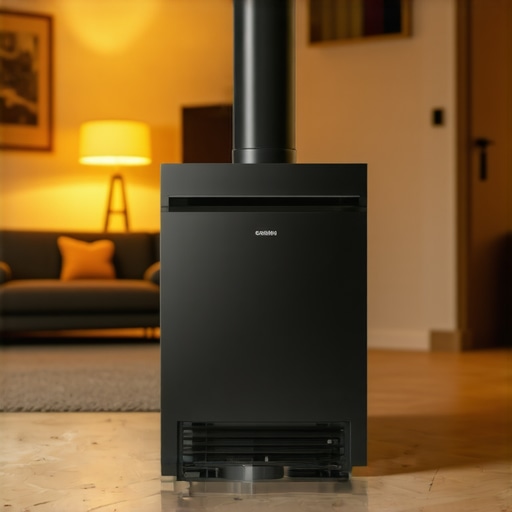
When we talk about a two-stage furnace, we are talking about a gas valve and an inducer motor that have two levels of operation: high and low. A standard, cheap furnace is either 100% on or 100% off. Imagine trying to drive your car in a school zone where you can only go 0 or 100 mph. That is what a single-stage unit does to a basement apartment. It blasts the space with hot air, hits the setpoint in five minutes, and shuts off. This is called short-cycling, and it is the enemy of comfort. Because the unit shuts off so fast, the air never has a chance to circulate properly into the corners or the bathroom, leaving those areas like an icebox. A two-stage unit typically runs at about 60-65% of its capacity for the majority of the time. This lower fire rate means longer run cycles, which allows for better air filtration and a much more even distribution of heat. It is the difference between a warm hug and a blowtorch to the face.
“Properly sized equipment, particularly in multi-stage configurations, is essential for maintaining consistent thermal gradients in subterranean living spaces.” – ASHRAE Fundamentals Handbook
In the North, where we deal with deep freezes and the constant threat of frozen pipes, that low-stage operation is a lifesaver. It keeps the air moving constantly, preventing the ‘stratification’ where the floor stays at 55 degrees while the ceiling is at 80. If you are struggling with an old, noisy unit, you might be debating between gas furnace repair and a total upgrade. If that heat exchanger is rusted or the inducer is screaming, it is time to look at a two-stage replacement that won’t keep the whole building awake at night.
The Airflow Manifesto: Static Pressure and the ‘Pookie’ Factor
You can buy the most expensive furnace on the market, but if your Tin Knocker (the duct guy) didn’t understand static pressure, it won’t perform. Basement ductwork is notoriously terrible. You’re usually fighting for every inch of headroom, which means flat, wide ‘pancake’ ducts that have more resistance than a mule. When I walk into a basement and see duct tape failing at every joint, I know the system is bleeding efficiency. This is where we break out the Pookie—that thick, gray mastic sealant that actually seals a joint. Tape is for Christmas presents; Pookie is for HVAC. High static pressure in a basement furnace causes the blower motor to work harder, generating a high-pitched whine that resonates through the floor joists. By using a two-stage furnace with a variable-speed blower (ECM motor), the system can adjust its torque to overcome the resistance of cramped ductwork without sounding like a wind tunnel. This is one of the heating service innovations transforming 2025 climate control, making it possible to have a whisper-quiet apartment even in a century-old home.
Venting and Safety: The Chimney Liner Criticality
One thing people forget when they swap an old 80% furnace for a high-efficiency unit is the venting. In older homes, the furnace often shares a masonry chimney with a water heater. If you put in a high-efficiency furnace that vents through PVC out the side of the house, you’ve now ‘orphaned’ that water heater. The chimney is now too big for the water heater’s exhaust to create a proper draft, leading to condensation that eats the mortar out of your bricks and, eventually, carbon monoxide leaking into the apartment. This is why chimney liner installation is non-negotiable in many basement retrofits. We have to drop a stainless steel sleeve down that chimney to keep the draft tight and the air safe. If you’re smelling something sour or metallic near the utility closet, don’t wait. Check out furnace repair myths debunked by industry experts to understand why ‘it’s just an old house smell’ is a dangerous lie.
Advanced Controls: From Geofencing to Inverters
We are moving into an era where app-controlled heating systems are the standard. For a basement tenant, having geofencing temperature control means the furnace can ramp up when they are five miles from home and dial back when they leave, saving the landlord money while ensuring the tenant never walks into a tomb. If the basement is part of a larger commercial building, we might even look at commercial furnace repair or inverter-driven compressors for heat pump backups. In some regions, homeowners are even looking at biomass boiler services or pellet stove repair for supplemental heat, but for the primary basement load, a two-stage gas furnace is still the king of reliability. If your system is old and you’re tired of the ‘Sales Tech’ trying to sell you a whole new house when you just need a repair, you need to know what homeowners need to know about choosing the right fixes. Sometimes it’s a baseboard heater repair in a far bedroom to supplement the furnace, rather than a whole new system.
“The most expensive equipment in the world cannot overcome a bad duct system.” – Industry Axiom
Conclusion: Comfort is Physics, Not Magic
Stopping the ‘On-Off’ hammer of a single-stage furnace is the first step to a livable basement. By focusing on two-stage technology, proper static pressure management with the right Pookie application, and ensuring your venting is up to code with a proper liner, you turn a dungeon into a suite. Whether you are looking at a heat pump replacement to add cooling or just trying to survive a polar vortex with a furnace that doesn’t scream, remember that airflow is the heart of the machine. Don’t let a Sales Tech talk you into a massive unit that will just short-cycle and die early. Get the staging right, get the ducting right, and enjoy the silence. For more expert guidance on keeping your system running through the harshest winters, visit our contact page to speak with a tech who actually knows his way around a manifold gauge.