The Invisible War in Your Return Air
Most homeowners think their HVAC system is just a big metal box that makes the house hot or cold. They’re wrong. It’s a lung. And right now, if you’re sneezing your head off, that lung is likely aspirating every bit of dust, dander, and microscopic debris it can find. I’ve spent thirty years in the trade, mostly crawling through crawlspaces and balancing airflows that some tin knocker threw together in a hurry forty years ago, and I can tell you this: you can’t fix what you can’t measure. My old mentor used to scream, ‘You can’t clean what you can’t capture!’ This is why airflow matters more than horsepower. If the air in your bedroom isn’t actually reaching the filter because of a poorly designed return, no amount of expensive equipment will stop your allergies. We’re going to talk about the physics of indoor air quality (IAQ) sensors and how they reveal the failures of your home’s mechanical anatomy.
“The most expensive equipment in the world cannot overcome a bad duct system.” – Industry Axiom
In the North, where the winter air gets so dry it practically turns your skin to parchment, we deal with a specific set of physics. Cold air has a miserable capacity for holding moisture. When that dry air enters your home and hits your furnace, it becomes even hungrier for water. This is where bypass humidifier repair becomes a health priority, not just a comfort one. Dry air is heavy with static, and it allows dust particles to stay buoyant. In a humidified environment, particles clump and fall; in a dry one, they float right into your nasal passages. [IMAGE_PLACEHOLDER] If you’re seeing spikes on your IAQ sensors, specifically PM2.5 (particulate matter), the culprit is often the lack of moisture control or a failing seal in your new construction heating design. I’ve seen brand-new million-dollar homes where the builders used cheap tape instead of pookie (mastic) on the plenum, causing the system to suck in attic fiberglass every time the blower ramps up.
The Logic of Hospital HVAC Zoning in Your Home
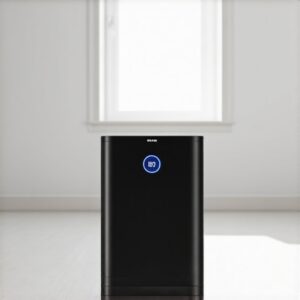
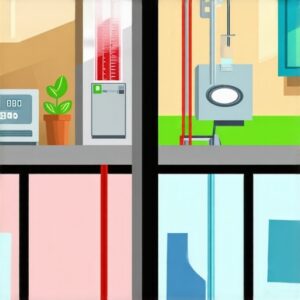
When we talk about hospital HVAC zoning, we aren’t just talking about keeping the ER cold. We’re talking about pressure differentials. Hospitals use positive and negative pressure to keep ‘bad air’ in its place. Your home should be no different. If your master suite has a dedicated return but the door is always shut, you’re creating a pressure imbalance. Your IAQ sensor might show a massive spike in VOCs (Volatile Organic Compounds) because the room is ‘stagnant’—it’s not exchanging air. This is where HEPA filter systems become critical. But you can’t just slap a HEPA filter on a standard furnace. A HEPA filter has massive resistance (static pressure). If your blower motor isn’t designed for it, you’ll burn out the transformer or the motor itself in a season. You need to look at efficient HVAC repairs that address the whole system’s capacity to move air through dense media.
Sensors vs. The ‘Sales Tech’ Myth
I despise the sales techs who walk into a house, see one person sneeze, and try to sell a $15,000 full-system replacement. Half the time, the issue is a $20 thermocouple replacement or a transformer replacement causing the system to short-cycle. When a unit short-cycles, it never reaches a steady-state of filtration. It turns on, moves a bit of air, then dies. The IAQ sensor will show you this pattern: a saw-tooth graph of rising pollutants that never quite get filtered out. Real high-efficiency furnace installation requires a deep dive into the total external static pressure (TESP). If the TESP is too high, the air is moving too fast across the evaporator coil, and it isn’t dropping below the dew point effectively to pull out latent heat (humidity) or trapping particles in the filter. You’re just ‘breeze-making,’ not air conditioning.
“Ventilation shall be provided by mechanical means… to ensure the health and safety of occupants.” – ASHRAE Standard 62.2
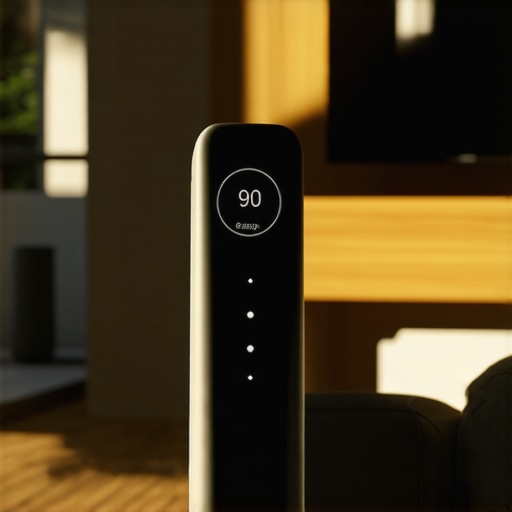
If you’re serious about your health, stop looking at duct cleaning services as a magic bullet. If your ducts are leaky, you’re just cleaning the pipe that’s sucking in more dirt from the basement. You need a warranty service plan that includes a real combustion analysis and airflow test. I’ve seen IAQ sensors detect carbon monoxide long before a cheap wall-mounted alarm because they are sensitive to the trace gases of a cracked heat exchanger. That’s not an allergy; that’s a life-safety issue. For those who want control, app-controlled heating systems linked to IAQ monitors are the way of the future, allowing the system to kick on the fan (even without heat or AC) if the particulate count gets too high. This is the integration of top HVAC repair strategies with modern data.
The Solution: Engineering Out the Allergens
To truly solve the allergy puzzle, we have to look at the ‘The Airflow Manifesto.’ This means checking the new construction heating design for adequate return-air volume. Most houses are ‘constipated’—plenty of supply air, but no way for the air to get back to the furnace to be cleaned. If you’re planning a high-efficiency furnace installation, insist on a 4-inch media cabinet. A 1-inch filter is a joke; it’s there to protect the equipment, not your lungs. A 4-inch filter has the surface area to catch the small stuff without killing the airflow. If you’ve been told you need a whole new system, check your heating service hacks first. Sometimes, a simple zoning adjustment or sealing the ‘gas’ (refrigerant) lines with proper insulation can change the thermodynamic performance enough to improve IAQ. Don’t let a salesman talk you into a ‘magic’ UV light before you’ve fixed the physical holes in your returns. Comfort is physics, and your IAQ sensor is the only honest witness in the house. Always verify your tech’s claims against the data your sensors are providing, and keep that warranty service plan active to ensure your sensors and thermocouple stay in spec. “