The Physics of Burning Down Your House: A Veteran’s Perspective
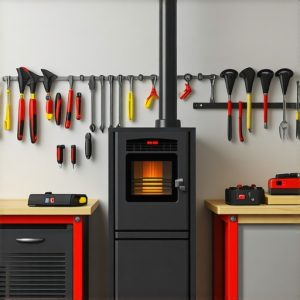
My old mentor, a grizzled master tech who could smell a cracked heat exchanger from the driveway, used to scream at me, ‘You can’t cool what you can’t touch, and you can’t heat what you’ve already turned to ash!’ He was a stickler for clearances, and for good reason. I remember walking into a split-level in the dead of a Chicago winter where the homeowner had installed a beautiful cast-iron wood stove. It was cranking out sensible heat like a blast furnace. But as I got closer, I smelled it—that sickly, sweet-charring scent of toasted pine. They’d pushed the stove within six inches of a drywall-covered stud wall. The drywall wasn’t on fire yet, but the studs behind it were undergoing pyrolysis—a chemical decomposition caused by long-term heat exposure that lowers the ignition temperature of wood until it spontaneously combusts. That is why we don’t play games with wall protection rules. If you think your ‘handyman’ knows better than the NFPA, you’re betting your life on a coin flip.
“The minimum clearance from a radiant stove to an unprotected combustible wall is 36 inches, regardless of the stove’s thermal output, unless specific reduction methods are employed.” – NFPA 211: Standard for Chimneys, Fireplaces, Vents, and Solid Fuel-Burning Appliances
The Anatomy of Heat: Why Drywall is a Traitor
People think drywall is fireproof because it doesn’t immediately ignite. In the HVAC world, we know better. Drywall is just gypsum and paper. While it has a high water content that provides some initial resistance, once that moisture is driven out by the constant radiant energy of a wood stove, the gypsum crumbles and the paper becomes a fuse. To protect your home, you have to understand the Thermodynamic Zooming of radiant heat. Unlike a furnace that uses an air handler to push convective heat through ducts, a wood stove emits infrared radiation. This energy travels in waves and vibrates the molecules of whatever it hits—including your wall studs. Without a proper thermal break, that energy conducts right through the wall. This is where heating service hacks come into play—not to bypass code, but to master it. You need a shield that doesn’t just block heat, but dissipates it.
The 1-Inch Air Gap: The Tin Knocker’s Secret
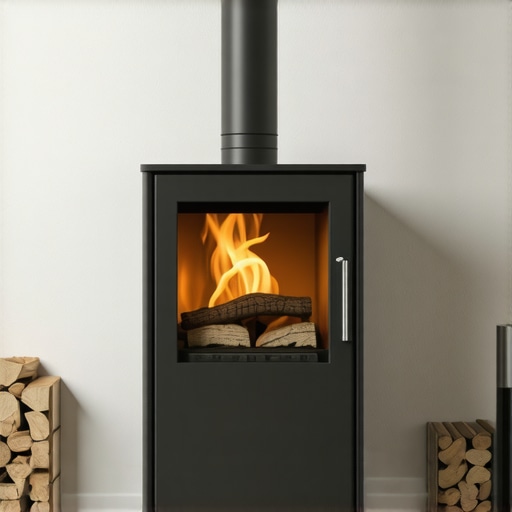
If you want to reduce those 36-inch clearances, you need a wall protector. But don’t just slap a sheet of metal on the wall. If you screw a piece of sheet metal directly to the drywall, you’ve just created a thermal bridge. The metal gets hot, transfers the heat to the screws, and the screws bake the studs. Any real Tin Knocker knows that the secret is the one-inch air gap. By using non-combustible spacers—like ceramic cylinders or even cut pieces of copper pipe—to hold the shield one inch away from the wall, you create a convection curtain. Cool air is drawn in at the bottom, heats up behind the shield, and rises out the top, stripping the heat away before it ever reaches the combustible surface. This is the same logic we use in furnace repair myths debunked by industry experts; it’s all about managing the airflow. [IMAGE_PLACEHOLDER] Using this method, you can often reduce clearances by 50% to 66%, depending on the material of the shield.
Integrating Wood Stoves with Your Modern HVAC System
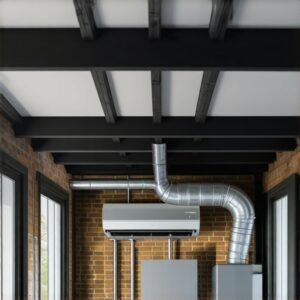
Here is where things get technical. A wood stove is a ‘dumb’ heater; it has no feedback loop with your central system. If you have a high-efficiency furnace with variable speed furnace services, the stove can actually cause more harm than good if not integrated properly. Your programmable thermostat programming needs to account for the fact that the living room might be 80°F while the back bedrooms are 50°F. If the thermostat is in the same room as the stove, the furnace will never kick on, and your pipes in the north wall might freeze. This is why we recommend system performance testing after any stove installation. We often suggest a voice control setup Alexa Google integration that allows you to trigger the air handler repair or fan-only mode to circulate that wood heat throughout the house. Without it, you’re just creating a ‘hot box’ and wasting energy. Furthermore, you must consider demand-controlled ventilation. A wood stove consumes oxygen and exhausts it up the flue. In a tight, modern home with an Energy Star heating certification, the stove can actually create a negative pressure environment, sucking carbon monoxide back down the furnace vent. This is why HVAC load calculation services are vital—we need to ensure you have enough ‘makeup air’ for the stove to breathe without killing you in your sleep.
“The most expensive equipment in the world cannot overcome a bad duct system or an unbalanced pressure envelope.” – Industry Axiom
The Regulatory Trap and Financial Incentives
Don’t think you can just wing it and hope for the best. If you don’t follow the local codes, your insurance company will laugh in your face after a fire. When we perform urgent furnace repair, we often see the aftermath of DIY wood stove installs that have scorched the nearby return air vents. If you’re looking to save money, don’t skimp on the shield—instead, look for rebate application assistance. Many local utilities and federal programs offer incentives for installing high-efficiency, EPA-certified wood stoves or pellet stoves that work in tandem with heat pumps. We can help with the paperwork to ensure your ‘off-grid’ heating dream doesn’t become a financial nightmare. Whether you need an air handler repair to help move that wood-warmed air or a complete HVAC load calculation to see how a stove affects your home’s thermal envelope, do it right. Don’t be the guy I have to visit on a freezing January night because his ‘pookie’ (mastic) on the chimney pipe failed and filled the attic with smoke. Physics doesn’t care about your feelings, and it certainly doesn’t care about your décor—it only cares about the ΔT (temperature difference) and the path of least resistance.