The Sound of a Dead System and the 24V Ghost
You walk into your house, it is 85 degrees inside, and the thermostat is a blank, black void. No click, no hum, no rush of air from the registers. Most homeowners think the whole unit just gave up the ghost. But as a tech who has spent three decades dragging a tool bag through blown-in insulation and navigating the spider-infested crawlspaces of the high desert, I know better. That silence usually means the 24-volt transformer has surrendered. But here is the thing: transformers don’t just die. They are murdered. If you find a tech who just swaps the transformer and hands you a bill, you haven’t found a mechanic; you’ve found a part-changer who is going to be back in your house in forty-eight hours when the new one pops too. A transformer is a simple beast—two coils of wire, primary and secondary, using electromagnetic induction to drop 120 or 240 volts down to the 24 volts that runs your control board. When that secondary winding melts, it is because something further down the line asked for more amperage than the transformer was rated to handle. It is a suicide pact designed to save your more expensive control board from frying.
The Sales Tech Scam: A Forensic Case Study
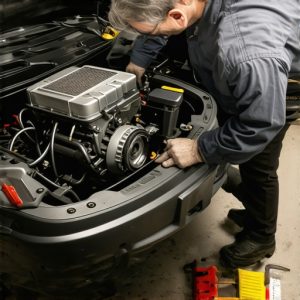
I remember following behind a ‘Sales Tech’—those guys in the crisp white shirts who care more about their commission than their manifold gauges—on a multi-family heating upgrade project last winter. The client was a property manager who had been told that four of his furnace units needed total replacements because the ‘electronics were internally compromised.’ Total quote? Somewhere north of $22,000. I pulled the panel on the first unit and smelled that unmistakable ozone-and-burnt-copper stench. The transformer was toast. But instead of quoting a new furnace, I grabbed my Multimeter. I started hunting. I found a wire leading to the furnace ignition repair site that had been vibrating against the sharp edge of the blower housing for five years. The insulation had rubbed raw, creating a dead short to ground every time the draft inducer motor kicked on. I fixed the wire with some heat shrink, swapped a $40 transformer, and the ‘dead’ unit roared to life. This is why you never trust a guy who doesn’t check for a short before condemning a system. Understanding the furnace repair myths debunked by industry experts can save you thousands when a ‘sparky’ or a sales tech tries to overcomplicate a simple electrical failure.
“The most expensive equipment in the world cannot overcome a bad duct system, nor can it survive a circuit that lacks proper overcurrent protection.” – Industry Axiom
Thermodynamic Zooming: The Physics of the Short
When we talk about a blown transformer, we are talking about a failure in the ‘brain’ of the system. In our high-desert climate, where we transition from restaurant kitchen exhaust repair in a 100-degree kitchen to maintaining snow melt systems installation in a freezing driveway, the electrical components take a beating. Heat increases resistance. When resistance in a contactor coil increases due to pitting or debris, the coil draws more ‘juice’ to pull in the high-voltage contacts. If that draw exceeds the Volt-Amp (VA) rating of your transformer—usually 40VA in standard residential units—the internal windings of the transformer heat up until the lacquer melts and the wires touch. Boom. The 24V circuit is dead. In many modern systems, heating service innovations transforming 2025 climate control have introduced predictive maintenance alerts that can actually sense this increased amperage draw before the component fails. If you aren’t using these sensors, you are basically waiting for a catastrophe to happen. [imagePlaceholder]
The Culprits: From Inducer Motors to Swamp Coolers
If you are dealing with evaporative cooler services or swamp cooler maintenance during our dry summers, the transformer’s enemy is often water. A small leak from a float valve can spray onto the solenoid, causing a short. In a furnace, the draft inducer motor repair is often the secondary cause; if the motor is drawing too many amps because the bearings are seizing (the classic ‘screech’ I hear through the walls), it can stress the relay on the board, which in turn stresses the transformer. Then there is the zoning system installation. Homeowners love to add zones, but they forget that every time you add a damper motor, you are adding a load to that 24V circuit. If your ‘tin knocker’ didn’t upgrade your transformer to a 75VA model when he added those three new zones, you are living on borrowed time. This is part of the top hvac repair strategies to extend your systems life: always match your power supply to your actual load. You wouldn’t try to tow a fifth-wheel trailer with a moped; don’t try to run ten dampers off a stock transformer.
The Professional Diagnosis Checklist
When I find a blown transformer, I follow a strict forensic protocol. First, I isolate the low-voltage wires. I use a ‘Lil’ Popper’—a resettable thermal breaker—in place of the fuse so I don’t go through ten transformers while hunting the short. I check the contactor first. In this climate, ants love to crawl into the contactors because they are attracted to the electromagnetic field, and their fried bodies create enough resistance to blow the circuit. Next, I check the thermostat wire. If ‘Pookie’ (mastic) wasn’t used to seal the hole where the wire enters the cabinet, the vibration of the compressor can saw through the wire over time. This is especially critical in how to identify when furnace repair is urgent and why; a blown transformer might seem minor, but it could be masking a grounded compressor or a failing ignition board that is a legitimate fire hazard.
“All low-voltage circuits shall be protected by a fuse or circuit breaker sized to the transformer’s secondary output to prevent catastrophic failure of the control transformer.” – NFPA 70 / NEC Standard
The Cost of Ignorance vs. The Value of Maintenance
A transformer replacement usually runs a few hundred bucks with labor, but the ‘much bigger problem’ could be a $1,200 blower motor or a $3,000 evaporator coil replacement if the short originated there. This is why preventative hvac repair tips for year-round efficiency are not just sales talk. It’s about checking the static pressure and the amp draw of every component during a furnace tune-up. We look for the ‘sour’ smell of a compressor burnout and the tell-tale signs of flame rollout on a heat exchanger. If you ignore the signs and just keep resetting the breaker or swapping the fuse, you aren’t just being frugal; you’re being dangerous. Airflow is king, but electricity is the king’s nervous system. If the nerves are frayed, the king is dead. Don’t let a sales tech talk you into a new unit until a real mechanic has put a meter on your wires and found the ghost in the machine. “