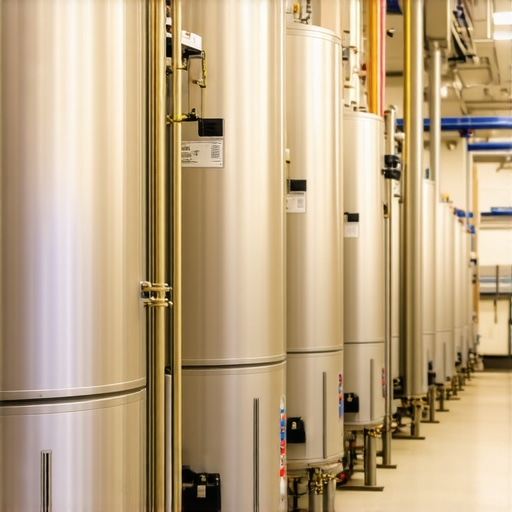
Walk into a hotel mechanical room at 4:00 AM in the middle of a Chicago January, and you will hear a symphony. It is the rhythmic thrum of the circulator pumps, the low roar of the burners, and the steady click-clack of the relay services orchestrating the flow of BTUs. To the average guest, it is invisible. To a facility manager, it is the heartbeat of the business. But to me, a guy who has spent three decades elbow-deep in glycol and combustion soot, that sound is a fragile truce between physics and mechanical failure. When that symphony stops, the silence is deafening—and expensive. In the hospitality industry, a single-point failure in the boiler room is not just a maintenance headache; it is a catastrophe that leads to mass refunds, negative reviews, and a permanent stain on the brand’s reputation.
My old mentor, a grizzled tin knocker and pipe-fitter named Mac, used to scream at me whenever I got too focused on the fancy controls: ‘You can’t move what you can’t touch!’ This was his way of saying that the most sophisticated modulating furnace repair techniques or high-end sensors mean nothing if the physical airflow and hydronic distribution are compromised. He believed that airflow and fluid dynamics were king. ‘If the medium isn’t moving, the heat isn’t grooving,’ he’d bark. This Physics Lesson is the foundation of why redundancy isn’t a luxury for hotels; it is a thermodynamic necessity. You have to understand that we aren’t just heating rooms; we are managing energy transfer across massive scales, often involving energy recovery ventilators to keep the air fresh without dumping all our sensible heat out the exhaust vent.
“The most expensive equipment in the world cannot overcome a bad duct system.” – Industry Axiom
In a cold climate, the enemy is twofold: sensible heat loss and the physical danger of frozen pipes. If a hotel relies on a single massive boiler, they are gambling with the laws of probability. A ‘redundant plan’ doesn’t just mean having a spare part in a dusty cabinet; it means having a lead-lag configuration where two or more units share the load. This is where modulating furnace repair becomes technical art. Modern high-efficiency boilers use modulating burners that can ‘turn down’ their output to match the demand. If you have two boilers at 50% capacity, and one fails, the other can ramp up to 100% instantly. That is redundancy. Without it, you are one cracked heat exchanger away from a cold-dark-start scenario. I’ve seen ‘Sales Techs’ try to push a single high-output unit because it’s a cheaper install, but they aren’t the ones taking the 2:00 AM call when the flame rollout sensor trips and kills the whole building’s heat.
Thermodynamically, we have to look at the ‘Dew Point’ of the flue gas. In high-efficiency condensing systems, we want the water vapor in the exhaust to condense so we can capture that latent heat. But this process is acidic. If your HVAC repair technician isn’t checking the pH of that condensate or ensuring the secondary heat exchanger isn’t clogging with scale, your ‘redundant’ system will fail right alongside your primary. This is especially critical for hotels that offer spa heater services. Pools and spas add a massive latent heat load to the building. If the spa heater fails, guests complain. If the pool’s dehumidification system fails, the building starts to sweat, leading to mold in the wall cavities. You need a warranty service plans that specifically covers these high-demand components, ensuring that HVAC duct sealing is maintained to prevent that humid spa air from migrating into the guest corridors.
“Properly sized equipment is the foundation of a healthy building, but redundancy ensures its survival during extreme peak loads.” – ASHRAE Standard 62.1
We are currently facing the ‘Regulatory Cliff’ of 2025. The transition from R-410A to A2L refrigerants like R-454B is changing how we look at HVAC repair. While boilers use water, the overall climate control of a hotel is an integrated web. Many modern hotels are looking at geothermal heat pump systems as a redundant backup or primary source to lower their carbon footprint and take advantage of rebate application assistance. These systems are incredible for efficiency, but they require a ‘Sparky’ (electrician) and a tech who understands ground-loop pressures. If your geothermal loop goes down, you better have that boiler redundant plan ready to kick in. This integration is part of the heating service innovations transforming 2025 climate control, where hybrid systems are becoming the standard for 100+ room properties.
Don’t forget the kitchen. A hotel’s restaurant is a massive energy sink. Restaurant kitchen exhaust repair is often ignored until the makeup air unit (MAU) fails and the building goes into a negative pressure state. When that happens, the boiler flue might not draft correctly, leading to carbon monoxide risks. Redundancy means having sensors that talk to each other. If the kitchen hood is pulling 5,000 CFM, the MAU better be pushing 5,000 CFM back in. If you want to keep the building efficient, you need a blueprint for cooler summers and warmer winters that accounts for these massive air shifts. Using ‘Pookie’ (mastic) on the duct joints isn’t just about saving pennies; it’s about ensuring the air you paid to heat actually reaches the guest’s face, not the crawlspace.
When I talk about ‘The Trap,’ I’m talking about the facility managers who skip the preventative HVAC repair tips for year-round efficiency. They think they’re saving money by not having a redundant pump or a backup controller. Then, a $50 relay fails, and because they didn’t have relay services or a secondary control loop, the whole $200,000 plant goes offline. I always tell my clients that top HVAC repair strategies to extend your systems life must include a ‘N+1’ philosophy. That means if you need 5 million BTUs to heat the building on the coldest day of the year, you should have 7.5 million BTUs of capacity spread across multiple units. That way, you can perform a modulating furnace repair on one unit in the middle of February without the guests ever knowing there was a problem. That is true hospitality. It is the peace of mind that comes from knowing the physics are on your side because you planned for the mechanical inevitable.
How to Build a Hotel HVAC Redundancy Plan
1. Audit your peak load: Know exactly how many BTUs you need for both space heating and Domestic Hot Water (DHW) during a ‘Design Day’ (the coldest day on record). 2. Implement a Lead-Lag Controller: This ensures that all boilers get equal run-time, preventing one from wearing out while the other sits idle and seizes up. 3. Secure a warranty service plans: Ensure you have 24/7 priority response. In the hotel world, a 4-hour window is the difference between a minor issue and a total evacuation. 4. Maintain the secondary systems: This includes spa heater services and restaurant kitchen exhaust repair, which can impact the main boiler’s load. 5. Check your energy recovery ventilators: If these are clogged, your boiler has to work 30% harder to heat ‘raw’ outside air. 6. Seek rebate application assistance: Many utilities will pay you to install that second, redundant high-efficiency boiler because it stabilizes the grid. Investing in redundancy is the only way to avoid the ‘Scam’ of emergency replacements where you’re forced to buy whatever is in stock, rather than what is right for the building’s thermodynamics.