The Physics of Breathing: Why Your Hardware Store Filter is Lying to You
My old mentor, a grizzled tin knocker named Sarge who had lost three fingers to a shear and half his hearing to a blower motor, used to scream at me in the middle of cramped, frozen crawlspaces: ‘You can’t cool what you can’t touch, and you can’t clean what you don’t measure!’ This was 1994, and Sarge was obsessed with the physics of the ‘boundary layer.’ He knew that airflow matters more than horsepower, and that most homeowners think a $20 pleated filter is a magical shield. It’s not. In fact, if you don’t understand the static pressure in your ducts, that high-MERV filter you just bought is probably suffocating your blower motor faster than a soot-clogged modulating furnace repair could ever hope to fix.
“The most expensive equipment in the world cannot overcome a bad duct system.” – Industry Axiom
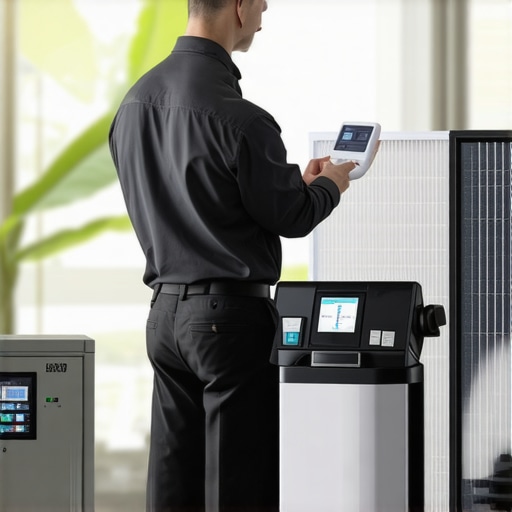
In the cold northern climates where we battle cracked heat exchangers and the constant threat of flame rollout, Indoor Air Quality (IAQ) isn’t a luxury—it’s a survival metric. When we talk about IAQ testing, we aren’t just looking for dust. We are looking at particle counts, VOC (Volatile Organic Compound) concentrations, and moisture levels that lead to biological growth. Slapping a filter in a slot is like putting a band-aid on a broken leg. You need to know why the air is dirty. Is your chimney liner installation failing, allowing combustion gases to backdraft into the living space? Is your pellet stove repair overdue, leaving fine particulate matter to circulate through your return air? Without testing, you’re just guessing with your lungs.
Thermodynamic Zooming: The Latent Heat Trap
Let’s talk about the science of the air. When we perform a high-efficiency furnace installation, we aren’t just moving hot air; we are managing enthalpy. In a cold climate, the air gets dry—sensible heat is easy to manage, but latent heat is the killer. If your IAQ testing shows high humidity in a sealed basement, that moisture is a transport mechanism for mold spores. A filter won’t stop a spore that has already colonized your evaporator coil because your static pressure is too high. Hospital HVAC zoning techniques are now trickling down to residential homes, using pressure differentials to keep ‘dirty’ air in the mudroom and ‘clean’ air in the bedrooms. This requires sophisticated sensors, not just a thicker piece of fiberglass.
The R-454B Transition and the 2025 Regulatory Cliff
We are currently standing at the edge of the R-454B refrigerant transition services era. The ‘gas’ or ‘juice’ we’ve used for years (R-410A) is being phased out for A2L refrigerants, which are ‘mildly flammable.’ Why does this matter for IAQ? Because these new systems require integrated leak detection sensors that tie directly into your home’s ventilation strategy. If you’re planning an AC installation in 2025, you aren’t just buying a condenser; you’re buying a chemical management system. A proper IAQ test today sets the baseline for these future systems, ensuring your ‘suction line’ is ‘beer can cold’ without off-gassing toxic levels of new-age refrigerants into your ductwork.
“Ventilation is the process of supplying or removing air by natural or mechanical means to or from any space. Such air may or may not have been conditioned.” – ASHRAE Standard 62.2
The Anatomy of Airflow: Pookie, Static, and Screeching Bearings
When I walk into a house for 24/7 heating emergency response, I don’t look at the thermostat first. I listen. I listen for the screech of a bearing fighting against a high-static load. When you buy those ‘ultra-allergen’ filters without an IAQ test, you increase the resistance (static pressure) the fan has to push against. It’s like trying to breathe through a wet wool blanket. Eventually, the ‘Sparky’ (electrician) has to come out because you’ve fried the control board, or I’m there doing a furnace tune-up services only to find the blower motor is running at 200 degrees. We use ‘Pookie’ (mastic) to seal duct leaks because air takes the path of least resistance. If your ducts aren’t sealed, your expensive filter is only cleaning 60% of the air while the rest is pulled from your dusty, spider-infested crawlspace.
Why Radiators and Boilers Aren’t Exempt
Even if you have hydronic heating, IAQ testing is vital. A radiator replacement might fix a leak, but it doesn’t address the dust mites living in the convection fins. In older North-zone homes, the lack of forced air means zero filtration. We often see homeowners suffer from ‘Sick Building Syndrome’ because they have no mechanical ventilation. Testing can reveal if you need an ERV (Energy Recovery Ventilator) to swap stale, CO2-heavy indoor air with fresh outdoor air without losing your heat. This is far more effective than any ‘purple’ filter from a big-box store.
The Verdict: Testing Over Guessing
If you want to protect your family and your equipment, stop buying filters based on marketing gimmicks. Get a professional IAQ profile. We check for the ‘silent killers’: carbon monoxide from a cracked heat exchanger (which we often find during preventative HVAC repair), radon, and ultra-fine particulates. Don’t be the homeowner who spends $15,000 on a new system because they choked the old one to death with a ‘high-performance’ filter. Physics doesn’t care about your filter’s MERV rating; it only cares about the CFM (Cubic Feet per Minute) and the delta-T.