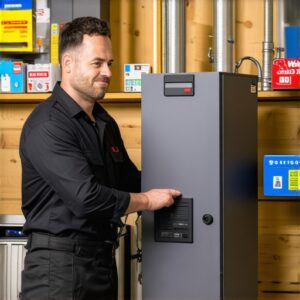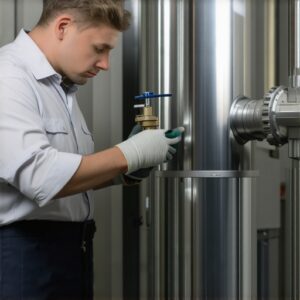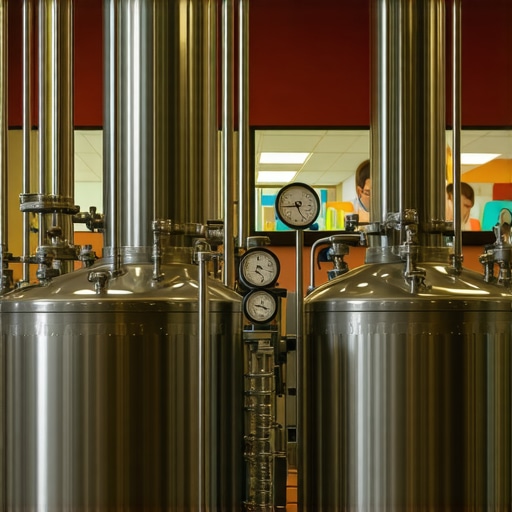
I remember the sound of a failing school boiler like it was yesterday—a rhythmic, metallic thudding that resonated through the hallways of a 1950s elementary school in the dead of January. It wasn’t just a nuisance; it was the sound of a building’s heart failing. By the time I arrived at the mechanical room, the temperature in the third-grade wing had plummeted to 54 degrees. You can’t teach a kid who’s shivering, and more importantly, you can’t keep a kid healthy in a building that doesn’t breathe or heat correctly. Administrators often overlook the boiler room until the pipes start banging, but as a guy who’s spent three decades in the trenches, I can tell you that the mechanical integrity of a school is the primary driver of student attendance. When the heat fails, the humidity spikes or drops, and the ventilation stagnates, you aren’t just looking at a repair bill; you’re looking at a localized health crisis.
The Physics of Circulation: Why Horsepower Isn’t Enough
My old mentor, a man who could diagnose a bad burner just by the smell of the flue gas, used to scream at me, ‘You can’t heat what you can’t touch!’ He was talking about the fundamental physics of airflow and hydronic circulation. In a school setting, the boiler is the engine, but the distribution system is the circulatory system. If the pumps are cavitating or the radiant floor heating installation was botched by a ‘tin knocker’ who didn’t understand flow rates, the boiler’s horsepower is irrelevant. Heat transfer is a delicate dance. In a water-based system, we’re looking at sensible heat transfer from the burner to the water, then from the water to the heat exchangers in each classroom. If those exchangers are coated in dust or if the system has air pockets, the heat never reaches the students. This is where top HVAC repair strategies become critical. We’re not just ‘fixing’ things; we’re optimizing the thermal conductivity of the entire facility.
“The most expensive equipment in the world cannot overcome a bad duct system.” – Industry Axiom
The Attendance Killer: Carbon Dioxide and Viral Load
Why does school boiler maintenance affect attendance? It’s not just about warmth; it’s about the air quality that comes with it. Modern school HVAC systems rely on demand-controlled ventilation (DCV). When a boiler is struggling or the system is cycling poorly, maintenance staff often throttle back the fresh air intake to save energy. This is a massive mistake. High CO2 levels lead to lethargy and ‘brain fog,’ but worse, poor ventilation increases the ‘viral load’ in the air. If you aren’t moving enough cubic feet of air per minute (CFM) because you’re trying to keep a dying boiler from redlining, you are essentially creating a petri dish. Using occupancy sensor installation helps us track where students are and direct conditioned air where it’s needed, rather than wasting energy on an empty gymnasium. This level of precision is what differentiates a modern facility from a drafty relic. We also see schools looking at heating service innovations like remote thermostat access to ensure that the building is pre-heated before the first bell rings, preventing the thermal shock that often leads to cracked heat exchangers.
The Forensic Diagnosis of a School’s Heating Heart
When I perform a forensic diagnosis on a school system, I’m looking for the ‘silent killers.’ One of those is scaling in the boiler tubes. Just a millimeter of mineral buildup can drop efficiency by 10% and cause the metal to overheat and crack. If I see a ‘Sparky’ (electrician) hacking into the control board of a high-efficiency unit because the sensors keep tripping, I know there’s an airflow or pressure issue they’re trying to bypass. You can’t bypass physics. We look for flame rollout and check the ‘gas’ (refrigerant or natural gas levels) to ensure the combustion is stoichiometric—perfectly balanced. If you’re smelling something sour or acidic near the mechanical room, that’s not just ‘old building smell’; that’s likely a combustion leak or a compressor burnout in the chiller section. This is why identifying when furnace repair is urgent is vital for school safety. We don’t play games with carbon monoxide.
Modernizing for the 2025 Regulatory Cliff
We are currently facing a massive shift in the industry with the transition to low-GWP refrigerant retrofits. For schools, this means the old R-410A systems are becoming legacy equipment. If your school is still relying on old technology, the cost of ‘juice’ for your air conditioning and heat pump systems is going to skyrocket. This is why we’re seeing a surge in financing for heat pump installs. These systems are significantly more efficient than old-school boilers for shoulder-season heating. However, they require precision. You can’t just slap a heat pump on a system designed for a boiler. You need to understand the ‘suction line’ temperatures and ensure that the indoor coils are sized for the lower discharge temperatures of a heat pump. For some smaller rural districts, we even see a return to basics with pellet stove repair for localized auxiliary heating, though I always caution against ventless gas heater services in a classroom setting—they dump moisture and combustion byproducts directly into the breathing zone, which is a recipe for mold and respiratory issues.
“Ventilation systems shall be designed to provide outdoor air at a rate not less than that specified in Table 6.2.1.1.” – ASHRAE Standard 62.1
The Logic of Preventive Maintenance
Predictive maintenance alerts are the new frontier. Instead of waiting for a teacher to complain that her room is 60 degrees, modern sensors tell me when a circulator pump is drawing too many amps or when the static pressure in the ducts is rising due to a clogged filter. This is the difference between a five-minute filter change and a $5,000 blower motor replacement. Priority service memberships for school districts ensure that when the polar vortex hits, their technician is on-site before the students arrive. We use ‘Pookie’ (mastic) to seal every joint in the ductwork because we know that a 10% leak in the attic is 10% of the taxpayer’s money heating the squirrels. Comfort is a matter of physics, not magic. If you want kids in seats, you need the air to be ‘beer can cold’ in the summer and the radiant floors to be ‘tootsie-toastie’ in the winter. For more on how we approach these complex systems, check out our ultimate guide to installation. When we talk about school attendance, we are talking about mechanical reliability. A well-maintained boiler doesn’t just provide heat; it provides a safe, oxygenated environment where learning is actually possible. Don’t let a $20 capacitor or a lack of grease on a bearing be the reason a school shuts down for a week. Maintenance isn’t an expense; it’s an attendance strategy.