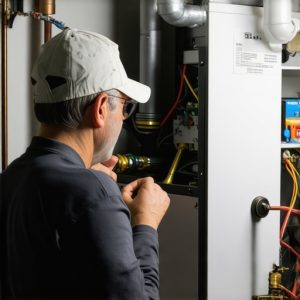
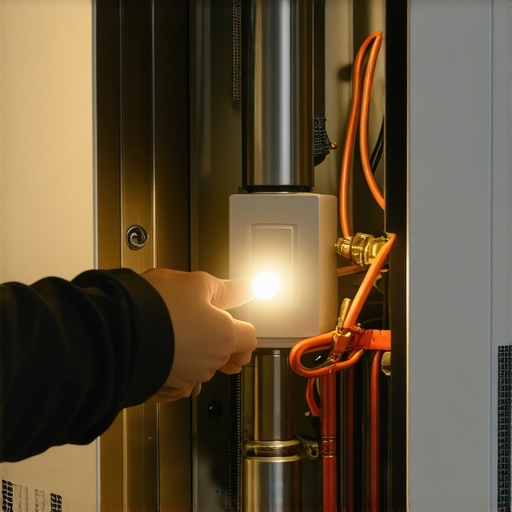
The sound usually starts at 3 AM when the outdoor ambient temperature is hovering in the single digits and your breath is visible in the hallway. You hear that distinct, rhythmic click-click-click coming from the utility closet. It’s the sound of a machine trying to fulfill its thermodynamic destiny and failing. As someone who has spent thirty years crawling through fiberglass-filled crawlspaces and dodging ‘Sparky’s’ questionable wiring, I can tell you: that click is the furnace’s way of screaming for help. Most homeowners think it’s a ‘broken motor,’ but in the world of high-efficiency combustion, the truth is usually far more microscopic and mechanical.
My old mentor, a grizzled tin knocker named Gus who could size a return air drop by looking at a shadow, used to grab me by the collar when I’d rush toward a gas valve. ‘You can’t burn what you can’t breathe, kid!’ he’d bark. ‘This is why airflow matters more than horsepower.’ He was right. That clicking sound is the sequence of operations hitting a brick wall. Before you let some ‘Sales Tech’ convince you that you need a $15,000 modulating furnace because of a clicking relay, you need to understand the physics of what’s happening inside that sheet metal box. If you’re wondering how to identify when furnace repair is urgent and why, that clicking sound is your first Red Alert.
“Properly functioning combustion equipment must have an adequate supply of air for combustion, ventilation, and dilution of flue gases.” – ASHRAE Standard 62.1
The Anatomy of the Click: The Sequence of Operations
When your smart thermostat setup sends a 24-volt signal to the furnace control board, it doesn’t just ‘turn on.’ It’s a choreographed dance of physics. First, the inducer motor—the small fan that clears the ‘bad air’—must ramp up. Once it creates enough negative pressure, a small rubber tube triggers a pressure switch. Only then does the igniter get the ‘juice.’ If the igniter (the glow plug) is cracked, or if the relay on the board is sticking, you get the click, but no fire. This is where efficient HVAC repairs begin: by following the voltage, not the guesswork.
The Flame Sensor: The $20 Part That Holds You Hostage
If your furnace starts for five seconds and then dies, the click you hear is the gas valve slamming shut. This is almost always the flame sensor. It’s a simple rod of stainless steel that uses flame rectification to tell the board, ‘Hey, we have fire, don’t blow the house up.’ Over time, carbon buildup—what we techs call ‘soot’—insulates the rod. The board loses the signal and cuts the gas. I’ve seen ‘Sales Techs’ quote a full AC installation or furnace replacement for a dirty sensor that just needed a bit of steel wool. It’s a scam, plain and simple. This is why preventative HVAC repair tips always include cleaning the ignition components before the first frost hits.
Climate Zone Impact: The North’s Polar Vortex Problem
In cold climates like Chicago or the Northeast, the ‘click’ often points to a different beast: frozen condensate lines or blocked PVC vents. High-efficiency furnaces (90% AFUE and above) produce water. If that water can’t drain because of an ice-clogged P-trap in an unconditioned basement, the pressure switch won’t close. The inducer spins, the relay clicks, but the gas never flows. This is a common issue we see during emergency heating repair calls. If your furnace is located in a freezing attic, ensure the drains are wrapped in heat tape and sealed with plenty of ‘Pookie’ (mastic) to prevent air leaks that cause localized freezing.
“The most expensive equipment in the world cannot overcome a bad duct system or poor maintenance habits.” – Industry Axiom
Smart Systems and Zoning: Modern Complexity
With today’s heating service innovations, the clicking might be coming from your zoning system installation rather than the furnace itself. If a damper motor is stripped, the zone board might be cycling the furnace on and off rapidly. Integrating smart building management allows us to see these errors remotely, but it doesn’t change the mechanical reality. Whether you have a basic blower motor replacement or a complex modulating furnace repair, the logic remains: fuel, air, and spark must meet at the exact right millisecond.
Repair vs. Replace: The Financial Reality
If your heat exchanger is cracked, the ‘click’ is the least of your worries—you’re looking at a carbon monoxide factory. At that point, financing for heat pump installs or a new high-efficiency gas unit becomes the only logical path. However, for most clicking issues, a simple furnace tune-up services package—one that actually includes checking the capacitor and cleaning the burners—will buy you another five years. Don’t let a ‘Sales Tech’ turn a $300 fix into a $10,000 debt. If you’re unsure, contact us for a second opinion from someone who actually knows how to use a multimeter. Comfort is physics, not magic, and it certainly shouldn’t be a scam.