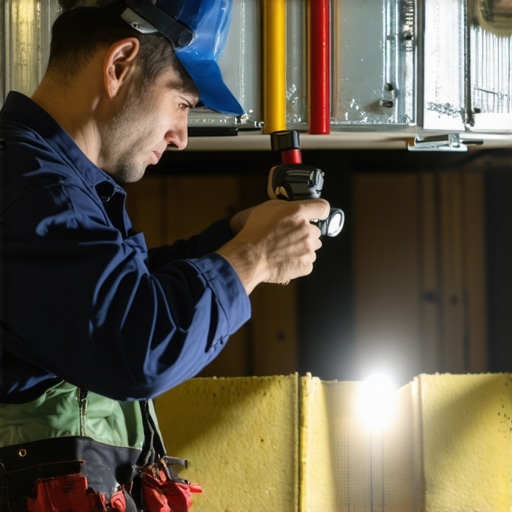
You’re sitting in a house that feels like a meat locker, waiting for the ‘furnace whisperer’ to arrive, and when I finally get there, what do I do? I don’t even look at the burners first. I walk straight to your return air grill and start poking around at your trunk line. You probably think I’m stalling or looking for a way to pad the bill. I’ve seen that look on homeowners’ faces for thirty years, usually right before I have to tell them their brand-new, high-efficiency furnace is dying because some tin knocker thirty years ago thought a 10-inch return was ‘good enough’ for a three-ton blower. The truth is, the most expensive furnace in the catalog is just a shiny paperweight if it can’t move the air it creates. My old mentor, a guy who could smell a cracked heat exchanger from the driveway, used to scream at me, ‘You can’t heat what you can’t touch!’ He was right. If the air isn’t moving across that heat exchanger, the thermal energy just sits there, cooking the internal components until the safety limits decide they’ve had enough of your neglect.
“The most expensive equipment in the world cannot overcome a bad duct system.” – Industry Axiom
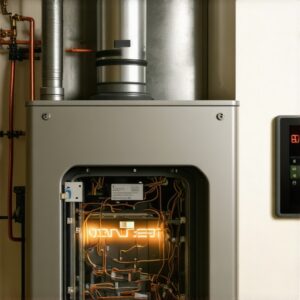
When I’m looking at your ducts, I’m looking for the ‘choke point.’ Think of your HVAC system like a set of lungs. If you try to run a marathon while breathing through a cocktail straw, you’re going to collapse. That’s exactly what happens when we perform a limit switch replacement. That little sensor didn’t fail because it was cheap; it failed because the furnace was suffocating. The heat exchanger reached temperatures high enough to warp the metal because the static pressure was too high. Total External Static Pressure (TESP) is the metric that separates the pros from the ‘Sales Techs’ who just want to sell you a 98% AFUE unit and run. If the static pressure is too high, the blower motor works double-time, the heat builds up, and eventually, the limit switch trips to keep your house from catching fire. Replacing the switch without fixing the duct is like putting a band-aid on a gunshot wound. In colder climates like ours, where the furnace runs for six months straight, that kind of thermal stress is a death sentence for the equipment.
This is why a two-stage furnace installation requires a deep dive into the existing ‘Pookie’ (mastic) and metal. A two-stage unit is designed to run at a lower capacity for longer periods, which is great for comfort and efficiency, but only if the ductwork can handle the specific CFM (cubic feet per minute) requirements of both stages. If I’m installing a high-end system and I don’t check your return drop, I’m doing you a disservice. I’ve seen plenty of ‘Sparkies’ or cut-rate installers slap a new box in and wonder why the secondary heat exchanger is clogged with condensate or why the inducer motor sounds like a bag of marbles after two seasons. It’s always the airflow. Even with biomass boiler services or specialized electric heater services, the physics of heat transfer remain the same: if you don’t have the surface area and the velocity, you don’t have heat.
“Standard practice requires that duct systems be sized according to ACCA Manual D to ensure the blower can deliver the required air volume against the system’s resistance.” – ACCA Manual D
Let’s talk about the ‘The sound of silence’—that terrifying moment the furnace cuts out in the middle of a polar vortex. Often, the homeowner thinks it’s a gas valve or a dead igniter. But I’ll go to the programmable thermostat programming and see that the system has been short-cycling for weeks. Why? Because the ducts are restricted. In a restaurant kitchen exhaust repair scenario, we see this in the extreme; if the makeup air isn’t right, the whole building goes into negative pressure. In your home, it’s more subtle. You get hot spots, cold spots, and a furnace that sounds like a jet engine taking off. That noise isn’t ‘power’; it’s the sound of air struggling to bypass a restrictive filter or a crushed flex duct in the crawlspace. If you’re looking for financing for heat pump installs, you better make sure your technician includes a ductwork evaluation in the quote, or you’ll be paying for efficiency you’ll never actually feel. Whether it’s a wall furnace installation or a standard hot water heater repair, the venting and the air paths are the most critical components of the system. I’ve spent too many nights on rooftops and in frozen attics to let a bad duct ruin a good compressor or a clean heat exchanger. Don’t be the homeowner who buys a Ferrari engine and puts it in a tricycle frame. Fix the ducts, check the static, and let the machine breathe.