The coldest night of the year doesn’t announce itself with a bang; it announces itself with a click, a hiss, and then a deafening, cold silence. You’re lying in bed, waiting for the familiar rumble of the furnace, but it never comes. You head down to the basement, the floorboards freezing under your feet, and you see it: the pilot light is out, or the burners refuse to stay lit for more than five seconds. This isn’t a ‘ghost in the machine’—it’s physics. Specifically, it’s a failure of the thermocouple, that copper-clad sentinel that stands between you and a gas leak. If you’ve pulled that little rod out only to find it covered in a thick, velvety layer of black carbon, you’ve got a soot-loading problem. And as my old mentor, a man who had more silver in his hair than a tin knocker has in his truck, used to scream at me, ‘You can’t cool what you can’t touch, and you can’t heat what you can’t breathe!’ This is the primary law of the HVAC jungle: airflow and combustion are two sides of the same coin.
“The most expensive equipment in the world cannot overcome a bad duct system.” – Industry Axiom
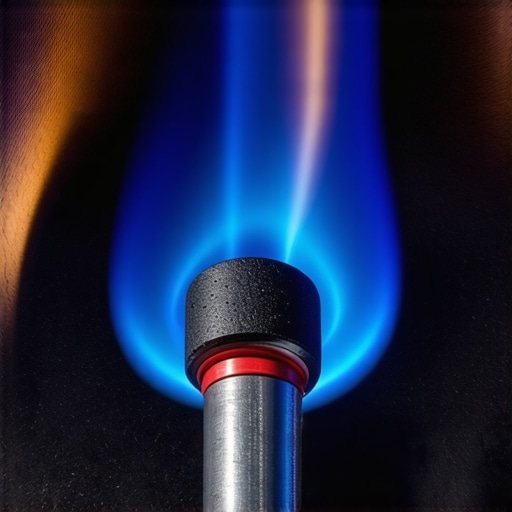
To understand why your furnace ignition repair is failing, we have to look at the thermodynamic zooming of the thermocouple itself. It operates on the Seebeck Effect—a phenomenon where two dissimilar metals, joined at one end, produce a millivolt signal when heated. We’re talking about 25 to 30 millivolts of pure, thermoelectric potential. That tiny electrical current is the only thing holding the electromagnet in your gas valve open. When soot builds up on the tip of that thermocouple, it acts as a high-efficiency thermal insulator. Carbon is a fantastic blocker of heat transfer. The flame hits the soot, the soot gets hot, but the heat never penetrates to the junction of the metals. The millivolts drop, the gas valve thinks the flame is out, and it snaps shut to prevent your house from becoming a bomb. This is why how to identify when furnace repair is urgent and why often starts with understanding these safety cycles. If you’re constantly resetting your system, you’re not fixing a problem; you’re ignoring a symptom.
Soot isn’t just ‘dirt.’ It is the physical manifestation of incomplete combustion. In a perfect world, your furnace would mix exactly 10 parts of air with 1 part of natural gas, resulting in blue flames, water vapor, and carbon dioxide. But we don’t live in a perfect world. We live in a world where dryer vent cleaning is ignored, and air handler repair is deferred. When a furnace is starved for oxygen—what we call being ‘under-aired’—the carbon in the fuel doesn’t burn off. It clumps together and sticks to the nearest cool surface, which is usually your burner assembly or your thermocouple. This is often exacerbated by manual J calculations being ignored during the original installation. An oversized furnace in a small house will short-cycle, never reaching the steady-state temperatures required for a clean burn. This constant ‘on-off’ dance prevents the heat exchanger from staying above the dew point, leading to condensation and, you guessed it, more soot.
“Improperly sized equipment will fail to maintain moisture control and result in premature component failure.” – ACCA Manual J
Let’s talk about the anatomy of the fix. First, check your combustion air. If your mechanical room is sealed tighter than a drum, your furnace is trying to breathe through a straw. Sometimes, something as simple as a clogged dryer vent nearby can create a pressure imbalance that pulls flue gases back into the burner box. If you’ve ruled out oxygen starvation, look at the gas pressure. A ‘Sparky’ might tell you it’s an electrical issue, but a real tech knows to check the manifold pressure. High pressure leads to ‘over-firing,’ where the flame is too large and ‘laps’ against the metal, cooling the flame front and depositing carbon. In dry climates, you might see evaporative cooler services being performed on the same property where a furnace is soot-loading; the humidity changes from those units can actually affect the density of the air, throwing off the combustion mix if the steam humidifiers or other environmental controls aren’t calibrated correctly with a modern thermostat installation.
For those looking toward the future, the industry is shifting toward low-GWP refrigerant retrofits and dual fuel heat pump systems. In a dual fuel setup, you have an electric heat pump handling the moderate cold and the gas furnace only kicking in during the ‘Polar Vortex’ depths. This reduces the runtime of your gas burners, but it also means that when they DO run, they need to be pristine. If your system is old and the heat exchanger is starting to pit or crack, cleaning the thermocouple is just putting a band-aid on a gunshot wound. You need to know the furnace repair myths debunked by industry experts before you spend $500 on a cleaning that should have been a replacement. With geofencing temperature control now standard, your system is being asked to ramp up and down more aggressively than ever before. This thermal stress can lead to the very soot issues we’re discussing. Always ensure that any preventative HVAC repair tips for year-round efficiency you follow include a full combustion analysis to ensure your ‘gas’ is burning blue, not orange.