My old mentor, a grizzly veteran who’d spent more time in crawlspaces than in his own living room, used to scream at me whenever I’d eye a job too quickly: ‘You can’t move heat if you can’t move air, and you can’t move air if you don’t understand the draft!’ He wasn’t just talking about a blower motor in a furnace. He was talking about the fundamental physics of pressure. This was never more apparent than on a call in late October in a drafty farmhouse where the owner thought a wood burning stove installation meant just sticking a pipe into an old brick chimney. The house smelled like a campfire, and not in the nostalgic way—more like the ‘about to lose your insurance’ way. That’s when the physics lesson really hits home. If you think a stainless steel chimney liner is an optional upsell, you’ve been listening to a ‘Sales Tech’ trying to meet a quota instead of a technician who understands the thermodynamic nightmare of a cold masonry flue.
The Forensic Diagnosis: Why Your Old Chimney is Killing Your Efficiency
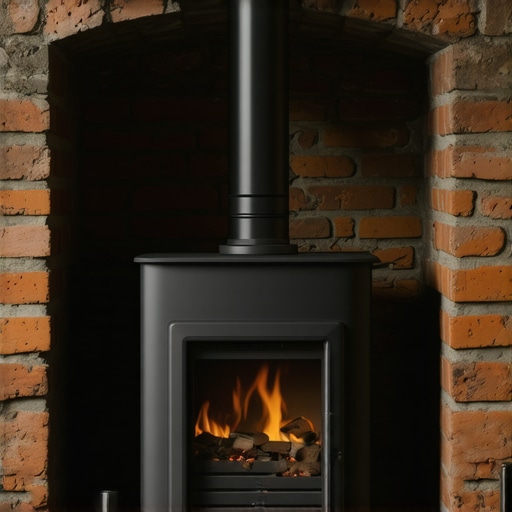
When we talk about wood burning stove installation, we aren’t just talking about a cast-iron box. We are talking about an atmospheric engine. For that stove to burn clean, it needs to evacuate combustion gases at a specific velocity. Most older homes have masonry chimneys with clay tile liners. These tiles were designed for open fireplaces, which are massive, inefficient heat-wasters. When you vent a high-efficiency wood stove into a 12×12 clay tile flue, the smoke slows down, cools off, and dies. This is where thermodynamic zooming becomes critical: as the flue gases cool below their dew point—usually around 250°F—they undergo a phase change from a gas to a liquid and then a solid. This is the birth of creosote. Creosote isn’t just soot; it’s a highly flammable fuel that coats the inside of your chimney like a thick, acidic tar. A stainless steel liner reduces the cross-sectional area of the flue, which keeps the gases hot and moving fast, shooting them out of the house before they can condense.
“The most expensive equipment in the world cannot overcome a bad duct system, and the finest wood stove cannot overcome a cold, oversized flue.” – Industry Axiom
In the frozen North, where the polar vortex turns your attic into a meat locker, the temperature differential (Delta T) between the inside of your flue and the outside air is extreme. This is why IAQ improvement services often start with the heating source. If your flue isn’t drafting properly, you aren’t just losing heat; you are leaking carbon monoxide and particulates back into the living space. This is a common issue I see when performing wall furnace installation or servicing old boiler systems—people forget that the chimney is the exhaust pipe of the home.
The Metallurgy of Safety: 304 vs. 316 Stainless Steel
Not all liners are created equal. If some ‘tin knocker’ tries to sell you a cheap aluminum liner for a wood stove, kick them out of your house. Aluminum is for dryer vent cleaning and maybe some gas appliances, but wood fire is a different beast. For wood, you need 304 or, preferably, 316-grade stainless steel. The 316 alloy contains molybdenum, which gives it superior resistance to the acidic condensate found in wood smoke. When we perform a flue pipe installation, we aren’t just fitting pieces together; we are creating a continuous, sealed pathway that can withstand temperatures up to 2100°F during a chimney fire. This is the ‘insurance policy’ that keeps your family safe while you’re asleep.
The Airflow Ecosystem: Beyond the Stove
Your home is a system. You can’t just look at the stove in isolation. I’ve seen cases where a perfectly installed wood stove starts back-puffing smoke every time the kitchen exhaust fan or the dryer turns on. Why? Because the house is too tight. This is where dryer vent cleaning and proper ventilation come into play. If your dryer is struggling against a clogged vent, it’s pulling even more air from the house, creating a negative pressure environment that can actually pull smoke down the chimney. It’s the same logic we use when dealing with humidifier installation or bypass humidifier repair—you have to balance the moisture and the pressure or the whole system fails.
“All chimneys must be lined and the liner must be capable of containing the products of combustion.” – NFPA 211 Standards
If you’re upgrading your heating system, perhaps adding heating service innovations like remote thermostat access for your backup furnace, don’t neglect the manual labor of the wood stove. A stainless steel liner makes the chimney easier to clean, more efficient to run, and significantly safer. I’ve seen enough cracked heat exchangers during industrial heater services to know that metal fatigue is real. A masonry chimney expands and contracts at different rates than the rest of your house. A stainless steel liner is flexible, allowing it to move without cracking the structural brickwork.
The Maintenance Reality: Don’t Be a Victim of the ‘Scam Tune-Up’
I despise ‘Sales Techs’ who walk into a house and immediately try to sell a $10,000 chimney rebuild. Most of the time, a professional liner installation solves 99% of draft issues. However, you still need to maintain the rest of your HVAC equipment. Just because you have a wood stove doesn’t mean you can ignore your AC’s capacitor replacement services or forget how to identify when furnace repair is urgent. In fact, using a wood stove often dries out the air so much that you’ll need to look into humidifier installation to keep your hardwood floors from shrinking and your nose from bleeding. If your current humidifier is leaking, you need bypass humidifier repair immediately to prevent mold growth in your plenums.
Conclusion: Physics Always Wins
At the end of the day, a wood stove is a beautiful way to heat a home, but it’s a machine that demands respect. Without a stainless steel liner, you are fighting a losing battle against physics. You are allowing creosote to build up, you are wasting wood, and you are risking a house fire. If you are serious about your home’s safety and efficiency, contact us to discuss your installation options. Whether you need wall furnace installation or a complex flue liner, remember: airflow is king, and pookie (mastic) belongs on duct seams, not on chimney cracks. Invest in the liner, keep your flue hot, and let the physics work for you instead of against you. “