The Physics of Moisture: Why Your Old Mentor Was Right
My old mentor, a grizzled veteran who could diagnose a compressor by the vibration in his teeth, used to scream at me every time I reached for a bypass humidifier: ‘You can’t cool what you can’t touch, and you can’t humidify what you haven’t boiled!’ Back then, I thought he was just being a cranky old tin knocker. Thirty years later, after gutting countless ‘mold-factory’ drum units and seeing the pathetic output of evaporative pads in high-efficiency systems, I realize he was preaching the gospel of thermodynamics. In the bone-chilling winters of the North, where we deal with boiler repair services and cracked heat exchangers, humidity isn’t just a comfort luxury—it’s a requirement for the structural integrity of your home. As we move into 2026, the industry is finally catching up to what we veterans already knew: steam is king.
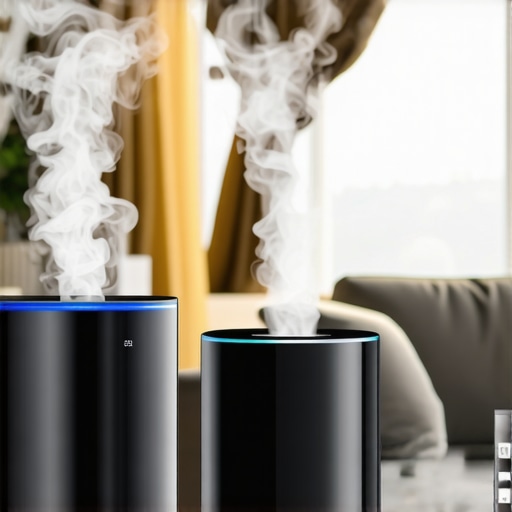
When you heat air, its capacity to hold moisture increases, which causes the relative humidity to tank. Traditional bypass humidifiers rely on the furnace’s sensible heat to evaporate water off a pad. It’s a lazy process. Steam humidifiers, however, use electrode technology or heating elements to create a phase change independently. We are talking about the latent heat of vaporization—roughly 970 BTUs per pound of water. If your system isn’t hitting that mark, you aren’t humidifying; you’re just making your ductwork damp and inviting a biology project to grow in your plenum. [IMAGE_HERE]
1. Independent Operation and the Geothermal Shift
The biggest reason steam beats traditional models in 2026 is the rise of low-temperature heating. Between geothermal heat pump systems and modern modulating furnaces, the air coming out of the vents isn’t the 140°F ‘scorcher’ air of the 1980s. It’s often a mild 90-100°F. Traditional evaporative humidifiers starve at these temperatures because there isn’t enough sensible heat to drive evaporation. Steam humidifiers don’t care if your heat pump is running a mild cycle or if you are utilizing financing for heat pump installs to switch to a greener footprint. Because they boil their own water, they deliver moisture regardless of the ‘juice’ running through your coils.
“The most expensive equipment in the world cannot overcome a bad duct system, nor can it compensate for the lack of controlled latent load management in tight envelopes.” – Industry Axiom adapted from ACCA Manual J
2. Hygiene, Minerals, and the ‘Pookie’ Factor
I’ve seen bypass humidifiers that looked like a mineral mine after three seasons. All those minerals stay on the pad, or worse, get blown into your lungs. Steam canisters in 2026 models are self-contained. When the mineral concentration gets too high, the unit drains itself and refills. It’s a controlled purge. If you are worried about air quality, especially when integrating heat recovery ventilators (HRVs) into a tight home, you can’t afford the ‘swamp’ smell of an old-school drum. We use ‘Pookie’ (mastic) to seal every joint in the ductwork because we want total control over the environment. Steam gives you that control. It’s sterile. It’s pure. It’s physics, not magic.
3. The Intelligence Gap: Predictive Maintenance and 2026 Tech
In the old days, you knew your humidifier was broken because your piano went out of tune or your nose started bleeding. In 2026, we have predictive maintenance alerts. Modern steam units are no longer ‘dumb’ boxes. They integrate directly with your voice control setup Alexa Google and provide real-time data on canister life. This is a far cry from the ‘Sales Tech’ scams I’ve spent my career debunking, where they try to sell you a whole new system because a $20 part failed. These units tell you exactly what’s wrong before it happens. Plus, with leak detector integration, the system will shut off the water supply the second it senses a drop in the pan, saving your finished basement from a ‘commercial furnace repair’ level disaster.
4. Precision Control and the ‘Cold Swamp’ Mitigation
In the North, we fight ‘Cold Swamp’ syndrome. This happens when an oversized unit (usually sold by a guy in a shiny suit who didn’t do a Manual J) short cycles. It cools the air but doesn’t run long enough to handle the humidity in summer, or it heats the air but leaves it dry as a bone in winter. Steam units, paired with a professional thermostat installation, allow for ‘humidity on demand.’ This means the humidifier can call for the indoor blower to run even if there is no call for heat. This is crucial for maintaining the 35-45% RH sweet spot.
“Ventilation systems shall be designed to prevent moisture accumulation that could lead to mold growth, ensuring the building envelope remains under positive pressure in humid climates.” – ASHRAE Standard 62.1
The Verdict from the Rooftop
Stop falling for furnace repair myths that claim bypass units are ‘just as good.’ They aren’t. They waste gallons of water down the drain for every ounce they put in the air. If you are already looking into an annual heating inspection or considering commercial furnace repair for your property, it’s time to look at the humidifier. Steam is more efficient, more hygienic, and built for the high-tech reality of 2026 climate control. Don’t let a ‘sparky’ or a ‘sales tech’ tell you otherwise—moisture is a science, and steam is the only way to master it. Check out more heating service innovations to see how the industry is changing for the better.