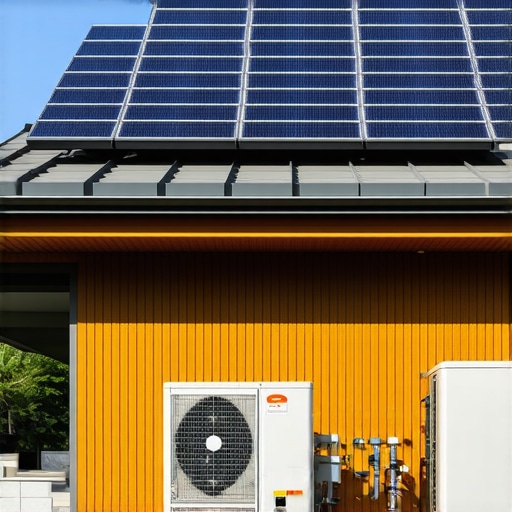
The 2025 Refrigerant Cliff and Why Your Wallet is in the Crosshairs
I’ve spent three decades dragging my tool bag through crawlspaces and over frozen parapets, and I can tell you this: the industry is about to hit a wall. As we barrel toward 2026, the old R-410A gas (the ‘juice’) is being phased out in favor of low-GWP refrigerant retrofits. If you think your power bill is high now, wait until you’re trying to run an inefficient, leaking system on a refrigerant that costs more per ounce than a decent steak. I recently followed a ‘Sales Tech’—one of those guys who spends more time on his hair than his manifold gauges—who told a homeowner her steam boiler was a ‘ticking time bomb’ and quoted her twenty-two grand for a full swap. I walked in, saw the boiler was fine, and realized the pilot wouldn’t stay lit because of a soot-covered thermocouple. A thermocouple replacement and a quick cleaning of the sight glass saved her $21,970. That’s the difference between a technician and a salesman. But even with a well-maintained system, the new SEER2 regulations change the game. SEER2 isn’t just a marketing buzzword; it’s a shift in how we measure efficiency under real-world static pressure. If your ductwork is ‘choking’ your unit, your SEER rating is a lie. Real efficiency comes from how we handle the physics of heat transfer in the harsh Northeast winters.
“The most expensive equipment in the world cannot overcome a bad duct system.” – Industry Axiom
1. Dual Fuel Heat Pump Systems: The Hybrid Workhorse
In our climate, a standard air-source heat pump used to be a joke once the temp dropped below 30°F. Not anymore. A dual fuel heat pump system pairs an electric heat pump with a variable speed furnace. This is the ultimate hedge against energy prices. When it’s 40°F, the heat pump pulls heat from the outside air (yes, there is heat in 40-degree air) using the refrigeration cycle. When the ‘polar vortex’ hits and the heat pump hits its ‘balance point,’ the gas furnace kicks in to provide that blast of heat. This prevents the dreaded ‘auxiliary heat’ strips from kicking on, which is basically like trying to heat your house with a giant toaster—it’ll bankrupt you. For more on high-end configurations, see the ultimate guide to AC installation. You need a Tin Knocker who knows how to size the plenum so the transition between the coil and the furnace doesn’t create a static pressure nightmare.
2. Variable Speed Air Handler Repair & Optimization
If your indoor blower motor only has two settings—’Off’ and ‘Hurricane’—you are hemorrhaging money. Modern air handler repair often involves upgrading to or maintaining ECM (Electronically Commutated Motors). These motors don’t just turn on; they ramp up slowly, matching the exact CFM (cubic feet per minute) required to move air through the house. This is critical for steam boiler repair scenarios where you might be using a hydro-coil for backup. When the air moves slower over the evaporator coil in summer, it spends more time below the dew point. This is Thermodynamic Zooming in action: by slowing the air, we remove more latent heat (humidity). A house at 75°F with 40% humidity feels cooler than a house at 70°F with 60% humidity. You save money because you aren’t fighting the ‘swamp feeling.’ Always check your preventative HVAC repair tips to ensure your blower wheel isn’t caked in dust, which acts like a brake on your efficiency.
“HFC-410A shall be phased down to 15% of its baseline by 2036, necessitating the transition to A2L refrigerants with lower global warming potential.” – EPA Section 608 Regulatory Overview
3. Smart Thermostat Setup & Remote Access: The Brain of the Operation
A smart thermostat setup is more than just a glowing screen on the wall. In the 2026 energy landscape, remote thermostat access allows for ‘load shifting.’ You can pre-cool or pre-heat your home when energy rates are lower, then let the house ‘coast’ during peak hours. This is especially vital if you have an infrared heater installation in a garage or workshop, where costs can spiral. By monitoring the Delta T—the temperature difference between the return air and the supply air—a smart system can alert you to a failing capacitor before it leaves you in the dark. If you’re wondering if your current setup is lying to you, check out these furnace repair myths to see how control systems are often misunderstood.
4. Low-GWP Refrigerant Retrofits and Hydronic Innovation
We are moving into the era of R-454B and R-32. These ‘mildly flammable’ A2L refrigerants require new sensors and specialized training. A low-GWP refrigerant retrofit isn’t always possible on old ‘Sparky-built’ systems from the 90s; sometimes the evaporator coil just can’t handle the different pressure curves. However, for those with hydronic systems, snow melt systems installation integrated with a high-efficiency boiler can actually improve the overall ‘load’ on the boiler, keeping it in condensing mode longer. Condensing boilers love cold return water. The colder the water coming back from your driveway’s snow melt loop, the more the boiler can extract ‘free’ latent heat from the exhaust gases. It’s pure physics. If your boiler is cycling too hard, you might need a variable speed furnace service logic applied to your circulator pumps to keep the flow laminar and efficient.
The Verdict: Comfort is Physics, Not Magic
Don’t let a salesman talk you into a 25-SEER unit if your ductwork is held together with duct tape and ‘Pookie’ (mastic) that’s peeling off. The suction line should be ‘beer can cold,’ and your static pressure should be low. If you’re hearing a screeching bearing or smelling that sour, acidic tang of a compressor burnout, it’s time to stop the bleeding. The 2026 power bills won’t be kind to the unprepared. Whether it’s a simple thermocouple replacement or a complex heating service innovation, the goal is the same: move the heat where you want it, and keep it there efficiently. If you’re smelling something funky or your unit is ‘short cycling,’ don’t wait. You can contact us before the summer rush turns into a mid-winter emergency. Stay cool, stay warm, and keep your airflow unrestricted.