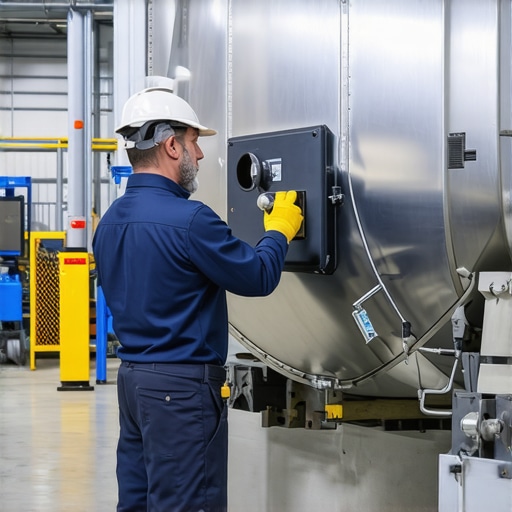
The sound usually starts around 3:00 AM on the coldest Tuesday of January. It’s not a tap; it’s a metallic, rhythmic sledgehammer strike that echoes through the floorboards of a multi-family unit or the high vaulted ceilings of a sanctuary. In the trade, we call it ‘kettling,’ but to a building owner, it sounds like their bank account is about to be emptied by a contractor. I’ve spent thirty winters hauling pipe wrenches into dank mechanical rooms, and if there is one thing I’ve learned, it’s that a banging boiler is a cry for help that most ‘Sales Techs’ will try to silence with a $20,000 replacement quote rather than a real fix.
The Sales Tech Scam: A $45,000 Ghost Story
I remember following one of those ‘shiny truck’ companies into a local church last winter. The deacon was shaking. He had a quote in his hand for $45,000 to replace their entire church heating systems setup because the ‘expert’ told him the cast-iron sections were ‘imploding.’ I walked into that mechanical room, heard the boiler screaming like a jet engine, and realized within five minutes that the unit wasn’t dying—it was choking. The heat exchanger was so fouled with lime and scale that the water was flash-boiling against the metal, creating steam pockets that collapsed with the force of a grenade. A professional heat exchanger cleaning and a $300 expansion tank replacement saved that congregation forty-four grand. That’s the difference between a mechanic and a salesman. You don’t always need a new system; you need someone who understands the thermodynamics of fluid flow and the efficient HVAC repairs that actually matter.
“The most expensive equipment in the world cannot overcome a bad duct system—or in the case of hydronics, a fouled heat exchanger and poor circulation.” – Industry Axiom
1. The Kettling Cure: Heat Exchanger Descaling
In 2026, we are seeing more high-efficiency stainless steel heat exchangers in industrial heater services. These things are marvels of engineering, but they have tight water ways. When minerals in the water ‘plate out’ on the hot surfaces, it creates an insulation layer. This causes the metal to overheat while the water stays cold. The resulting ‘banging’ is the sound of thermal shock. If you don’t perform a chemical flush and heat exchanger cleaning, that metal will eventually fatigue and crack. This is why I tell people to look at top HVAC repair strategies to extend your systems life. A clean exchanger transfers heat at the molecular level without the drama of a water hammer.
2. The Control Revolution: Programming for 2026 Standards
We’ve moved past the days of the simple mercury bulb thermostat. Today, programmable thermostat programming is the brain of the operation, especially in multi-family heating upgrades. The ‘bang’ isn’t always mechanical; sometimes it’s the sound of a zone valve slamming shut because the ‘Sparky’ (electrician) didn’t wire the end-switch correctly, or the occupancy sensor installation is fighting with the boiler’s logic board. In 2026, we’re integrating heat recovery ventilators into these systems to ensure we aren’t just heating the same stale, humid air. If your boiler is short-cycling and banging, it might be because the controls are telling it to fire when the pump isn’t even up to speed yet. Check out how heating service innovations are changing how we talk to our equipment.
3. Industrial Strength: Beyond the Wall Furnace
For those still relying on an ancient wall furnace installation or a legacy wood burning stove installation in a commercial space, the transition to modern hydronics can be a shock. Industrial systems require massive amounts of air, and if your electric heater services aren’t supplementing the load correctly, the boiler becomes a slave to the thermostat. When a large industrial boiler bangs, it can actually move the 4-inch steel headers. This usually points to a ‘near-boiler piping’ error—what we call ‘pumping away’ from the expansion tank. If your ‘Tin Knocker’ didn’t size the flue or the air intake right, you get flame rollout, which is a hell of a lot more dangerous than a simple noise. This is why identifying urgent furnace repair is a life-saving skill.
“Proper venting and combustion air are non-negotiable for the safe operation of any fuel-burning appliance, regardless of AFUE rating.” – ASHRAE Standard 15
4. The Physics of Airflow and Fluid Dynamics
In the North, where the polar vortex is a seasonal guest, we deal with extreme temperature differentials. If you have an oversized boiler in a church or apartment complex, it will ‘bang’ because it’s trying to shove 200,000 BTUs into a system that can only dissipate 50,000. It’s like trying to pour a five-gallon bucket of water through a funnel. The noise is the physics of resistance. This is why multi-family heating upgrades should focus on variable-speed pumps and outdoor reset controls. We want the ‘Gas’ (refrigerant or fuel) to burn steady, not in violent bursts. If you’re wondering if your system is a candidate for a fix or a scrap heap, read up on choosing the right HVAC fixes before signing any contracts.
The Verdict: Maintenance vs. The Sales Pitch
Don’t let a technician scare you with the ‘Carbon Monoxide Boogeyman’ the second they hear a pipe rattle. Yes, CO is a killer, but a banging boiler is usually a sign of poor maintenance, not a lethal crack—though it will lead to one if ignored. Whether you are dealing with electric heater services or a complex industrial steam plant, the physics remains the same: clean the surfaces, control the flow, and respect the pressure. If you need a pro who knows the difference between a real repair and a sales pitch, contact us today. We don’t do ‘shiny trucks’ and high-pressure scripts; we do thermodynamics. “