The Sound of a Dying Flame: Why Your Furnace is Giving Up Early
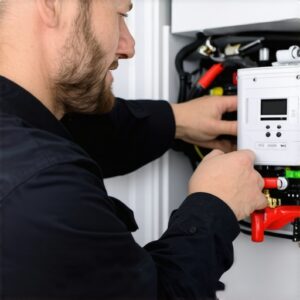
I remember a call I took last February. It was 3:00 AM, the kind of cold that makes the metal on your service van groan, and I was staring at a unit that had just been ‘condemned’ by a kid half my age wearing a shiny uniform with a ‘Senior Technician’ patch. He’d told the homeowner, a retired nurse, that her heat exchanger was cracked and she needed to shell out twelve grand for a new install immediately. I pulled the panel, checked the flame signal, and found a layer of carbon on the flame sensor so thick it looked like it had been dipped in coal dust. Ten minutes of cleaning and a thermocouple replacement for good measure, and that furnace purred like a kitten. That’s the difference between a mechanic and a salesman. When your furnace starts short cycling—shutting down before it reaches the thermostat’s set point—it isn’t always a death sentence. It’s usually a cry for help from a system that can’t breathe or a safety loop that’s doing its job too well. Understanding the physics of a furnace shutdown requires looking at the machine as a living organism. It has a heart (the compressor or burner), lungs (the blower and ductwork), and a nervous system (the control board and sensors).
“The most expensive equipment in the world cannot overcome a bad duct system.” – Industry Axiom
The Anatomy of a Short Cycle: The Mechanical Forensic Investigation
When a gas furnace shuts down prematurely, it’s rarely a random glitch. Most modern units operate on a series of safety interlocks. If one link in that chain breaks, the whole system ‘locks out’ to prevent your house from turning into a Roman candle. The first place I look is the transformer replacement history. If a transformer is weak, it can’t provide the 24 volts needed to hold the gas valve open or keep the contactor engaged. You’ll hear a chattering sound—that’s the ‘Sparky’ side of the job—where the electricity is fighting to complete the circuit. Then there’s the issue of the flame sensor. If the control board doesn’t detect a flame within a few milliseconds of the gas valve opening, it cuts the juice. It’s a binary world: either there is fire, or there isn’t. If the sensor is dirty, the microamps won’t flow, and the board thinks the room is filling with raw gas. This is a common point of failure that ‘Sales Techs’ love to exploit to push new equipment. For more on distinguishing between honest repairs and sales pitches, check out how to choose the right HVAC fixes before you sign a contract.
The Thermodynamic Reality: Airflow is the King of the Hill
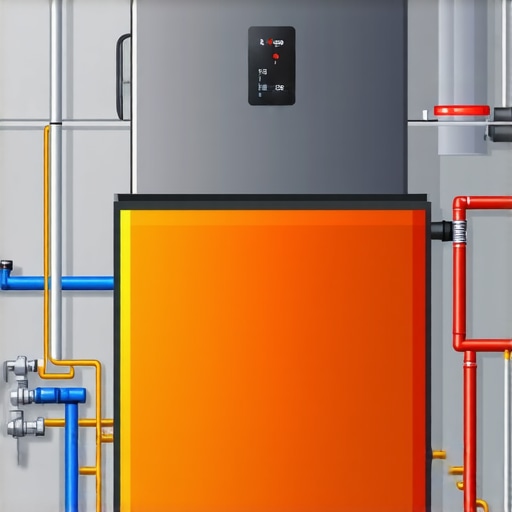
In the HVAC world, we have a saying: ‘You can’t heat what you can’t move.’ Most premature shutdowns are caused by high-limit trips. Inside your furnace, there’s a heat exchanger. When the burners fire, that metal gets red hot. The blower motor’s job is to move enough air over those ‘fins’ to strip the heat away and send it into your living room. If the airflow is restricted—say, by a tin knocker who undersized the return air drops or a homeowner who hasn’t changed a 4-inch pleated filter in six months—the heat exchanger temperature skyrockets. Once it hits the limit switch’s threshold (usually around 140°F to 170°F), the switch pops open, and the burners kill over to prevent the metal from melting or cracking. This is where variable speed furnace services become vital. A variable-speed motor can ramp up to overcome the static pressure of a dirty filter or poorly designed ductwork, but even it has limits. If you keep hitting that limit switch, you are heat-stressing the metal, leading to the very cracks that the ‘Sales Tech’ lied about earlier. Proper IAQ improvement services aren’t just about breathing clean air; they are about ensuring the furnace can actually breathe too.
The Climate Factor: Managing Heat and Humidity in the Cold North
Up here in the cold zones, we deal with sensible heat, but we also have to worry about the internal environment. If your furnace is short cycling, it might be due to the integration of dehumidification services or poor geofencing temperature control settings that are confusing the board. Modern ‘smart’ thermostats often try to be too clever. They use ‘anticipators’ to shut the furnace off before it hits the target temp to prevent overshoot. If yours is misconfigured via remote thermostat access, it might look like a mechanical failure when it’s actually just a software setting. Furthermore, in specialized environments like hospital HVAC zoning, the precision required is even higher. Any deviation in pressure or temperature can trigger a shutdown. For residential users, baseboard heater repair can sometimes reveal that the primary furnace is oversized for the home, leading to ‘short-cycling’ because the unit reaches the set point so fast it never actually dehumidifies the air or stabilizes the home’s thermal mass. This is why we look at the heating service innovations coming in 2025 to see how smarter modulation is fixing these age-old physics problems.
“Design shall be based on the coincident 99% or 97.5% outdoor design temperature for the location.” – ACCA Manual J Section 1-4
The Forensic Checklist: From Thermocouples to Transformers
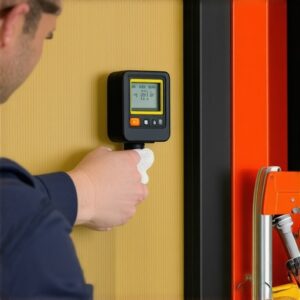
When I walk into a mechanical room, I’m looking for the ‘why’ behind the ‘what.’ If the furnace is dead, we check the basics first. Is there power? Is the gas on? But when it’s intermittent, we have to go deeper. Thermocouple replacement is a lost art in the age of electronic ignition, but many older units and portable heater safety checks still rely on these millivolt generators. If the tip of that thermocouple isn’t engulfed in the pilot flame, or if it’s carboned up, it won’t hold the safety magnet open. On the high-tech side, I’ve seen transformer replacement jobs go wrong because a tech used a 40VA transformer when the system needed a 75VA to handle the extra load of a humidistat and an air purifier. The system works for ten minutes, the transformer gets hot, the voltage drops, and the control board resets. It looks like a ghost in the machine, but it’s just basic electrical load math. If you are noticing these symptoms, you need to understand when furnace repair is urgent versus when it’s a simple maintenance tweak. Don’t let a ‘parts changer’ talk you into a $15,000 mistake because they don’t know how to use a multimeter.
The Longevity Myth: Maintenance vs. The Scam Tune-Up
The industry is flooded with ‘$29 Tune-Up’ specials. Let me tell you a secret: nobody can afford to drive a van to your house for $29. Those are ‘foot-in-the-door’ leads for sales teams. A real technician is going to check the gas manifold pressure, the temperature rise, and the static pressure of the ductwork. They are going to look for ‘Pookie’ (mastic) leaks in the plenum that are sucking in cold attic air and causing the furnace to work harder than it should. They will check the IAQ improvement services filters and ensure that the variable speed furnace services are calibrated to the home’s specific ‘footprint.’ If your furnace is shutting down, it’s often because these small details were ignored. A well-maintained unit should last 20 years, but without the right top hvac repair strategies, you’ll be lucky to get 12. Always remember, the best time to fix a furnace is when it’s still running, not when the condensate line is frozen and your family is huddled around a space heater. For more tips on keeping your system alive, see our guide on extending your system’s life.