The Physics of the Hiss: A Lesson from the Old School
My old mentor used to scream, ‘You can’t cool what you can’t touch, and you can’t heat what you can’t move!’ This is why airflow and pressure dynamics matter more than horsepower or BTUs. Back in the day, standing in a flooded basement in Chicago with a pipe wrench that weighed more than my lunch, I learned that a steam boiler is a living, breathing beast. When it starts hissing at you, it isn’t just making noise; it’s crying for help. That hiss is a symptom of a pressure-volume-temperature relationship gone sideways. Steam radiators are designed to be silent partners in your comfort, but when the air vents fail or the water level is off, you get a symphony of metallic shrieks and wet slaps. If you are hearing that sound, you are likely looking for how to identify when furnace repair is urgent and why, because a boiler is a pressurized vessel, and pressure is a bully that doesn’t play nice with your drywall or your safety.
The Mechanical Anatomy of a Hissing Radiator
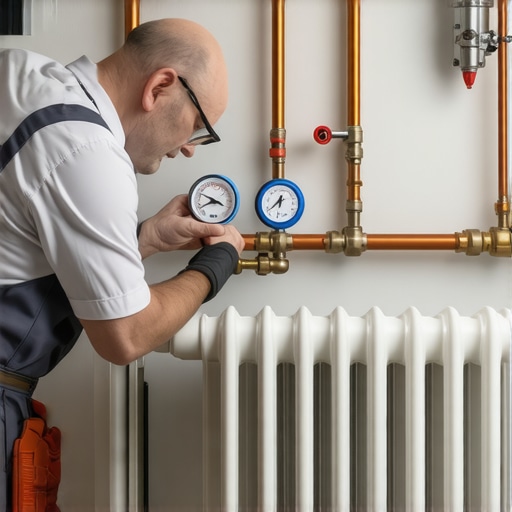
To understand the hiss, you have to look at the thermodynamic zooming of the system. A steam boiler works by boiling water until it undergoes a phase change into steam, which then expands rapidly. This steam travels up the risers, pushing the existing air out through the air vent at the end of the radiator. Once the steam reaches that vent, a heat-sensitive element (usually a bi-metal strip or a bellows filled with alcohol) expands and seals the vent. If that vent is gunked up with mineral deposits or is simply thirty years past its prime, it won’t seal. That’s your hiss. It is the sound of expensive energy escaping into the room instead of heating the cast iron. Unlike a two-stage furnace installation where we worry about blower speeds, here we worry about air-traps. If the air can’t leave, the steam can’t enter. If the air leaves but the vent doesn’t close, you’re basically running a localized humidifier that’s ruining your floorboards. While we often talk about steam humidifiers as a comfort add-on, a leaking radiator is the wrong way to achieve it.
“Standard practice for steam systems requires the removal of all non-condensable gases to ensure efficient heat transfer through the heat exchanger surfaces.” – ASHRAE Standards 155P
The Forensic Diagnosis: What is Hissing at You?
When I walk into a house that sounds like a tea kettle on steroids, I look for three things: the pitch of the hiss, the location of the moisture, and the slope of the radiator. If the hiss is constant, your air vent is shot. If the hiss is followed by a violent ‘clank’—what we call water hammer—you have condensate trapped in the lines. This usually happens because a ‘tin knocker’ or a careless homeowner didn’t check the pitch of the radiator. Steam and water are trying to use the same pipe, and when they collide, it’s like a car crash inside your walls. This is why duct cleaning services or biomass boiler services require a different mindset; steam is about gravity and pressure balance. If your radiator isn’t sloped back toward the supply valve, that condensate pools, blocks the steam, and starts the hissing and banging dance. Sometimes the problem isn’t the radiator at all, but the draft inducer motor repair needed on a modern high-efficiency boiler or the lack of proper venting in the basement. I’ve seen guys try to fix a steam hiss with UV light installation for HVAC units, which is like trying to fix a flat tire with a new air freshener.
The Math: Repair vs. Replace in the Cold North
In the Northeast or Midwest, we aren’t dealing with ‘sensible heat’ issues like the dry heat of Arizona. We are dealing with raw, brutal cold that tests the limits of cracked heat exchangers and old cast iron. If you have an old boiler with a cracked section, it’s game over. However, most hissing issues are $20 fixes that ‘sales techs’ will try to turn into $15,000 system replacements. They’ll tell you the ‘gas’ is leaking or some other nonsense. Steam boilers don’t have ‘juice’ or refrigerant; they have water and fire. If your boiler is still solid but the radiators are screaming, you need a tech who knows how to use a plumb bob, not a sales brochure. Check out the furnace repair myths debunked by industry experts to see how common these upsells are. If you’re considering a heat pump installation as a replacement, remember that steam systems were designed for high-temperature output; swapping to a low-temp heat pump without upgrading the radiators is a recipe for a cold winter. Sometimes, adding a carbon monoxide detector installation and a new set of high-quality vents is all you need to keep that old beast purring for another decade.
“The most expensive equipment in the world cannot overcome a bad delivery system, whether it be ducts or pipes.” – Industry Axiom
Safety Checks and the ‘Pookie’ Principle
Every tech has a different name for it—mastic, ‘Pookie’, or just sealant—but in steam, we rely on the integrity of the threads. When I perform portable heater safety checks for clients while their boilers are down, it’s a reminder of how dangerous things can get when we ignore the basics. If your boiler is hissing and you smell something sour or acidic, that’s not steam—that’s combustion gases. You might need a carbon monoxide detector installation immediately. In a restaurant kitchen exhaust repair, we worry about grease fires; in a residential steam system, we worry about dry-firing the boiler. If the low-water cutoff fails and the burner stays on, that cast iron will glow red and eventually crack or explode when cold water finally hits it. It’s a high-stakes game. Always ensure your UV light installation for HVAC is focused on the coil if you have a hybrid system, but for the steam side, stick to the basics: water level, pressure control settings (usually 0.5 to 2 PSI), and clean glass. For more insights, look into efficient HVAC repairs: the blueprint for cooler summers and warmer winters to understand the full scope of seasonal maintenance. Don’t let a sales tech talk you into a two-stage furnace installation if your steam infrastructure is sound. Fix the vents, pitch the pipes, and let the physics do the work.{“@context”:”https://schema.org”,”@type”:”HowTo”,”name”:”How to Fix a Hissing Steam Radiator”,”step”:[{“@type”:”HowToStep”,”text”:”Identify the source of the hiss by checking the air vent on the side of the radiator.”,”name”:”Locate the Hiss”},{“@type”:”HowToStep”,”text”:”Ensure the supply valve is fully open or fully closed; partial opening causes water hammer and hissing.”,”name”:”Check Supply Valve”},{“@type”:”HowToStep”,”text”:”Use a level to ensure the radiator is slightly pitched toward the steam supply pipe.”,”name”:”Adjust Pitch”},{“@type”:”HowToStep”,”text”:”Unscrew the old air vent and replace it with a new one of the same size/rating if the hissing persists.”,”name”:”Replace Air Vent”}]}