Modernizing the Hearth: The Physics of Cold-Climate Comfort and Airflow Integrity
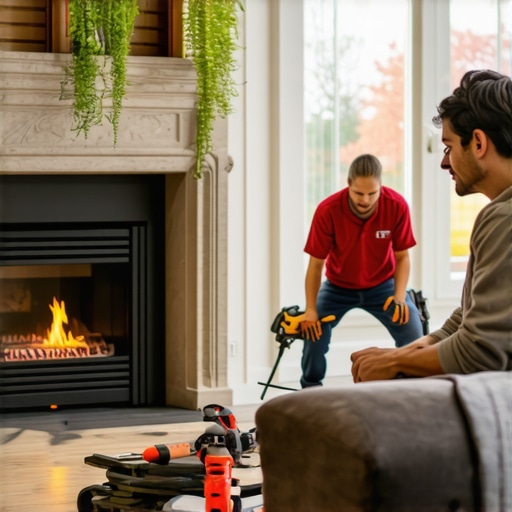
My old mentor used to scream at me until he was purple in the face, ‘You can’t heat what you can’t touch!’ We were standing in a drafty 1920s bungalow in the middle of a January freeze, and the homeowner couldn’t understand why her brand-new furnace wasn’t keeping the living room warm. He pointed at the massive, open-hearth fireplace that was sucking every BTU of heat we generated right up the chimney like a giant atmospheric vacuum. This is the fundamental reality of thermodynamics: if you don’t control the air, the air controls you. Updating an old hearth with modern fireplace insert services isn’t just about aesthetics; it is about stopping the massive heat loss inherent in open combustion. When we talk about heat pump installation or upgrading a hearth, we are looking at the house as a single, pressurized vessel. If the vessel leaks, you’re just burning money to heat the neighborhood birds.
The Airflow Manifesto: Why Your Old Hearth is a Heat Thief
In the trade, we see it every day. A homeowner spends thousands on a high-efficiency system but ignores the gaping hole in their living room. An open fireplace is essentially a thermal siphon. As the fire burns, it requires oxygen—lots of it. It pulls that air from the heated rooms, through the cracks in your windows and under your doors, and sends it straight out the flue. To fix this, we look at the integration of cold climate heat pumps and sealed fireplace inserts. By sealing that combustion, we maintain the home’s static pressure. My mentor’s lesson was simple: airflow is the blood of the house, and your ductwork is the arteries. If you’ve got a clogged artery or a massive ‘wound’ like an open chimney, I don’t care how big the mechanical heart is—the system will fail.
“The most expensive equipment in the world cannot overcome a bad duct system.” – Industry Axiom
When I perform static pressure testing, I’m measuring the resistance that your blower motor has to fight against. If you’ve got a ‘Tin Knocker’ who didn’t size your returns correctly, your new hyper-heat heat pumps will struggle to move the air across the coil, leading to premature contactor repair needs or even a fried blower. We use ‘Pookie’ (mastic) to seal those joints because even a pinhole leak in a high-pressure plenum can drop your efficiency by 10% before the air even hits the register.
Thermodynamic Zooming: How Hyper-Heat Changes the Game
Let’s talk about the ‘Juice’—the refrigerant. In the old days, a heat pump was useless once the temp hit 35°F. You’d end up running on ‘Emergency Heat’ (expensive electric heat strips) all winter. But hyper-heat heat pumps utilize a technology called flash-injection. We’re essentially injecting a bit of vapor back into the scroll compressor during the compression stroke. This allows the system to maintain its mass flow rate even when the outdoor air is a frigid -15°F. It’s not magic; it’s physics. By pairing this with a cold climate heat pump installation, we can provide 100% of the heating capacity without needing a backup furnace. However, this precision equipment requires a clean signal. That’s why transformer replacement is often a hidden necessity; old transformers can’t handle the sensitive electronics in modern WiFi thermostat integration and predictive maintenance alerts.
The Anatomy of a Modern Insert: Combustion Analysis and Safety
When we install a modern insert into an old hearth, we aren’t just sliding a box into a hole. We are performing a combustion analysis to ensure that the fuel-to-air ratio is perfect. If you’re running too rich, you’re creating carbon monoxide; too lean, and you’re wasting fuel. We also look at the ‘Sparky’ work—ensuring the electrical feed to the insert’s blowers and the heat pump’s inverter are isolated and grounded. This prevents the dreaded contactor repair cycle that plagues amateur installs. For those looking at heating service innovations, the synergy between a sealed fireplace and a variable-speed heat pump is the gold standard for 2025.
“Proper sizing and installation of heating equipment are critical to ensuring the safety, health, and comfort of building occupants.” – ACCA Manual J Standards
Humidity: The Invisible Comfort Factor
In Northern climates, the biggest enemy isn’t just the cold—it’s the dryness. Cold air can’t hold moisture. When you heat that dry air up to 70°F, the relative humidity drops to desert levels. This is why humidifier installation is non-negotiable. Without it, the dry air sucks moisture right out of your skin, making you feel 5 degrees colder than it actually is. By integrating a whole-home humidifier with your heat pump installation, we use the latent heat of vaporization to keep you comfortable at lower thermostat settings. This is a key part of heating service hacks for comfort and savings. We often find that homeowners who complain about their ‘weak furnace’ actually just have bone-dry air. Before you buy a new unit, check the humidity; we might just need to debunk some furnace repair myths and fix your air quality instead.
Predictive Maintenance: The End of the ‘July 4th Panic’
I’ve seen too many people wait until their system dies on the coldest night of the year to call us. With predictive maintenance alerts, we can see if a capacitor is starting to drift out of spec or if a contactor repair is imminent before the system actually fails. This is especially critical for cold climate heat pumps where a failure at -10°F can lead to frozen pipes in hours. If you’re ready to stop the draft and start the science of comfort, it’s time to contact us for a full system evaluation. We don’t just ‘top off the gas’; we find the leak, fix the pressure, and ensure your hearth modernization is a thermal success, not just a cosmetic one.