The Sound of a Choked System
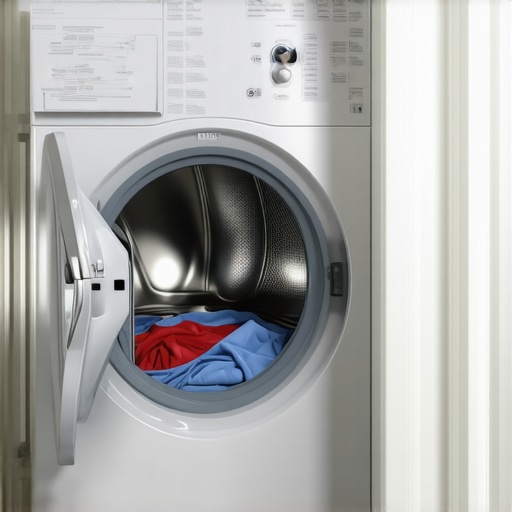
You hear that rhythmic thumping from the laundry room? It’s not just your jeans tumbling; it’s the sound of an appliance gasping for air. As a technician who’s spent three decades crawling through crawlspaces and balancing static pressure testing on commercial air handlers, I can tell you that a dryer requiring two cycles isn’t a sign of ‘old age.’ It’s a warning of a potential structural fire. Most folks think a dryer just spins and gets hot. In reality, it’s a delicate thermodynamic balance. If the moisture-laden air can’t escape, the heat has nowhere to go but back into the motor and the heating element. It’s the same principle we see in furnace repair services: if you choke the airflow, you kill the machine.
The Physics Lesson: You Can’t Cool What You Can’t Touch
My old mentor, a grizzly veteran who could smell a capacitor replacement service from the curb, used to scream at me, ‘You can’t cool what you can’t touch!’ He was talking about evaporator coils, but the physics translates perfectly to your dryer vent. If the air is stagnant because of a lint blockage, the heat can’t ‘touch’ the wet clothes and carry the moisture away. It just sits there, creating a sauna that keeps your towels damp and doubles your utility bill. This isn’t magic; it’s basic psychrometrics. When the air inside that drum hits its saturation point, it stops absorbing water. No amount of heat will fix it if the air isn’t moving.
“Static pressure is the resistance to airflow. If the static pressure in a venting system exceeds the manufacturer’s rating, the appliance’s efficiency and safety are compromised.” – ACCA Manual D
The Forensic Diagnosis: Anatomy of a Failure
When I walk into a mechanical room for hotel boiler services or a residential basement, I’m looking for the ‘tells.’ A dryer that takes two cycles is usually suffering from ‘pookie’ (mastic) and lint buildup in the transition duct. I’ve seen tin knockers install flex-duct that’s been crushed, causing the static pressure testing results to go off the charts. It’s like trying to breathe through a cocktail straw while running a marathon. Eventually, the contactor repair or capacitor replacement services won’t be enough because the heat will have cooked the motor windings. This is why top HVAC repair strategies always start with airflow, not just parts-swapping.
The North Zone Reality: Ice, Lint, and Fire
Up here, where we deal with snow melt systems installation and sub-zero winters, the venting becomes even more critical. Cold air outside creates a massive temperature differential. If your dryer vent isn’t clean, that warm, moist air hits the freezing exit point and condenses instantly, turning lint into a wet, soggy paste that eventually freezes solid. This is the same reason we emphasize how to identify when furnace repair is urgent. A blocked vent isn’t just an inconvenience; it’s a carbon monoxide and fire hazard. Dryer vent cleaning is the most ignored maintenance task in the modern home, yet it’s the one most likely to burn it down. I’ve seen smart building management systems flag high humidity levels in laundry rooms because the venting was so restricted that the moisture was back-feeding into the structure.
“All fuel-burning and heat-producing appliances must be vented to the outdoors in accordance with the manufacturer’s instructions to prevent the accumulation of hazardous gases and excessive heat.” – International Mechanical Code (IMC)
The ‘Sales Tech’ Trap and The Real Solution
I despise the ‘Sales Techs’—those guys who show up with a shiny clipboard and tell you that because your dryer is five years old and taking two cycles, you need a $1,200 new unit. Most of the time, the machine is fine; the ‘veins’ (the vents) are just clogged. Before you sign up for warranty service plans or buy a new machine, look at the vent. Is the flap opening fully? Is there a bird’s nest in the termination? If you have a variable speed furnace service scheduled, ask the tech to take a quick peek at the dryer’s static pressure. We have the tools to measure it in seconds. Proper maintenance is always cheaper than replacement. Check out these heating service hacks for more ways to keep your home running lean and mean. Don’t let a $50 dryer vent cleaning turn into a $15,000 insurance claim.