The Sound of a Strangled System
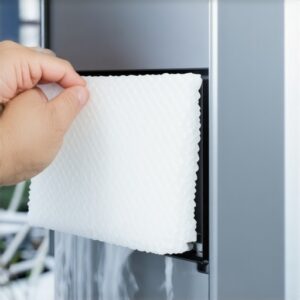
You’ve heard it before. That high-pitched whistle coming from the return air grille or the low, ominous thrumming of a blower motor that sounds like it’s trying to drag a brick through a straw. That isn’t just ‘the house making noise.’ That is the sound of static pressure killing your equipment. As a technician who has spent thirty years crawling through fiberglass-filled attics in the dead of a Chicago winter, I can tell you that airflow is the lifeblood of your home. If your ducts are choked with twenty years of skin cells, pet dander, and construction debris, your furnace is suffocating. This is the Airflow Manifesto: why cleaning and sealing your ducts is the only way to stop wasting money on ‘juice’ and start investing in physics.
The Mentor’s Physics Lesson
My old mentor, a grizzly guy named Miller who could sniff out a cracked heat exchanger from the driveway, used to scream at me, ‘You can’t move what you can’t touch!’ I was twenty-one, trying to figure out why a brand-new 96% AFUE furnace was tripping its high-limit switch. Miller grabbed my manometer and shoved it into the supply plenum. The static pressure was off the charts. He didn’t look at the furnace; he looked at the ducts. ‘You see those 6-inch runs?’ he barked. ‘They’re trying to move 8-inch air through a 4-inch hole because they’re lined with two inches of filth. The air can’t touch the heat exchanger long enough to carry the heat away, so the unit cooks itself.’ That was my first lesson in IAQ improvement services and the raw reality of thermodynamics. If the air can’t flow, the heat can’t go.
“The most expensive equipment in the world cannot overcome a bad duct system.” – Industry Axiom
The Anatomy of Airflow and Friction Loss
Inside your ductwork, air isn’t just moving; it’s fighting. Every elbow, every transition, and every speck of dust creates friction. In a cold climate like ours, where furnace filter replacement is often ignored until the house is 50 degrees, that friction becomes a silent killer. When dust builds up on the internal insulation of your ducts, it creates a turbulent ‘boundary layer.’ Instead of a smooth, laminar flow, the air tumbles and swirls, losing velocity. This is why that one bedroom at the end of the hall is always freezing while the living room is a sauna. It’s not a ‘bad unit’; it’s a delivery problem. Professional duct cleaning removes that turbulent layer, restoring the cross-sectional area and allowing your blower motor to operate within its design envelope. When we combine this with top hvac repair strategies, we aren’t just fixing a part; we’re restoring a system’s ability to breathe.
The Pookie Factor: Why Cleaning Needs Sealing
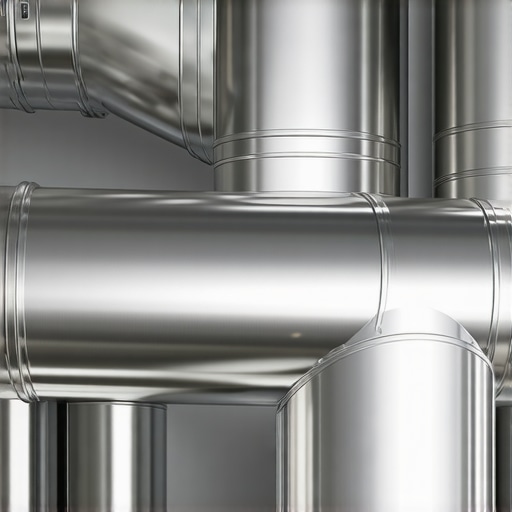
If you clean the ducts but leave the leaks, you’re only doing half the job. In the trade, we use ‘Pookie’—a thick, gray mastic sealant—to bridge the gaps where the ‘tin knocker’ (the duct installer) might have missed a spot. HVAC duct sealing is the partner to duct cleaning. Think about it: why clean the air just to have it leak into your unconditioned crawlspace? System performance testing often reveals that 20% to 30% of the air you’ve paid to heat or cool is escaping before it ever reaches a register. This leads homeowners to think they need a bigger unit, when in reality, they just need to stop the bleeding. Choosing the right hvac fixes means looking at the ductwork as a pressurized vessel, not just a series of boxes.
The Northern Climate Reality: Boilers, Furnaces, and Chimneys
Up here, we deal with extreme temperature swings. We’re talking about hotel boiler services that keep entire buildings alive and chimney liner installation to prevent carbon monoxide from seeping back into your living room. When the air is dry, we look at humidifier installation to protect your wood floors and your lungs. But all these components rely on a common denominator: the integrity of the air path. If you have a high-efficiency furnace, the secondary heat exchanger has fins spaced so closely together that a few years of bypass dust can clog them entirely. This leads to ‘short cycling,’ where the unit turns on and off rapidly, never reaching its peak efficiency. It’s a fast track to a compressor burnout or a cracked heat exchanger. Knowing when furnace repair is urgent usually starts with noticing that your cycle times are getting shorter and your utility bills are getting longer.
The Myth of Closing Vents
I see it in almost every house. A homeowner thinks they’re being smart by closing vents in ‘unused rooms’ to save money. Let me be clear: stop doing that. Your HVAC system is a balanced circuit. When you close a vent, you increase the ‘Total External Static Pressure’ (TESP). This makes the blower motor work harder, generates more heat, and can actually freeze up an evaporator coil in the summer or crack a heat exchanger in the winter. Instead of closing vents, look into voice control setup Alexa Google for smart dampers, but only if your ductwork can handle the pressure. Proper airflow management is about balance, not restriction. Following preventative hvac repair tips means letting the system breathe the way the engineer intended.
“Standard 62.1-2022 specifies minimum ventilation rates and other measures intended to provide indoor air quality (IAQ) that is acceptable to human occupants.” – ASHRAE Standards
The Sales Tech Scam vs. Real Maintenance
I despise ‘Sales Techs’—the guys who show up with a shiny clipboard and tell you that you need a $15,000 system because your capacitor is slightly out of spec. Real maintenance isn’t about selling you a new box; it’s about optimizing the one you have. This includes evaporative cooler services for those specific dry-climate applications or ensuring your warranty service plans actually cover the labor-intensive stuff like deep coil cleaning. If a tech doesn’t pull out a manometer to check your airflow before suggesting a replacement, they aren’t a tech; they’re a salesman. Implementing heating service hacks like checking the ‘Temperature Rise’ across the furnace tells you more about the health of your system than any fancy sales pitch ever will.
Conclusion: Comfort is Physics
At the end of the day, you don’t live in a house; you live in a climate-controlled envelope. Duct cleaning and sealing aren’t just ‘luxury’ services; they are foundational to the longevity of your mechanical systems. By removing the restriction, you lower the amp draw on your motor, you improve heat transfer at the coil, and you actually get the 15 SEER or 96% AFUE you paid for. Don’t let a ‘Sparky’ or a fly-by-night contractor tell you that airflow doesn’t matter. It’s the difference between a house that feels like a cold swamp and one that feels like home. Start with a filter, end with a seal, and always respect the physics of the air.”