The Sound of a Dying Cold Snap
It’s 3:00 AM in the middle of a February polar vortex, the kind of cold that makes the nails in your rafters pop like gunshots. You wake up not to a sound, but to the lack of one. The rhythmic rumble of your furnace has been replaced by a frantic, rhythmic clicking—a relay trying to engage, failing, and trying again. I’ve spent thirty years crawling through spider-infested crawlspaces and balancing on ice-slicked rooftops to solve this exact silence. Most homeowners think a furnace is a ‘set it and forget it’ box. They’re wrong. It’s a precision-engineered combustion chamber where physics meets chemistry, and if you aren’t paying attention to the color of the fire inside that box, you’re ignoring the only warning sign you’ll get before things go sideways. My old mentor, a legendary tin knocker who could diagnose a CFM imbalance just by the way a curtain fluttered, used to scream at me, ‘You can’t burn what you can’t touch! This is why airflow matters more than horsepower!’ He was right. If the oxygen-to-fuel ratio is off, your furnace isn’t just inefficient; it’s a ticking carbon monoxide bomb. Stop listening to the sales tech who wants to quote you fifteen grand for a new install before even pulling the burner assembly. We’re going to look at the fire.
The Thermodynamic Zoom: Why Blue is the Gold Standard
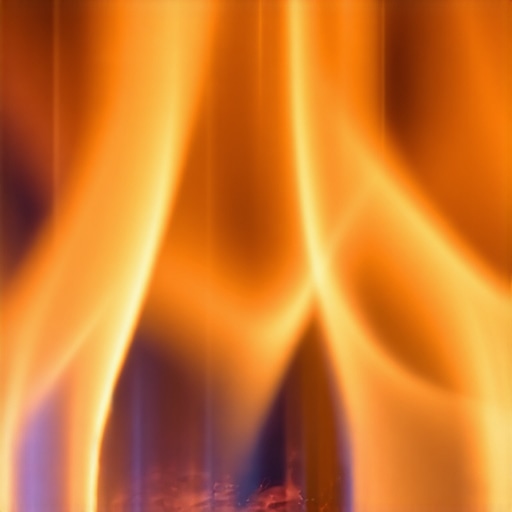
When you peer through that sight glass, you should see a crisp, steady, laser-blue flame. In the world of HVAC physics, this is ‘stoichiometric combustion.’ It means the methane in your natural gas is reacting perfectly with the oxygen in the air. The chemical equation is simple: CH4 + 2O2 → CO2 + 2H2O. When that flame is blue, you’re getting the maximum BTUs for every penny you pay the utility company. It’s a high-temperature, clean-burning reaction that produces nothing but carbon dioxide and water vapor. But when that flame starts dancing with orange or yellow tips, the chemistry has failed. You’re now looking at incomplete combustion. Instead of clean CO2, you’re producing CO—Carbon Monoxide. That orange glow is actually incandescent carbon particles—soot—that haven’t been burned off because there isn’t enough ‘juice’ or oxygen in the mix. This often happens when annual heating inspection routines are skipped, allowing dust to clog the burner ports. This is where identifying when furnace repair is urgent becomes a matter of life and death, not just comfort.
“The most expensive equipment in the world cannot overcome a bad duct system or improper combustion air.” – Industry Axiom
The Forensic Diagnosis: Anatomy of a Failing Flame
Think of your furnace like a human body. The heat exchanger is the heart, the inducer motor is the lungs, and the gas valve is the stomach. If the ‘lungs’ can’t pull enough air through, the ‘heart’ starts to fail. If you see an orange flame, we start the forensic audit. First, we look at the burners. Are they rusted? Rust acts like a thermal insulator and disrupts the flow of gas. Second, we check the limit switch replacement history. If that switch is tripping, it’s because the internal temperatures are skyrocketing—often because of restricted airflow. I’ve seen hospital HVAC zoning systems fail because of the same basic physics: if you don’t balance the static pressure, the fire won’t burn right. If you’re dealing with an older system, you might even consider an oil to gas conversion to move away from the soot-heavy nightmare of fuel oil, but even gas needs a heat recovery ventilator to ensure the house stays pressurized correctly. A flickering flame isn’t just ‘old age’; it’s a symptom of a mechanical failure in the air handler repair cycle or a cracked heat exchanger. When a heat exchanger cracks, the blower motor pushes house air into the combustion chamber, ‘disturbing’ the flame and turning it yellow. That is a red-alert scenario.
The Math of the Repair: When to Pull the Plug
I despise the ‘Sales Tech’ who tries to sell a new unit for a $20 capacitor fix, but I’m also a realist. If I’m looking at a 20-year-old furnace with a cracked heat exchanger and a flame that looks like a campfire, the math is simple. A heat exchanger replacement can cost $2,000 to $4,000 depending on the brand. Combine that with a failing inducer or the need for a limit switch replacement, and you’re halfway to a new 96% AFUE unit. If you are still running a pellet stove repair side-hustle or relying on portable heater safety checks to get through the night, it’s time to look at the ROI of a modern system. We’re seeing massive shifts in 2025 with heating service innovations, including solar thermal heating integration that can offset your gas usage during the day. Don’t let a sparky tell you it’s just an electrical issue; if the fire is orange, it’s a mechanical and chemical failure. For those in the North, the ‘Monsoon Effect’ isn’t the problem—it’s the ‘Deep Freeze’ that causes humidifier installation units to leak into the furnace cabinet, rusting out your burners and turning that beautiful blue flame into a dangerous orange flicker.
“All combustion equipment shall be installed such that the combustion, ventilation, and dilution air are provided in accordance with the manufacturer’s instructions.” – NFPA 54 / ANSI Z223.1
The Airflow Manifesto: Beyond the Burner
You can have the cleanest burners in the state, but if your tin knocker didn’t size the return air drops correctly, you’re still going to have issues. Low airflow causes the heat exchanger to overheat, which can lead to ‘flame rollout’—where the fire literally reaches out of the cabinet to find more oxygen. This is why we preach about preventative HVAC repair tips. A dirty filter increases static pressure, slows down the air, and starves the flame. If you’re wondering about furnace repair myths, let’s debunk one right now: closing vents in unused rooms saves money. It doesn’t. It increases pressure, kills your blower motor, and can actually distort your flame pattern. Whether it’s a pellet stove repair or a high-end solar thermal heating integration project, the physics of airflow remains the king of the castle. If you smell something acidic or sour, that’s not just ‘dust’—it could be a limit switch replacement warning or a failing bearing in your air handler repair sequence. If the flame is orange and the house smells like a garage, get out and call a pro. Don’t wait for the portable heater safety checks to fail you. Real comfort isn’t about the thermostat setting; it’s about the chemistry of the flame and the integrity of the steel. If you need a real set of eyes on your system, contact us before the next freeze hits.