The Forensic Diagnosis: When Humidity Turns to Ice
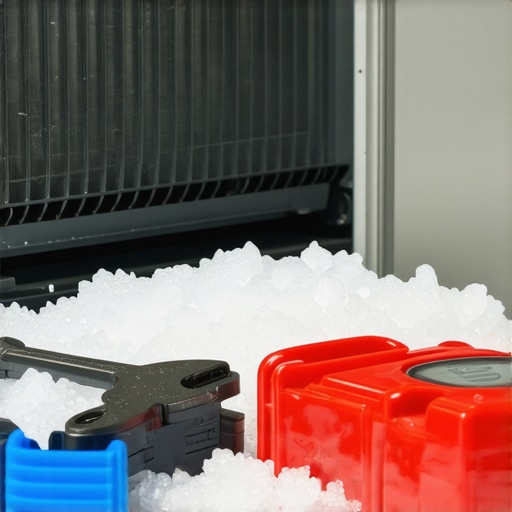
I’ve spent thirty years crawling through blown-in cellulose that’s probably twenty percent mouse droppings and eighty percent fiberglass, all to find out why a homeowner’s system is failing. You’ll hear it before you see it—the wet, heavy thud of a blower motor struggling against a block of ice. But when a client calls me out because their bypass humidifier pad is literally frozen, we aren’t just looking at a plumbing leak. We are looking at a thermodynamic crime scene. My old mentor used to scream at me, ‘You can’t heat what you can’t touch!’ and he wasn’t just talking about the heat exchanger. He meant that if the airflow is garbage, the physics of evaporation fails, and you end up with a basement skating rink instead of a comfortable home.
“The most expensive equipment in the world cannot overcome a bad duct system.” – Industry Axiom
A bypass humidifier works on a simple principle: pressure differential. It steals a little bit of hot, high-pressure air from the supply plenum, shoves it through a water-soaked media pad, and dumps it back into the low-pressure return side. In a perfect world, that air absorbs the water through the latent heat of vaporization. But if you’re dealing with a system that needs gas furnace repair or has a blower that’s losing its fight against static pressure, that air doesn’t move fast enough. In a cold climate like Chicago or the Northeast, if that furnace is located in an unconditioned space or if the attic insulation for heating is non-existent, the temperature in that bypass duct can drop below 32°F during the off-cycle. If the solenoid valve is weeping ‘juice’ (water) because of a transformer replacement gone wrong or a faulty smart thermostat setup that keeps the water running when the fan is off, you get ice. Real, hard ice.
The Mechanical Anatomy of a Humidifier Failure
When I walk up to a unit, the first thing I do isn’t look at the pad. I look at the control board diagnostics. I want to see what the furnace thinks it’s doing. Most ‘Sales Techs’ will just tell you to buy a new $12,000 furnace, but a real veteran checks the 24V signal. If the transformer is pushing inconsistent voltage, your solenoid might be chattering, leading to water pooling. I’ve seen cases where a botched ductless mini-split installation in a nearby room messed with the home’s overall pressure, causing the main furnace to short-cycle. When a furnace short-cycles, the heat exchanger never stays hot enough to evaporate the water on the pad. That’s why furnace repair myths often lead homeowners to overlook the simple stuff, like airflow velocity.
Airflow, Static Pressure, and the ‘Tin Knocker’s’ Revenge
If your bypass pad is ‘frozen’ (either with ice or calcified minerals that look like it), you have to look at the ‘Pookie’—that’s the mastic sealant we use to keep ducts airtight. If the ‘tin knocker’ who built your house didn’t size the return air drops correctly, the vacuum on the return side is too high. This can actually pull cold, unconditioned air into the system from the chimney or ventless gas heater services nearby, dropping the local temperature at the humidifier pad. This is especially true in multi-family heating upgrades where ductwork is often shared or cramped. If you’re tired of the ‘cold swamp’ feel, you might even consider rebate application assistance to offset the cost of a high-efficiency variable-speed blower that can maintain constant CFM regardless of the filter’s condition.
“Airflow is the lifeblood of the thermodynamic cycle; without it, you are merely moving noise, not heat.” – ASHRAE Standards
Let’s talk about the math of the fix. A transformer replacement or a new solenoid might set you back a few hundred bucks, which is a hell of a lot cheaper than the $8,000 to $15,000 for a full system replacement. But if your heat exchanger is cracked, you’re looking at a CO (carbon monoxide) risk, and that’s a non-negotiable ‘pull the plug’ scenario. You can learn more about when furnace repair is urgent to avoid these dangerous situations. For those using secondary heat sources, like a pellet stove repair or supplemental ventless gas heater services, remember that these units don’t add humidity—they often dry out the air even more, putting even more strain on that bypass humidifier.
The Solution: Physics, Not Magic
To solve the mystery of the frozen pad, we follow the heat. 1. Check the smart thermostat setup to ensure the humidifier only runs when the ‘W’ (heat) and ‘G’ (fan) calls are active. 2. Verify control board diagnostics for any limit switch trips that might be cutting the heat prematurely. 3. Inspect the attic insulation for heating to ensure the plenum isn’t being chilled by the ambient winter air. If you’re in the market for a more permanent fix, sometimes moving away from bypass systems toward steam humidification or a dedicated ductless mini-split installation for problematic zones is the smarter play. Don’t let a ‘Sales Tech’ talk you into a ‘Scam Tune-Up’ that ignores these physics-based realities. Effective heating service hacks always start with airflow and end with a solid understanding of your home’s envelope. Comfort isn’t magic; it’s a balanced equation of pressure, temperature, and moisture. If your pad is frozen, your equation is out of balance. Fix the airflow, and the ice disappears. It’s that simple.