The Sound of Silence in a Sub-Zero Mid-January
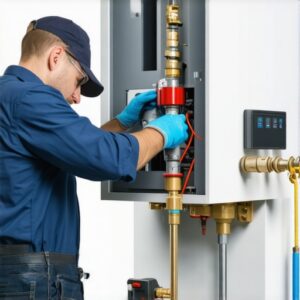
There is a specific kind of silence that wakes an HVAC man up at 3 AM. It’s not the quiet of a sleeping house; it’s the absence of the inducer motor’s hum and the rhythmic ‘whoosh’ of gas ignition. When the mercury drops toward zero in the Chicago suburbs or the Northeast corridor, that silence is the sound of pipes about to burst. I’ve spent thirty years chasing that silence, and nine times out of ten, it isn’t a catastrophic heat exchanger failure or a fried control board. It’s a tiny, soot-covered rod or a bimetallic probe that costs less than a decent steak. I remember following a ‘Sales Tech’—one of those guys with a crisp white shirt and a clipboard who hasn’t touched a manifold gauge in years—to a multi-family unit last winter. He’d already quoted the building owner $12,000 for multi-family heating upgrades, claiming the old atmospheric boilers were ‘unserviceable’ because the pilot wouldn’t stay lit. I walked in, pulled a $20 thermocouple from my bag, cleaned the pilot orifice with a bit of wire, and had the building humming in twenty minutes. He was selling a replacement; I was practicing boiler maintenance services. He left with a bruised ego; I left with a customer for life.
“The most expensive equipment in the world cannot overcome a bad duct system.” – Industry Axiom
The Physics of the Flame: How a Thermocouple Works
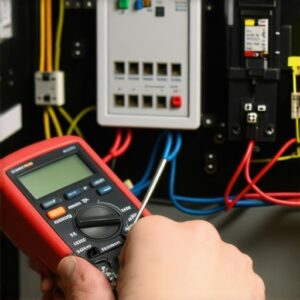
To understand why your furnace is locked out, you have to understand the Seebeck effect. We aren’t just ‘burning gas’ here; we are converting thermal energy into electrical voltage. An old-school thermocouple is a junction of two dissimilar metals. When that pilot flame licks the tip of the probe, it creates a tiny millivolt signal—usually between 25 and 30 mV. This tiny ‘juice’ is what holds the electromagnetic solenoid in the gas valve open. If the probe is covered in carbon or the internal wire has snapped from years of thermal expansion, the signal drops. The valve thinks the flame is out, snaps shut to prevent your basement from filling with raw gas, and you’re left in the cold. It’s a safety feature, not a conspiracy. In modern high-efficiency systems, we’ve traded the thermocouple for a flame sensor. This operates on flame rectification. The furnace sends an AC voltage to the sensor; the flame itself acts as a conductor, rectifying that AC into a DC microamp signal. If your control board doesn’t see at least 1.5 to 5 microamps (µA), it shuts the party down. This is why furnace filter replacement is so critical—poor airflow leads to ‘lazy’ flames that don’t engulf the sensor properly, causing intermittent lockouts. You can read more about these common headaches in this guide on furnace repair myths debunked by industry experts.
The Static Pressure Trap: Why Parts Fail Prematurely
I’ve seen ‘Tin Knockers’ slap together ductwork with nothing but silver tape and a prayer, leading to massive performance issues. If your furnace is struggling to breathe, the internal temperatures skyrocket. This ‘sensible heat’ doesn’t just make the house uncomfortable; it cooks the flame sensor and the limit switches. This is where static pressure testing becomes the most important tool in my kit. It’s the blood pressure of your HVAC system. High static pressure means your blower motor is working twice as hard, the heat exchanger is getting too hot, and your $20 safety parts are being heat-stressed into an early grave. Most homeowners ignore the warning signs until they need pellet stove repair or a full furnace overhaul. If you’re noticing the furnace ‘short cycling’ (turning on and off every few minutes), it’s often a sign that the limit switch is tripping because the heat isn’t being moved away fast enough. This is especially true in older homes where attic insulation for heating has settled or was never sufficient to begin with. Without proper insulation, your furnace runs 20% longer, putting unnecessary wear on that pilot assembly. For those in truly brutal climates, transitioning to cold climate heat pumps is becoming a popular choice, but even those require precision HVAC load calculation services to ensure you aren’t undersized when the polar vortex hits. Check out these urgent furnace repair indicators to see if your system is screaming for help.
“Provisions shall be made for the supply of primary and secondary combustion air.” – ASHRAE Standard 62.1
Maintenance Plans vs. The ‘Sparky’ Emergency Call
I hate seeing people pay $300 for a ‘Sparky’ (electrician) or an emergency tech to come out at midnight just to rub a flame sensor with a piece of Scotch-Brite. That’s why HVAC maintenance plans are the only way to fly. During a real tune-up, we don’t just look at the unit; we check the gas pressure, clean the burners, and ensure the heat recovery ventilators are actually exchanging air and not just whistling in the wind. If you’re managing a property, ignoring boiler maintenance services is a recipe for a lawsuit. A cracked heat exchanger can leak carbon monoxide, a silent killer that no $20 part can fix. I always tell my juniors: ‘Pookie’ (mastic) belongs on the duct seams, not as a band-aid for a failing unit. If you want to extend the life of your equipment, you have to treat the system as a whole, from the filter in the return to the insulation in the rafters. Understanding the top repair strategies to extend system life is the difference between a 10-year unit and a 25-year unit. Don’t let a ‘Sales Tech’ convince you that a dirty sensor means you need a whole new furnace. If the heat exchanger is solid and the static pressure is within spec, that $20 part is all that stands between you and a warm night’s sleep. For more technical insights, look into preventative repair tips that save you from the January panic.