The Sound of Silence: When Your Heating Service Becomes an Emergency
There is a specific kind of silence that wakes an HVAC man up at three in the morning. It isn’t the quiet of a sleeping house; it’s the absence of the low-frequency hum from a blower motor or the rhythmic metallic expansion of a heat exchanger. When that happens in the dead of a Northern winter, you aren’t just looking at a cold house; you’re looking at a potential plumbing catastrophe if the pipes freeze. My old mentor, a man who had more silver in his hair than a 90% AFUE secondary heat exchanger, used to scream at me, ‘You can’t heat what you can’t touch!’ This is why airflow matters more than raw horsepower, and why a single $40 electrical component like a contactor or heavy-duty relay can turn a $15,000 two-stage furnace installation into a very expensive paperweight. People think heating service is about magic, but it’s actually about the relentless physics of moving energy from one place to another. If your system is dead, the first place I’m looking isn’t the thermostat; it’s the electrical anatomy under the hood. For a deeper dive into the reality of these components, check out furnace repair myths debunked by industry experts.
The Mechanical Anatomy: Why the Contactor Is the Heart of the Circuit
In most residential gas furnaces, you’re dealing with integrated control board diagnostics and sequencers, but in high-capacity electric units or hybrid systems, the contactor is the heavy lifter. Think of the contactor as the ‘muscles’ of the furnace. It’s an electromechanical switch. When your app-controlled heating systems send a 24-volt ‘call for heat’ to the board, that board sends power to a small copper coil inside the contactor. This creates a magnetic field that pulls down a set of silver-plated contacts, allowing high-voltage ‘juice’ to flow to the heating elements or the blower. When these fail, you might hear ‘chattering’—a rapid-fire clicking that sounds like a frantic woodpecker—or you’ll smell the sharp, ozonic tang of electrical arcing. If the contacts are ‘pitted’ (burnt and uneven), they create resistance. Resistance creates heat. Heat kills components. This is basic thermodynamics: energy doesn’t disappear; it just changes form into something that melts your wires. Understanding this is key to how to identify when furnace repair is urgent and why.
“The most expensive equipment in the world cannot overcome a bad duct system.” – Industry Axiom
The Forensic Diagnosis: Testing with Your Multimeter
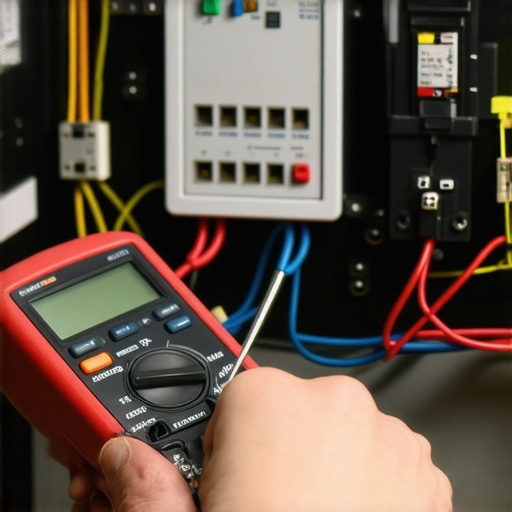
Before you even touch your meter, you need to know what you’re looking for. A ‘Sparky’ (electrician) might just look for continuity, but an HVAC tech looks for voltage drops. First, set your multimeter to Volts AC. You’re checking the ‘load’ side. If you have 240 volts coming in but only 210 volts going out to the heating elements, you’ve got high-resistance pitting. That’s a fire hazard, plain and simple. Next, we check the coil. Switch your meter to Ohms (Ω). A healthy 24V coil should read between 10 and 20 ohms. If it reads ‘OL’ (Open Line), the coil is snapped. If it reads 0, it’s shorted. Most ‘Sales Techs’ won’t even pull their meter out; they’ll just see a 10-year-old unit and start writing a quote for a new one. Don’t fall for it. You can often save a system with precise control board diagnostics and a simple part replacement. If you’re wondering about the cost-benefit, read choosing the right HVAC fixes what homeowners need to know. To do a real HVAC load calculation services check, you need to ensure the electrical components can actually handle the amperage the system demands.
The Climate Context: Why Cold Zones Demand Perfection
In the North, we deal with the ‘Polar Vortex’ effect. When it’s -10°F outside, your furnace isn’t just a luxury; it’s a life-support system. In these zones, we see radiator replacement and fireplace insert services as critical backups, but the central furnace remains king. The enemy here is the ‘Short Cycle.’ If your unit is oversized (a common mistake by guys who don’t do a Manual J), it heats the house too fast, shuts off, and then the contactor has to engage again ten minutes later. This constant ‘on-off’ cycles the mechanical parts to death. We aim for Energy Star heating certification standards not just to save a few bucks on the ‘gas’ bill, but to ensure the equipment runs long, steady cycles that preserve the integrity of the contactor and the heat exchanger. If your furnace is struggling, it might be time for efficient HVAC repairs.
“Design conditions must be met through rigorous calculation of sensible and latent heat loads to ensure component longevity.” – ACCA Manual J Standards
The Math: Repair vs. Replace in 2025
Is it worth spending $400 on a heating service call to replace a contactor and do a dryer vent cleaning (which, by the way, is the #1 cause of house fires nobody talks about)? Usually, yes. But if I find a cracked heat exchanger during my inspection, I’m pulling the plug. No amount of ‘Pookie’ (mastic) or tape can fix a cracked exchanger. However, if your tech is pushing a new system because of a bad capacitor or contactor, get a second opinion. With the new A2L refrigerant transitions and skyrocketing equipment costs in 2025, keeping your current ‘tin’ running efficiently is more important than ever. Proper evaporative cooler services in the summer and furnace checks in the winter are the only ways to avoid the $15k ’emergency’ installation trap. For more tips, see top HVAC repair strategies to extend your systems life. Remember, comfort is a matter of physics, and physics doesn’t care about your budget. It only cares about airflow, voltage, and regular maintenance.