The Silent Killer in the Flue: Why Your Furnace is More Than Just a Box of Fire
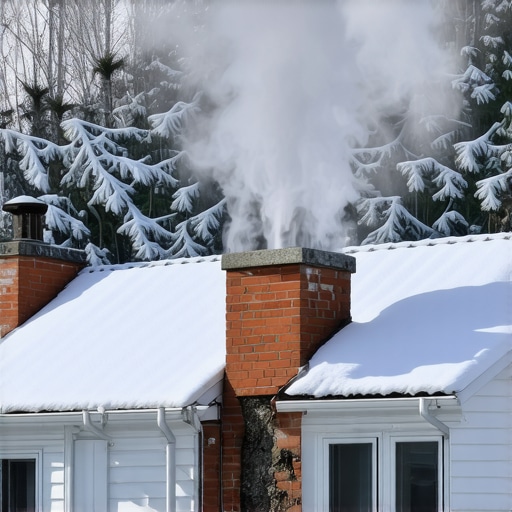
The coldest nights in the North don’t sound like a roar; they sound like the click-click-click of a furnace trying to ignite and failing. I’ve spent thirty years crawling through spider-infested basements and cramped mechanical rooms, and if there is one thing I’ve learned, it’s that homeowners worry about the ‘box’ (the furnace) while completely ignoring the ‘veins’ (the chimney). A cracked chimney liner isn’t just a minor repair; it is a fundamental failure of the thermodynamic circuit. My old mentor used to scream at me, ‘You can’t cool what you can’t touch, and you can’t burn what you can’t vent!’ This is why airflow matters more than horsepower, especially when we are talking about combustion byproducts. If your flue gases can’t escape because of a compromised liner, that heat—and those toxins—are coming back into your living space. This is where heating service stops being about comfort and starts being about survival.
“Failure to provide proper venting of combustion products can lead to the accumulation of carbon monoxide and other hazardous gases within the occupied space.” – ASHRAE Standard 62.1
The Forensic Diagnosis: Anatomy of a Flue Failure
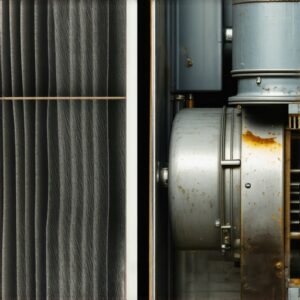
When I walk into a mechanical room and see white, powdery staining on the side of a boiler or furnace, I don’t need a multimeter to tell me what’s wrong. That’s efflorescence, a sure sign that moisture is escaping a cracked liner. You see, when natural gas burns, it creates water vapor as a byproduct. In a healthy system, the heat carries that moisture up the chimney before it can condense. But in the frozen winters of the North, if that liner is cracked, the gas cools too quickly. It hits the dew point inside the chimney, turning into a caustic, acidic liquid that eats through mortar and brick like a hot knife through butter. This is why furnace tune-up services must include a visual inspection of the flue. If I find a crack, I’m not just trying to sell you a part; I’m trying to keep your house from rotting from the inside out. We see similar issues in school boiler maintenance, where the scale of the equipment means a cracked liner can dump gallons of acidic condensate into the building structure every day.
The Thermodynamic Reality of Latent Heat and Condensation
Let’s talk physics. When we discuss crawl space heating solutions or main-floor comfort, we are managing sensible heat—the stuff you feel on your skin. But inside the chimney, we are fighting latent heat. As flue gases rise, they lose energy. If the liner is oversized or cracked, the velocity of the gas drops. This causes the temperature to fall below the condensation point. Once that happens, you’ve turned your chimney into a chemical processing plant. For high-efficiency systems, we often look at ductless mini-split installation as a secondary heat source to offset the load, but for your primary furnace, the chimney is the only exit strategy. I’ve seen ‘Sales Techs’ tell people they need a whole new furnace because of ‘weak’ heat, when in reality, the furnace was just suffocating because the chimney liner had collapsed. This is why preventative maintenance contracts are worth their weight in gold; we catch the ‘Pookie’ (mastic) and mortar failures before they become 3 AM emergencies.
“All category I appliances must be vented in accordance with the National Fuel Gas Code to prevent combustion product leakage and chimney transition failure.” – EPA Section 608 Regulatory Guidelines
Large Scale Risks: Hotel and School Systems
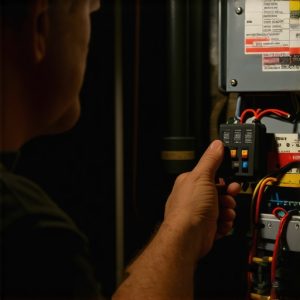
In the world of hotel boiler services, the stakes are even higher. You aren’t just protecting one family; you’re protecting hundreds of guests. A cracked liner in a large-scale commercial stack can create a vacuum back-draft that pulls carbon monoxide into the HVAC intake. We integrate leak detector integration into these systems for a reason. These electronic ‘noses’ sense what a human can’t. If you’re a facility manager, you should be more worried about your stack integrity than your inverter-driven compressors. One is a comfort issue; the other is a liability nightmare. When we perform school boiler maintenance, we use high-resolution cameras to snake down the flue. If we see a separation, that system is Red-Tagged immediately. There is no ‘waiting until spring.’
The Math of Repair vs. Disaster
I get asked all the time: ‘Can’t I just use a portable heater?’ No. Portable heater safety checks usually end with me telling the homeowner they are a fire hazard. Using a space heater because your furnace is locked out due to a venting issue is like putting a band-aid on a broken leg. The real cost of a cracked liner isn’t the $2,000 for a new stainless steel sleeve; it’s the cost of the structural damage to your chimney or, worse, the health of your family. Before you assume you need a total system replacement, check your furnace repair myths and look at the venting. Often, a professional heating service can reline the stack and restore the draft, saving the equipment you already have. For more information on how we handle these high-stakes repairs, check our preventative HVAC repair tips. If you suspect your furnace is struggling to breathe, don’t wait for the CO alarm to go off. Contact the pros who know the difference between a sales pitch and a physics problem at our contact page. Comfort is physics, not magic, and it starts with a clear path for the ‘gas’ to leave the building. Keep your suction line ‘beer can cold’ in the summer, but keep your flue gases ‘hot and moving’ in the winter.