The Ghost in the Exhaust: A Lesson in Combustion
My old mentor, a grizzled tin knocker who could smell a cracked heat exchanger from the driveway, used to scream at me, ‘You can’t heat what you can’t breathe!’ This was back in ’94, standing in a freezing garage in the middle of a blizzard. We were looking at a unit that was ‘sooting up’ because some DIY genius decided that a 90-degree elbow made of dryer vent was ‘good enough’ for a 100k BTU heater. Pete grabbed my shoulder and pointed at the vent stack. ‘The venting isn’t just a pipe, kid. It’s the lungs of the system. If it can’t exhale, the fire dies, and the family inside doesn’t wake up.’ That stuck with me. In the HVAC world, airflow isn’t just about comfort; it’s about the literal physics of life and death.
“Proper venting of combustion appliances is critical to prevent the accumulation of flue gases, including carbon monoxide, within the building envelope.” – ASHRAE Standard 62.1
The Physics of the Flue: Why Your Garage Heater Struggles
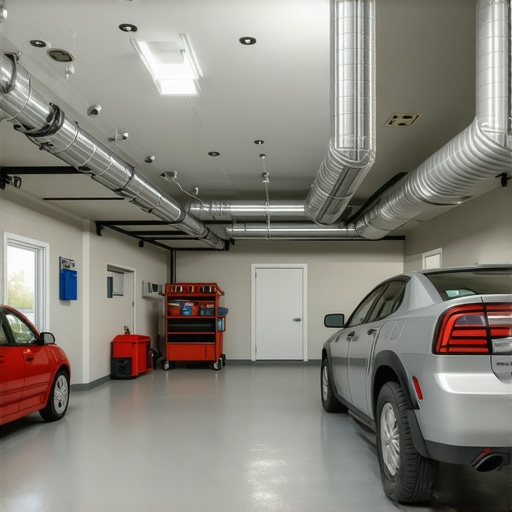
When we talk about routing venting for a new garage heater, we are dealing with thermodynamic buoyancy. In cold climates where we deal with snow melt systems installation and sub-zero temps, your heater has to work against the dense, heavy outside air. If you route that vent poorly, you end up with ‘flame rollout’—where the fire literally looks for oxygen outside the burner box because the exhaust is backed up. I’ve seen ‘Sales Techs’ try to sell a whole new furnace when the real issue was just a bird’s nest in a poorly screened termination. Most furnace repair myths ignore the fact that the vent pipe is the most important part of the install.
Horizontal vs. Vertical: Choosing Your Path
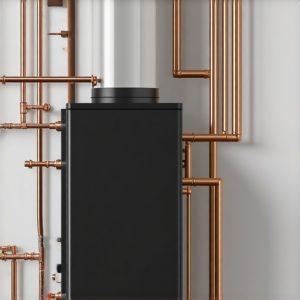
The best way to route venting depends entirely on whether you are using a Category I (Natural Draft) or Category III/IV (Power Vented) unit. For most modern garages, we prefer a power-vented setup. This allows us to shoot the exhaust horizontally through a side wall. It’s cleaner, easier to seal with ‘Pookie’ (mastic), and avoids cutting a massive hole in your roof. However, you have to watch your clearances. You can’t just dump hot ‘gas’ (refrigerant is for cooling, flue gas is for heating) near an intake or a window. If you’re looking for heating service innovations, look at concentric venting. It uses one pipe-within-a-pipe to pull fresh air in and push exhaust out, keeping the outer pipe cool and the efficiency high.
The Airflow Manifesto: Static Pressure and Pitch
One thing the ‘Sales Techs’ won’t tell you is that every elbow you add to a vent pipe is like adding 10 feet of straight pipe in terms of friction. This is why HVAC load calculation services are vital; you need to know if your fan can actually push the air through the route you’ve chosen. If you have to go horizontal, you MUST have a rise of at least 1/4 inch per foot. If that pipe dips, condensation (which is acidic and nasty) will pool, eat through the metal, and eventually cause a leak. I’ve seen guys use duct tape on B-vent; it’s a crime. You use high-temp silicone or the proper locking bands, or you’re just asking for a CO alarm to go off at 3 AM. For those in truly brutal climates, integrating heating service hacks like geofencing temperature control can help keep the unit from cycling too hard in the dead of winter.
“Vent systems shall be sized and installed so as to provide a continuous path to the external atmosphere and must withstand the thermal and corrosive effects of flue gases.” – NFPA 54 / ANSI Z223.1
Beyond the Burner: Modern Alternatives
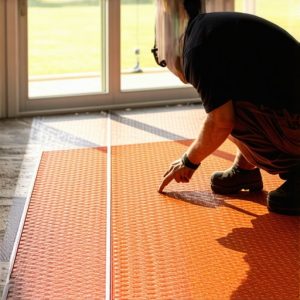
Sometimes, the ‘best way’ to route a vent is not to have a vent at all. If your garage is part of a smart building management ecosystem, you might consider hyper-heat heat pumps. These units don’t use combustion, so there’s no carbon monoxide risk and no holes to cut for flues. They work down to -13°F and are perfect for garages where you don’t want to mess with gas lines. We are also seeing a huge uptick in radiant floor heating installation for new garage builds. Combine that with a snow melt system installation on the apron, and you’ve got a professional-grade setup that makes a traditional hanging heater look like a relic. If you are sticking with gas, ensure you have a maintenance plan to check that vent every fall. Spiders love building webs in pressure switch hoses, and that will shut your heat down faster than a blown transformer.
Final Checklist for Garage Venting
Before you fire up that heater, check three things: Is the pitch correct (sloping back or up depending on the manual)? Are the clearances from combustibles met (don’t melt your siding)? And did you use the right material (B-vent for gravity, AL29-4C or PVC for condensing)? If you’re unsure, call a pro. Don’t be the guy I find on the roof on New Year’s Eve because his ‘handyman’ vented the heater into the attic. For more on how to do it right, check out our ultimate guide to installation. Safety isn’t an accident; it’s physics. [IMAGE_PLACEHOLDER]