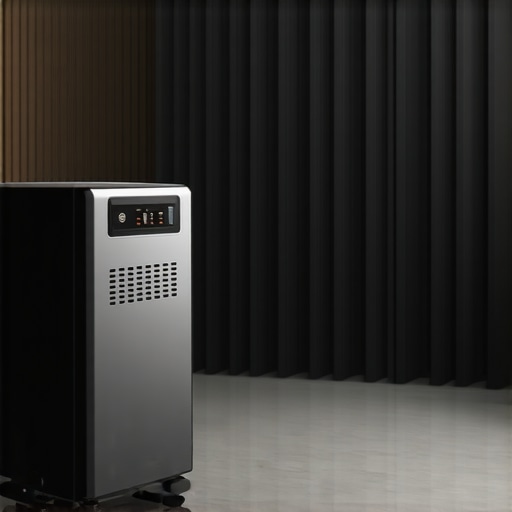
The Frozen Wrench and the Electricity Vampire
You know that feeling when the mercury drops to ten below and your shop feels less like a workspace and more like a meat locker? You walk out there, grab a 9/16″ wrench, and it practically bonds to your skin because the metal is a heat-thieving monster. Most guys make the same mistake right then: they run to the big-box store, grab the first 5,000-watt electric heater they see, and plug it in. Three weeks later, their electric bill looks like a mortgage payment. As someone who has spent thirty years crawling through crawlspaces and standing on frozen rooftops, I can tell you that heating a shop isn’t about brute force; it is about thermodynamics. If you don’t understand how heat moves, you are just throwing money into the wind.
The Physics Lesson: Why Airflow is King
My old mentor, a grizzly guy who could smell a refrigerant leak from a block away, used to scream at me, ‘You can’t heat what you can’t touch!’ We were standing in a drafty three-car garage at the time, looking at a massive unit heater that was screaming like a banshee while our feet were literally turning blue on the concrete. This is the Airflow Manifesto: heating a shop is a battle against the ‘stratification’ of air. Heat wants to live at the ceiling. If your heater isn’t designed to move that air back down to the floor, you’re just paying to keep the spiders in the rafters warm.
“The most expensive equipment in the world cannot overcome a bad duct system or poor air distribution.” – Industry Axiom
The Slab-on-Grade Problem
In cold climates like Chicago or the Northeast, the biggest enemy of your wallet is the concrete floor. It is a massive heat sink. You can pump 100,000 BTUs into the air, but if that slab is 35 degrees, it will suck the sensible heat right out of the room. This is why heating service innovations are focusing so much on radiant versus convective heat. When you choose a heater, you have to decide if you are heating the air or heating the objects. If you’re a woodworker or a mechanic, you want the tools and the floor to be warm, not just the ceiling.
The Electric Resistance Trap: Don’t Buy the Toaster
Standard electric shop heaters use resistance coils. It is basically a giant toaster with a fan. While they are 100% efficient at the point of use (meaning every watt becomes heat), they are incredibly expensive to operate because of the cost of electricity per BTU compared to gas. If you are looking for variable speed furnace services or shop heating solutions, you should be looking at cold climate heat pumps. These aren’t the heat pumps from the 80s that turned into expensive heat strips when it hit freezing. Modern cold climate units use vapor injection technology and variable speed compressors to pull heat out of the air even when it’s -13°F outside. This is where efficient HVAC repairs and upgrades really pay off.
The Gas Contender: Ventless vs. Vented
I get calls all the time for ventless gas heater services. People love them because they are cheap and easy to install. But here is the cynical truth from a guy who’s seen the damage: a ventless heater dumps all the combustion byproducts—including water vapor—straight into your shop. For every gallon of propane you burn, you’re dumping about a gallon of water into the air. If you have expensive machinery, that water will condense on the cold metal and rust your cast iron saw tables overnight. You end up needing whole-home humidifiers in the house, but in the shop, a ventless heater creates a swamp. If you go gas, go vented. It’s safer for your lungs and your tools. Check out furnace repair myths to see why ‘cheap’ heaters often cost the most in the long run.
AI-Driven HVAC Optimization for the Modern Shop
We are entering the era of AI-driven HVAC optimization. In a shop environment, this means smart sensors that understand when you’re actually working. A standard programmable thermostat is a blunt instrument. An AI-optimized system monitors the ‘recovery time’ of your space. It knows that if the temperature drops to 40°F, it will take four hours of high-intensity heating to get the slab back up to temperature. Instead, it maintains a ‘set-back’ temperature that is thermodynamically ideal to prevent your electric bill from spiking when you walk in at 8 AM. This is similar to how we handle school boiler maintenance or commercial furnace repair—we look at the thermal mass of the building, not just the air temperature.
The Blower Motor: The Unsung Hero
If your current heater is struggling, don’t just assume you need more ‘gas’ (refrigerant) or a bigger unit. Often, the culprit is a dying blower. A blower motor replacement can do wonders for your efficiency. If the motor is dragging, it’s pulling more ‘juice’ (amps) and moving less air. This causes the heat exchanger to overheat, which can lead to cracks—a common issue I see during furnace repair services.
“Standard practice for shop environments requires a thorough heat loss calculation that accounts for uninsulated slab-on-grade conditions.” – ACCA Manual J Standards
The ‘Pookie’ and the Seal: Airflow Integrity
You can have the best variable speed furnace services in the world, but if your shop is leakier than a screen door on a submarine, you are wasting money. I always tell my customers to grab a bucket of ‘Pookie’ (mastic) and a brush. Seal every joint in your ductwork. Don’t use that silver tape—it dries out and peels off in three years. Mastic is forever. While you’re at it, check your weather stripping. A shop heater has to fight the ‘stack effect’—hot air escaping out the top and sucking cold air in through the bottom of the garage door. If you don’t seal those gaps, you’re basically trying to heat the whole neighborhood.
Is a Pool Heater Repair Guy Relevant Here?
You might think pool heater repair has nothing to do with your shop, but the physics is identical. Both systems rely on high-efficiency heat exchangers that can fail due to poor maintenance or chemical imbalances (or in a shop, dust and debris). Whether it’s a commercial furnace repair or a small shop unit, the heat exchanger is the heart of the system. If it’s dirty, the heat stays in the metal and goes out the flue instead of into your workspace. This is why preventative HVAC repair tips are vital. Clean your coils, change your filters, and don’t let sawdust get sucked into the combustion chamber.
Final Verdict: How to Choose
If you have gas available, a power-vented unit heater is the gold standard for shops. It gets the heat down to the floor and vents the moisture outside. If you are all-electric, stop looking at space heaters and invest in a cold climate heat pump (mini-split). The SEER2 and HSPF2 ratings on these units are incredible, and they provide cooling in the summer—preventing that ‘suction line’ from sweating and dripping all over your projects. For more guidance, see choosing the right HVAC fixes to avoid the common traps set by ‘sales techs’ who just want to sell you the most expensive box on the truck. Real comfort is about physics, not magic. Keep your airflow high, your ducts sealed with pookie, and your expectations grounded in thermodynamics.