Why Your High-Efficiency AC Installation Requires a Dedicated Electrical Circuit
You’ve done the research, compared the SEER2 ratings, and finally pulled the trigger on a brand-new, high-efficiency air conditioning system. You’re ready for lower utility bills and a home that feels like a crisp mountain morning even when it’s 95 degrees outside. But then, your installer mentions something that sounds like an extra chore: “We need to run a dedicated electrical circuit for this unit.”
I get it. You just spent a good chunk of change on the equipment, and now there’s talk of opening up the electrical panel. As a Master Electrician and Licensed HVAC Technician, I’ve had this conversation with hundreds of homeowners across the Pacific Northwest. It might feel like an upsell, but trust me – it’s the most important part of the installation. In fact, skipping a dedicated circuit is like buying a Ferrari and trying to run it on lawnmower fuel. It might start, but you’re going to have a breakdown sooner rather than later.
My name is Aaron Owens, and today I’m going to walk you through why modern cooling technology and your home’s electrical system need to be perfectly in sync. We’re going to talk about safety, SEER2 standards, and why “sharing” a circuit is a recipe for disaster.
What Exactly is a Dedicated Electrical Circuit?
Think of your home’s electrical system like a series of highways. Most of the “roads” in your house are shared. Your living room circuit might handle the TV, a couple of lamps, and your phone charger all at once. That’s fine because those devices don’t pull much power. A dedicated electrical circuit, however, is a “private express lane” that goes directly from your main electrical breaker panel to one single appliance – and nothing else.
When we set up a dedicated circuit for an AC unit, we ensure that no other device can “steal” current from that line. If you’ve ever been in the middle of a summer heatwave and had your AC shut down because someone plugged a vacuum cleaner into the same circuit or started the microwave, you’ve experienced the failure of a shared circuit. Modern high-efficiency units are far too sensitive (and expensive) to be sharing their power with a kitchen appliance.
The High-Efficiency Factor: Why SEER2 Changes the Game
The HVAC world changed significantly in 2023 with the implementation of new SEER2 (Seasonal Energy Efficiency Ratio 2) standards. These units are incredible pieces of engineering, but they operate differently than the “clunkers” of twenty years ago. Older units were relatively simple – they were either “on” or “off,” using a massive amount of power to jumpstart a heavy motor.
Modern high-efficiency units often use inverter-driven compressors and complex control boards. These components allow the AC to ramp up and down slowly, maintaining a precise temperature. However, this high-tech brain requires a very stable voltage. If the voltage fluctuates because another appliance on the circuit kicks in, it can “confuse” or even fry the sensitive electronics in your new unit. I often tell my clients that Why SEER2 Standards Make Older AC Units Obsolete Overnight isn’t just about the cooling – it’s about the sophisticated electrical requirements that come with that efficiency.
Preventing the “Ghost” Breaker Trip
Have you ever had a circuit breaker trip for seemingly no reason? In the industry, we sometimes call these “ghost trips,” but they aren’t supernatural – they’re physics. It all comes down to “inrush current.”
When an AC compressor starts up, it requires a momentary surge of electricity to get the motor spinning. This surge can be three to five times the amount of power the unit uses while it’s actually running. If your AC is sharing a 20-amp circuit with a refrigerator or a space heater, that initial “kick” will push the total amperage over the limit, and click – your breaker trips to prevent the wires from melting.
By installing a dedicated circuit, we size the breaker specifically for that inrush current. This prevents those annoying mid-day shutoffs. If you are experiencing weird power issues, it’s worth investigating The Hidden Electrical Faults That Mimic a Broken AC Compressor before you assume the unit itself is a lemon.
Safety First: Fire Prevention and Wire Sizing
This is the part where I put on my Master Electrician hat. The National Electrical Code (NEC) isn’t just a book of suggestions; it’s a life-saving manual. Specifically, **NEC Article 440** covers Air-Conditioning and Refrigerating Equipment. It mandates that most central AC systems have a dedicated branch circuit.
Why? Because of heat. When electricity flows through a wire, it generates heat. If a wire is undersized or carrying too much load (because it’s sharing power), that heat can degrade the insulation. Over time, this leads to arcing and, eventually, electrical fires. We use **NEC Table 310.15(B)(16)** to determine the exact gauge of wire needed based on the unit’s “Minimum Circuit Ampacity” (MCA).
If your home is older, your current panel might not even have the physical space or the total capacity to add a high-efficiency AC safely. In these cases, a professional electric panel upgrade Bothell WA is often the first step to ensuring your home can handle the modern cooling load without becoming a fire hazard.
Protecting Your Investment: Longevity and Performance
A high-efficiency AC installation is an investment in your home’s value and your comfort. But running that unit on an inadequate circuit is a surefire way to shorten its lifespan. When an AC motor doesn’t get the full voltage it needs (a condition called “voltage drop”), it has to work harder to do the same amount of work. This extra work generates internal heat within the motor windings.
Heat is the number one killer of electric motors. By providing a dedicated, clean power source, you ensure the motor runs at its designed temperature. I’ve seen dedicated circuits help homeowners How to Extend the Life of Your Blower Motor by 5 Years or more. Conversely, unstable power is often the reason Why your furnace control board keeps frying and how to stop the cycle, as those boards are the first things to go when the power gets “dirty.”
Signs Your Current Wiring Isn’t Cutting It
Not sure if your current setup is up to snuff? Here are a few red flags I look for during an inspection:
- Flickering Lights: If your lights dim for a split second when the AC kicks on, that’s a sign of a significant voltage drop.
- Humming Breaker Panel: A buzzing sound from your electrical panel means a breaker is struggling under a load it wasn’t meant to handle.
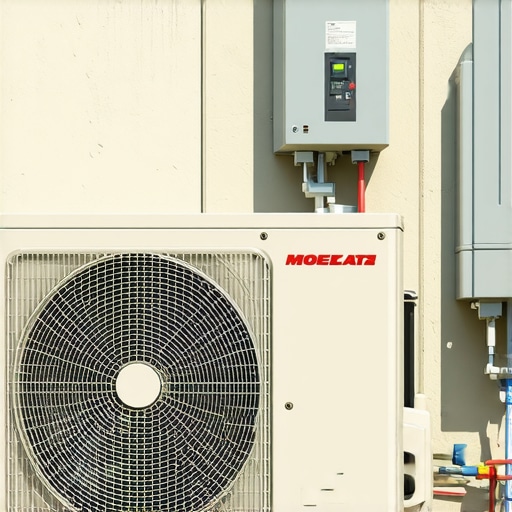
- Warm Disconnect Box: The metal box near your outdoor unit should never feel hot to the touch. If it does, you have high resistance in the wiring.
In extreme cases, these issues can lead to physical damage. You really want to avoid the situation Why your outdoor AC disconnect box is melting and how to stop it, which is almost always caused by poor electrical connections or an overloaded circuit.
Why DIY Wiring is a Disaster for AC Units
I’m all for a good DIY project – painting a room or fixing a leaky faucet is great. But running a 240-volt dedicated circuit for a high-efficiency AC is where you need to draw the line. This isn’t just about connecting black to black and white to white. It involves calculating load requirements, ensuring proper grounding, and following local municipal codes.
If you wire it incorrectly, you could void the manufacturer’s warranty on a $10,000 unit. Worse, if a fire occurs and the insurance investigator finds unpermitted, non-code-compliant electrical work, they might deny your claim. This is why you need a licensed electrician HVAC expert Mill Creek WA who understands both the “cold” side and the “hot” side of the installation.
The Professional Installation Process
When professional HVAC installers arrive at your home, the electrical portion of the job follows a strict protocol. Here is what we typically do:
- Load Calculation: We look at your main panel to ensure it can handle the additional load of the new AC.
- Permitting: We pull the necessary electrical permits with the city or county. This ensures an independent inspector verifies the work is safe.
- Conduit and Wire Pulling: We run heavy-duty conduit (often liquid-tight flexible conduit for the outdoor portion) and pull the correctly rated THHN or Romex wire.
- The Disconnect: We install a dedicated service disconnect box within sight of the outdoor unit. This is a safety requirement so a technician can cut power instantly while working on the machine.
- Testing: We test the voltage at the unit while it’s running to ensure there is minimal “drop.”
For a deeper dive into the full scope of a setup, check out our Ultimate Guide to AC Installation: Expert Tips for 2025 Success.
Conclusion & Final Thoughts
Here’s the deal: a dedicated electrical circuit isn’t a “luxury” or an “add-on.” It is a fundamental component of a modern, high-efficiency AC system. It protects your home from fire, protects your expensive equipment from premature failure, and ensures that you actually get the energy savings you were promised when you bought a SEER2-compliant unit.
Think of it as an insurance policy. You wouldn’t build a beautiful new house on a crumbling foundation, and you shouldn’t put a high-efficiency AC on a crumbling electrical infrastructure. If you’re planning a new installation or your current AC is acting up, don’t wait for the smoke to start.
Trust me on this one – getting the electrical right the first time will save you thousands of dollars and plenty of headaches down the road. If you’re ready to upgrade your comfort safely, contact Heat Pros Services today for a professional electrical audit and HVAC installation. Let’s make sure your home stays cool, safe, and efficient all summer long.