The Heartbeat of the Air Handler
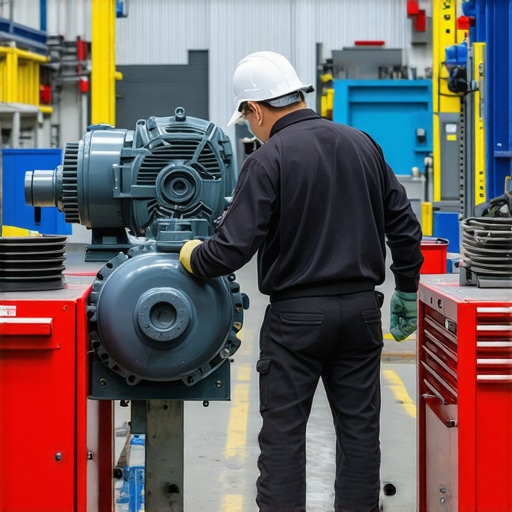
Your blower motor is the most underappreciated component in your entire mechanical room. It works harder than any compressor or heat exchanger, spinning thousands of revolutions per minute to push air through restricted ductwork that was likely designed by someone who never had to balance a system in their life. If your motor dies, the whole ship sinks. No cooling, no heating, just the sound of silence and the smell of ozone. Most people wait until the motor starts screaming like a banshee or until the furnace ignition repair becomes a monthly ritual before they look at the airflow. That is a rookie mistake. As an Airflow Architect, I am here to tell you that motors do not just die; they are murdered by static pressure.
“Static pressure is the resistance to airflow. If the pressure is too high, the motor works harder, draws more amperage, and cooks itself from the inside out.” – ACCA Manual D
The Physics Lesson: Why Airflow Matters More Than Horsepower
My old mentor used to pull me aside when I was just a green apprentice and scream, ‘You can’t cool what you can’t touch!’ This was his way of beating the laws of thermodynamics into my head. In a North/Cold climate, your blower motor is the lifeblood of your home. Whether you are running cold climate heat pumps or traditional furnaces, the physics remains the same: the motor is an electrical machine doing mechanical work. When you restrict that work by using a filter that is too thick or ductwork that is too small, you increase the Total External Static Pressure (TESP). This isn’t magic; it is math. A motor designed for 0.5 inches of water column that is forced to run at 0.9 inches is going to burn its windings. I have seen smart building management systems fail simply because the ‘smart’ tech did not account for a clogged secondary heat exchanger. To avoid this, you need to understand top hvac repair strategies to extend your systems life.
The MERV Trap and the High-Efficiency Lie
Everyone wants ‘clean air,’ so they go to the big box store and buy a MERV 13 pleated filter that looks like it belongs in a cleanroom at NASA. They slap it into a 20-year-old air handler and wonder why the motor starts groaning within a week. Those thick filters are basically a brick wall to a standard PSC motor. If you do not have a high-static ECM (Electronically Commutated Motor), you are choking your system to death. This leads to the evaporator coil freezing over or the heat exchanger overheating, causing a furnace ignition repair nightmare. If you are struggling with airflow, you might need an air handler repair to check if the motor is even capable of handling the load you are putting on it. I often find that homeowners could avoid a massive bill by simply using a less restrictive filter and changing it monthly. It is cheaper than calling me out to replace a blown motor on a Sunday night.
The Hydronic and Radiant Connection
In our region, many homeowners transition to radiant floor heating installation or hydronic heating systems to combat the bone-chilling winters. While these systems are fantastic for comfort, they do not provide air filtration or dehumidification. This means your air handler is often a secondary system, relegated to cooling or supplemental air. When a system sits idle, dust settles on the blower wheel. A dirty blower wheel is an unbalanced blower wheel. Even an eighth of an inch of dust on the blades can reduce airflow by 30% and cause the bearings to wobble. This wobble is the beginning of the end. If you have crawl space heating solutions, the environment is even harsher. Moisture and dust are the enemies of electrical components. Proper relay services ensure the motor starts smoothly, but if the wheel is weighted down by grime, the start-up torque will eventually kill the capacitor.
“Airflow is the primary mechanism for heat transfer in residential systems; without proper volume, the thermodynamic cycle cannot complete.” – ASHRAE Fundamentals
The Hidden Killer: Dryer Vents and Static Balance
People often ignore the holistic ecosystem of their home. If you have a clogged dryer vent, you are creating backpressure in the house, but more importantly, you are circulating lint that eventually finds its way back to the return air of your HVAC system. Regular dryer vent cleaning is part of the ‘Airflow Manifesto.’ If the return air is restricted, the blower motor enters a state of ‘hunting,’ where it speeds up and slows down trying to maintain airflow. This is especially true with modern variable-speed motors. They are smart, but they are fragile. Unlike the old ‘iron’ motors from the 80s, modern ECMs have sensitive control boards that can be fried by a simple power surge or excessive heat from a restricted return duct. I once followed a tech who quoted a whole system replacement when the only issue was a piece of ‘Pookie’ (mastic) that had fallen into the blower housing, blocking the wheel. Knowing how to identify when furnace repair is urgent and why can save you thousands of dollars in unnecessary replacements.
Managing Humidity and the Latent Heat Struggle
Even in cold climates, we deal with humidity spikes. In the summer, your evaporative cooler services or AC system must remove latent heat. If the blower motor is moving too fast, the air spends less time on the evaporator coil, meaning it does not drop below the dew point. The result? A ‘cold swamp’ house. Your house is 70 degrees, but you feel sticky. Most homeowners think they need more ‘juice’ (refrigerant), but usually, they just need to slow the fan down to allow for dehumidification. This is where smart building management comes into play. Adjusting the fan profile based on the season is the mark of a pro. If your system is old and clunky, you might be looking for heating service hacks for comfort and savings in 2025 to get through the next few years without a total overhaul.
Blueprint for Blower Longevity
If you want that motor to last 20 years instead of 10, follow this checklist. First, stop using tape and start using ‘Pookie’ to seal your duct joints. Any air leaking out of the supply plenum is air the motor worked to move but never reached the room. Second, verify your relay services are functioning. A sticky relay can keep a motor energized even when it shouldn’t be, burning it out while you sleep. Third, ensure your crawl space heating solutions are properly insulated so the motor isn’t fighting a 40-degree environment just to start up. Finally, consult a real pro for preventative hvac repair tips for year round efficiency. A simple TESP test by a qualified ‘Tin Knocker’ can tell you more about your system’s health than a thousand-dollar ‘Sales Tech’ ever could. Comfort is not magic; it is the deliberate application of physics to your home’s ductwork. Respect the airflow, and the blower motor will respect your wallet.