The Myth of the ‘Perfectly Sealed’ Envelope
My old mentor, a grizzly guy who had more sheet metal scars on his forearms than he had fingers, used to scream at me while we were jammed in a frozen crawlspace: ‘Kid, you can’t treat the air if you can’t move the air! Physics doesn’t care about your fancy insulation R-value if the lungs of the house are choked out!’ That lesson stuck. Today, we’re building homes like Tupperware containers. We wrap them in plastic, spray-foam every crevice, and pat ourselves on the back for ‘energy efficiency.’ But there is a dark side to an airtight home that the builders won’t tell you: without a Heat Recovery Ventilator (HRV) or an Energy Recovery Ventilator (ERV), you are literally breathing yesterday’s shower steam, last night’s burnt garlic, and a cocktail of VOCs that have nowhere to go. We’ve traded lung health for a lower utility bill, and as a technician who’s seen the inside of a thousand stagnant duct systems, I’m here to tell you that airflow is king. If your house doesn’t breathe, it dies—and it takes your comfort with it.
“The most expensive equipment in the world cannot overcome a bad duct system.” – Industry Axiom
When we talk about The Essential Role of Heat Recovery Ventilators in Airtight Modern Homes, we aren’t just talking about a ‘nice to have’ gadget. We are talking about the fundamental psychrometrics of survival in a Northern climate. In places where the winter wind howls like a banshee, you can’t just crack a window. You’d be dumping your expensive furnace heat straight into the yard. This is where the HRV comes in. It’s a mechanical lung. It pulls in that crisp, freezing outdoor air and passes it through a heat exchange core. At the same time, it sucks out the stale, humid, CO2-laden air from your bathrooms and kitchen. These two airstreams never touch—if they did, it would be a failure—but they pass close enough that the outgoing heat ‘jumps’ to the incoming cold air. You get fresh air at nearly the temperature of your living room. That is thermodynamic magic, and it’s the only way to stay sane in a modern high-performance home.
Thermodynamic Zooming: Sensible vs. Latent Heat
Let’s talk shop for a minute. When I pull up to a house for an emergency heating repair, the first thing I look at isn’t the thermostat; it’s the windows. If they are dripping with condensation, I know the home is airtight but ‘blind’ to its own humidity. In our cold Northern climate, we deal primarily with sensible heat—the temperature you can actually feel and measure with a thermometer. An HRV is a master of sensible heat exchange. However, if you’re also struggling with extreme dryness or humidity, you might need dehumidification services or an ERV, which handles latent heat (the energy bound up in water vapor). If you’ve invested in radiant floor heating installation, you know the luxury of warm toes, but radiant heat doesn’t move air. Without an HRV to circulate and refresh the atmosphere, that beautiful radiant-heated home becomes a stagnant pond of air. You need to understand that heat pump installation and SEER2 compliant upgrades are only half the battle; the other half is ensuring that your energy recovery ventilators are balanced to keep the static pressure from turning your front door into a vacuum seal.
The ‘Sales Tech’ Trap and Real Maintenance
I despise ‘Sales Techs.’ You know the ones—they show up in a clean uniform, spend five minutes looking at your furnace, and then tell you that you need a $15,000 system because your furnace flame sensor cleaning wasn’t done. It’s a joke. Real HVAC work is about the ‘bones’ of the system. I’ve seen baseboard heater repair calls turn into full-scale renovations because the original tin knocker didn’t size the returns correctly. If you want your system to last, you don’t need a shiny new box; you need a system that isn’t fighting itself. This is why preventative HVAC repair tips for year-round efficiency are worth their weight in gold. For instance, if you have a high-efficiency furnace, that flame sensor is a tiny rod that detects the presence of fire. If it’s coated in carbon, the furnace won’t stay lit. A $20 cleaning saves you a $400 ’emergency’ call. It’s the same with HRVs. If you don’t wash those filters, the blowers will ramp up, the bearings will start to screech, and eventually, you’ll be calling me for a motor replacement that could have been avoided with a little soap and water.
“Ventilation shall be provided to maintain indoor air quality by providing outdoor air and removing indoor contaminants.” – ASHRAE Standard 62.2
We are moving toward a future where geofencing temperature control and occupancy sensor installation do the thinking for us. Your house will know you’re home and ramp up the HRV to clear out the CO2 from your breath. But all the smart tech in the world won’t save a system that’s leaking ‘gas’ (refrigerant) or has a duct system held together with old duct tape instead of ‘Pookie’ (mastic). If you’re looking into heating service innovations transforming 2025 climate control, you need to be looking at how your HRV integrates with your smart home. A properly commissioned HRV should be ‘beer can cold’ on the exhaust side in the winter, meaning it’s stripped every bit of heat out of that stale air before dumping it outside. If your exhaust vent is warm, you’re throwing money into the atmosphere.
The Airflow Manifesto: Why Static Pressure is the Silent Killer
I’ve walked into homes where one room is a meat locker and the other is a sauna. The homeowner usually thinks they need more ‘juice’ in the AC or a bigger furnace. Wrong. They usually have a static pressure problem. When a house is built airtight, the HVAC system has to work harder to push air against the resistance of the ducts. If you don’t have enough return air, the blower motor is like a person trying to breathe through a cocktail straw. It’s going to burn out. This is why I advocate for choosing the right HVAC fixes based on measurements, not guesses. When we install an HRV, we have to balance it. We use manometers to ensure the ‘supply’ and ‘exhaust’ are equal. If they aren’t, the house becomes ‘negative’ or ‘positive’ in pressure. A negative house sucks in cold air through every tiny crack, including the water heater vent—which is a great way to get carbon monoxide poisoning. This is why how to identify when furnace repair is urgent and why often points back to poor ventilation and pressure imbalances.
The HVAC Pro’s Guide to HRV Maintenance
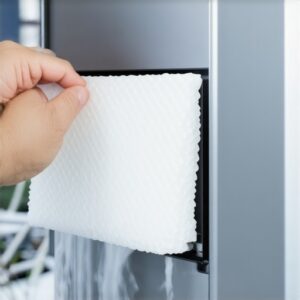
If you have an HRV, stop ignoring it. It’s not a ‘set it and forget it’ box. 1. Every three months, pull the filters and vacuum them. 2. Once a year, pull the entire core (the big plastic or aluminum block) and wash it in the tub with mild soap. 3. Check the exterior hoods. I’ve found bird nests, wasp hives, and even a dried-up frog blocking fresh air intakes. If that intake is blocked, your HRV is just a loud, expensive box that isn’t doing anything. For those looking for deeper secrets, check out ac installation secrets that hvac pros won’t tell you to see how airflow affects the cooling side of things too. Remember, comfort isn’t just a number on a screen; it’s the physics of air in motion. If you’re ready to stop guessing and start measuring, you can always contact us to get a real tech on the job, not a salesman in a disguise.