The Physics of Heat and the Ghost of My Mentor
My old mentor used to scream at me in the back of a freezing work van, ‘You can’t cool what you can’t touch, and you can’t heat what you can’t move!’ This is why airflow matters more than horsepower. He was right. Most guys in this trade just want to swap a box and collect a check. They don’t care about the static pressure or the fact that your old 80% AFUE furnace is essentially a campfire in a metal box where 20% of your money literally disappears up the chimney. When we talk about how high-efficiency furnace installation lowers your carbon footprint, we aren’t talking about magic; we are talking about thermodynamics and the brutal reality of combustion. Most people see a furnace as a heater; I see it as a fuel-to-thermal energy converter. If that conversion is sloppy, you’re burning gas for nothing and choking the planet in the process.
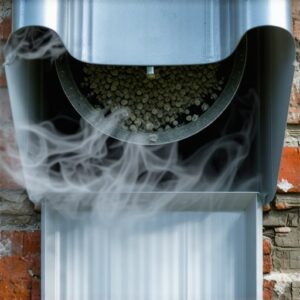
The industry is hitting a regulatory cliff in 2025. We are moving away from the old ways of ‘just getting by’ with inefficient equipment. High-efficiency units, often hitting 95% to 98% AFUE (Annual Fuel Utilization Efficiency), utilize a secondary heat exchanger to extract every possible BTU. While a standard furnace lets flue gases escape at 400 degrees Fahrenheit, a condensing furnace strips that heat until the exhaust is cool enough to be vented through PVC pipe. That’s not just ‘green’ talk; that’s engineering. Every bit of heat kept in your home is gas you didn’t have to burn. This transition isn’t just about new tech; it’s about surviving the skyrocketing costs of energy. If you’re still relying on an old beast that requires constant furnace repair, you’re essentially flushing ‘juice’—our trade word for fuel—down the drain.
“Equipment shall be sized in accordance with ACCA Manual J, and ductwork shall be designed according to Manual D to ensure maximum system efficiency.” – ACCA Standards
The Anatomy of Efficiency: Beyond the Burner
To understand the carbon impact, you have to look at the ‘Tin Knocker’s’ work—the ductwork. You can put a Ferrari engine in a lawnmower, but it won’t go 200 mph. A high-efficiency furnace requires a precise environment. We use ‘Pookie’ (mastic) to seal every joint because a 10% leak in your return air can drop your efficiency by 30%. When I perform an annual heating inspection, I’m looking at more than just the flame color. I’m looking at the total external static pressure. High carbon footprints are often the result of furnaces working too hard against restricted ducts. This leads to premature component failure, like a cracked heat exchanger. When that happens, you’re not just losing efficiency; you’re risking carbon monoxide poisoning. That’s why furnace repair myths suggesting you can skip maintenance are so dangerous.
In cold climates like the Northeast or Chicago, the enemy is the polar vortex. We see flame rollout and ice-blocked vents that shut systems down when they’re needed most. A high-efficiency installation often includes geofencing temperature control to prevent the unit from ‘short cycling’—that’s when the furnace turns on and off rapidly, which is the most carbon-intensive part of the cycle. It’s like stop-and-go traffic for your house. By using variable-speed blowers, the system can ramp up slowly, maintaining a steady, low-energy state that keeps the temperature stable without the massive fuel gulps required for a cold start. We also see a rise in heating service innovations like snow melt systems installation, which integrate with high-efficiency boilers to clear walkways without salt or manual labor, further optimizing the home’s thermal envelope.
The Secondary Heat Exchanger: The Secret to Decarbonization
The real difference in a high-efficiency rig is the secondary heat exchanger. In a standard 80% furnace, the combustion gases pass through one set of tubes and then go out the vent. In a 96% unit, those gases pass through a second coil. This is where the latent heat of vaporization is captured. The water vapor in the exhaust condenses into liquid, releasing extra energy. If you aren’t doing regular heat exchanger cleaning, this second stage can get fouled with scale and acidic buildup. I’ve seen ‘Sales Techs’ tell homeowners they need a whole new $15,000 system when the secondary was just plugged because the ‘Sparky’ (electrician) or the previous tech didn’t level the unit properly for drainage. Proper preventative HVAC repair ensures this condensation process happens correctly, keeping your carbon footprint low and your heat exchanger from rotting out.
“The design and installation of the venting system are critical to the safe and efficient operation of condensing furnaces.” – ASHRAE Fundamentals
We also have to talk about the ‘hidden’ carbon costs. Things like dryer vent cleaning and wall furnace installation for smaller zones. If your dryer vent is clogged, your house is under negative pressure, sucking in cold air from the outside and forcing your furnace to work harder. It’s all connected. Even commercial furnace repair follows these same rules of thermodynamics. Whether it’s a 40,000 BTU closet unit or a 500,000 BTU rooftop package, if the relay services are sticking or the burners are dirty, you’re wasting fuel. High-efficiency doesn’t just mean a better sticker on the side of the unit; it means a system that is tuned, sealed, and sized correctly for the specific heat loss of your building. Don’t let a ‘box-swapper’ convince you otherwise. If they don’t pull out a manometer to check your gas pressure, they aren’t saving you—or the planet—any money. If you’re ready to stop guessing and start saving, you should contact us for a real load calculation and an honest look at your system’s health.