The Invisible Crime of Inefficient Combustion
I remember my old mentor, a man who smelled like burnt dust and pipe dope, grabbing me by the collar of my work shirt while we were staring at a 40-year-old cast iron boiler. He used to scream, ‘You can’t cool what you can’t touch, and you can’t burn what you don’t measure!’ He was a stickler for the physics of the trade. That lesson stuck with me for three decades. While the modern ‘Sales Tech’ is busy trying to sell you a shiny new cabinet because your heat exchanger has some surface oxidation, a real technician looks at the chemistry of the flame. If your furnace is running, you are paying for every therm of gas. But are you actually getting the heat you’re paying for? Without a combustion analysis, you’re just guessing. And in this business, guessing is how people end up cold, broke, or worse.
The Thermodynamic Zoom: Understanding the Flame
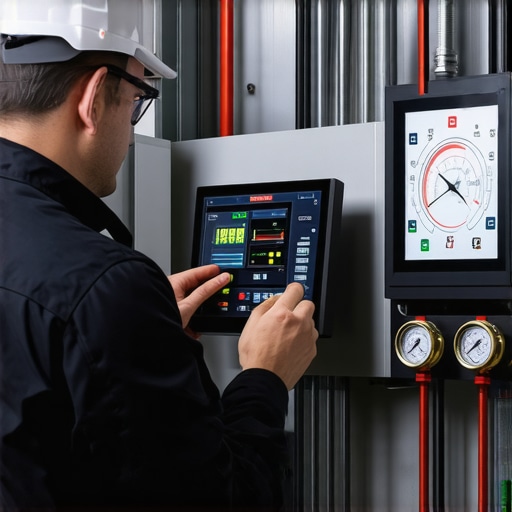
When we talk about a furnace ‘wasting gas,’ we aren’t just talking about a leak. We are talking about incomplete combustion. To the untrained eye, a blue flame looks ‘clean.’ But thermodynamics doesn’t care about your eyes. It cares about the molecular dance between methane and oxygen. Inside that burner, we are looking for a specific ratio. If you have too much air (excess air), you’re heating up a bunch of nitrogen and shooting it right out the chimney before it can transfer heat to your ductwork. If you have too little air, you’re creating Carbon Monoxide (CO)—the silent killer. This is where identifying urgent furnace repair becomes a matter of life and death. A combustion analyzer is a digital nose that tells us exactly how many parts per million (PPM) of CO are being produced and what the ‘stack temperature’ is. If the stack temp is too high, your heat exchanger isn’t doing its job; you’re essentially heating the squirrels outside rather than your living room.
“The most expensive equipment in the world cannot overcome a bad duct system.” – Industry Axiom
The Forensic Diagnosis: Anatomy of a Gas Burn
Let’s look at the mechanical organs of your heating system. You have the gas valve, the burners, the heat exchanger, and the inducer motor. A ‘Tin Knocker’ might care about the metal, but a tech cares about the pressure. If the inducer motor—the ‘lungs’ that pull the exhaust out—is failing, the draft changes. This causes the flame to ‘roll out’ or burn ‘lazy.’ When the burn is lazy, the soot starts to build up. Soot is an insulator. Even a 1/32nd of an inch of soot on your heat exchanger is like wrapping your furnace in a wool blanket; the heat can’t get through to the air. This is why furnace repair myths often lead people to replace units that just needed a deep cleaning and a proper tune. We also check the electrical heart of the system. If you’re needing capacitor replacement services, your blower motor might be dragging, which means the heat isn’t being pulled off the exchanger fast enough, causing the limit switch to trip and the system to short-cycle.
Climate Zone Impact: The Northern Winter & Heat Transfer
In the North, where the mercury drops below zero and stays there, the ‘Monsoon Effect’ isn’t our problem—cracked heat exchangers and ice-blocked vents are. In a polar vortex, your furnace is running at 100% capacity. This is when the physics of AFUE (Annual Fuel Utilization Efficiency) really matters. If you have a 90% furnace, that 10% ‘loss’ is mostly latent heat. But if your combustion is off, that 90% drops to 70% real fast. For those looking at heating service innovations, we are seeing more folks move toward hyper-heat heat pumps. These units can pull heat out of the air even when it is -15°F outside. But even those systems need a pro who understands the refrigeration cycle, not just a ‘Sparky’ who knows how to wire a thermostat. We integrate these with biomass boiler services and snow melt systems installation for clients who want total climate control. It’s all about the math of the BTU.
The Invisible Shield: IAQ and Safety Integration
Combustion analysis isn’t just about the bill; it’s about the air you breathe. IAQ improvement services often start at the furnace. If we find CO in the flue, the very next step is carbon monoxide detector installation and a thorough check of the heat exchanger for hairline cracks. You can’t see them with a flashlight, but a combustion analyzer sees the oxygen levels jump when the blower fan kicks on—that’s a ‘smoking gun’ for a crack. To further protect the home, air purification integration and UV light installation for HVAC are used to kill the biologicals that grow in the dark, damp corners of your evaporator coil. Even your outdoor amenities matter; we handle pool heater repair and spa heater services using the same combustion logic. If it burns gas, it needs to be measured. Whether it’s a furnace or a pool heater, ‘Pookie’ (mastic) and a good meter are what separate a pro from a hack.
Conclusion: Data vs. Sales Pitch
The next time a tech walks into your basement and tells you that you need a $12,000 system because your furnace is ‘old,’ ask to see the combustion report. Ask for the CO air-free reading and the excess air percentage. If they look at you like you have three heads, they aren’t a technician; they’re a salesman in a uniform. Real heating service hacks come down to maintenance and measurement. Keeping your ‘juice’ (refrigerant) levels right in the summer and your combustion ‘gas’ levels right in the winter is the only way to ensure your system lasts 20 years instead of ten. Don’t let your money go up the chimney in a cloud of unburnt hydrocarbons. Use the data, trust the physics, and keep your ‘suction line’ beer-can cold and your stack temp exactly where the manufacturer intended.