The Death of R-410A and the High Cost of Breathing
Listen closely, because the industry is about to hit a wall, and most homeowners are walking into it blindfolded. We are currently standing at the edge of the most significant regulatory shift in thirty years. As a tech who has spent three decades dragging manifolds through crawlspaces, I’ve seen the transition from R-12 to R-22, and R-22 to R-410A. But the move to R-454B refrigerant transition services is a different beast entirely. We aren’t just changing the gas; we are changing the physics of the equipment, the safety protocols, and most importantly, the price tag. If you think your neighbor’s 2023 install was pricey, wait until you see the quote for an A2L-compliant system in 2025. This is why understanding how to leverage financing and rebates isn’t just a ‘financial tip’—it’s a survival strategy for your bank account.
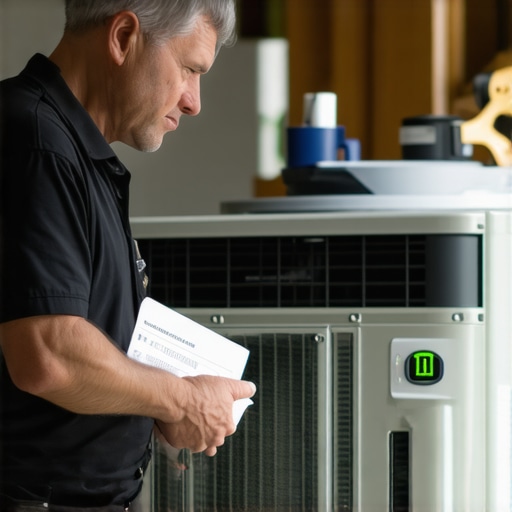
I followed a ‘Sales Tech’ last Tuesday who nearly cleared out a retired couple’s savings. He’d quoted them $22,000 for a full system replacement because their unit was ‘leaking the old stuff.’ I got there for a second opinion, pulled the side panel, and smelled it immediately—that sharp, acidic stench of a localized electrical arc. It wasn’t a refrigerant leak; it was a simple contactor repair. The points were pitted and welded shut, humming like a trapped hornet. A $20 part and some actual labor could’ve saved that unit for years. But that’s the game now: ‘Sales Techs’ in white shirts who don’t even own a set of gauges are pushing 15-year financing plans for equipment you might not even need. But if you *do* need it, you better know how to play the rebate game better than they do.
Thermodynamic Zooming: How Heat Pumps Actually Move the Needle
Before we talk money, let’s talk physics. Most people think a furnace ‘creates’ heat by burning fuel, while an AC ‘creates’ cold. Wrong. In the HVAC world, we deal in the transfer of energy. When we perform HVAC load calculation services, we aren’t just guessing based on square footage; we are measuring the rate of heat loss through your walls. A heat pump doesn’t make heat; it’s a heat thief. It uses a reversing valve to swap the roles of the evaporator and condenser coils. In the winter, it pulls what little thermal energy exists in the outside air—yes, even at 30°F—and concentrates it to dump inside your home. The R-454B ‘juice’ inside the lines has a boiling point so low that it can still absorb heat from freezing ambient air. To do this efficiently, the system must maintain a precise pressure-temperature relationship. If the airflow across that coil is restricted by a ‘Tin Knocker’ who didn’t size the returns correctly, the whole cycle falls apart. Efficiency isn’t a sticker on the side of the box; it’s a result of proper static pressure and thermal transfer.
“The most expensive equipment in the world cannot overcome a bad duct system.” – Industry Axiom
The North/Cold Strategy: Dual Fuel and Oil to Gas Conversion
If you’re living where the mercury drops into the teens, a standard heat pump might struggle once you hit the ‘balance point’—that temperature where the heat loss of the house exceeds the heat pump’s capacity. This is where dual fuel heat pump systems become the gold standard. By pairing an electric heat pump with a high-efficiency gas furnace, you get the best of both worlds. The heat pump handles the mild days (35°F and up) with incredible SEER2 efficiency, and the gas furnace kicks in as the ‘heavy hitter’ when the polar vortex arrives. For those still sitting on ancient, soot-covered boilers, an oil to gas conversion paired with a heat pump is the single fastest way to slash your monthly overhead. It’s about diversifying your energy sources so you aren’t at the mercy of one utility’s rate hikes.
Financing the Regulatory Cliff: SEER2 and R-454B
The EPA’s transition to A2L refrigerants like R-454B means new systems require leak sensors and often more robust coil designs because these refrigerants are ‘mildly flammable.’ This is driving up manufacturing costs. However, the federal government and local utilities are desperate to get people off old, inefficient 410A systems. This is where the SEER2 compliant upgrades come in. By utilizing the Inflation Reduction Act (IRA) tax credits—which can offer up to $2,000 for heat pump installs—and stacking them with local utility rebates that often reach $1,500 or more, you can offset nearly 30% of the cost. The ‘clever’ way to finance is to look for ‘bridge financing’—loans that allow you to pay off the principal once your rebate checks arrive, keeping your long-term interest costs at zero.
“Design heating and cooling loads shall be determined in accordance with ASHRAE/ACCA Standard 183.” – International Mechanical Code
The App-Controlled Future and Hospital-Grade Zoning
We are seeing a massive shift toward app-controlled heating systems that do more than just change the temp. They monitor the delta-T (the temperature difference) across your coil and can alert you to a failing capacitor before it leaves you in an emergency heating repair situation. In larger homes, we are even adopting hospital HVAC zoning techniques—using modulated dampers and variable-speed blowers to ensure that the nursery stays at 72°F while the kitchen stays at 68°F. This isn’t just about ‘comfort’; it’s about reducing the load on the compressor, which extends the life of the machine. If you’re going to spend the money on a high-end install, don’t let the installer skip the ‘Pookie’ (mastic) on the duct joints. Leaking air is leaking money.
The Verdict: Maintenance vs. The Scam
Don’t wait for the ‘boom’—that sound a compressor makes when it finally slugs liquid and dies on the hottest day of the year. Investing in priority service memberships is the only way to ensure a real technician, not a salesman, looks at your unit twice a year. They should be checking the ‘Suction Line’ to ensure it’s ‘beer can cold’ in the summer and checking the heat exchanger for cracks in the winter. If you’re looking for the ultimate guide to ac installation, remember that the quality of the install matters more than the brand on the box. For more technical deep dives, check out heating service innovations or learn how to identify when furnace repair is urgent. Real HVAC work is about physics, airflow, and honesty—not iPad presentations and 15-year high-interest loans. Keep your coils clean, your filters changed, and your BS detector high.