
The Sound of a Dying Industry: Why SEER2 Changes Everything
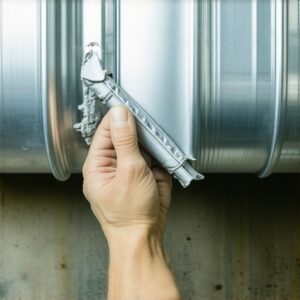
I followed a ‘Sales Tech’ last November who quoted a local school district a staggering $85,000 to replace a series of failing package units. The kid didn’t even own a combustion analyzer; he just saw a rusted cabinet and smelled commission. When I got there, I found out the issue wasn’t the compressors at all—it was a sequence of tripped high-limit switches caused by restricted return air. All they needed was professional airflow measurement services and a few $40 parts. But that kid was right about one thing: the old equipment is on borrowed time. We are currently standing at the edge of a regulatory cliff. The shift to SEER2 and the phase-out of R-410A isn’t just some bureaucrats in D.C. making life hard for a tin knocker; it is a fundamental shift in how we manage the physics of comfort.
“The most expensive equipment in the world cannot overcome a bad duct system.” – Industry Axiom
The Physics of SEER2: More Than a Label
Most folks think SEER2 is just a higher number on a yellow sticker. It’s not. The ‘M1’ testing procedure behind SEER2 actually accounts for the static pressure of a real-world duct system. In the old days, units were tested in a laboratory under conditions that didn’t exist in a real Northeast basement or a Chicago mechanical room. Now, the blower motors have to work harder to overcome the resistance of filters and coils. This is why new construction heating design has become so critical. If your ductwork is undersized, a SEER2-compliant unit will actually die faster because the variable-speed motor will ramp up to its maximum RPM just to breathe, eventually burning out the control board. This is where airflow measurement services come into play; we aren’t just checking if it ‘feels’ cold; we are measuring the enthalpy and the external static pressure to ensure the equipment doesn’t commit suicide in its first three years.
The North Climate: Boilers, Steam, and the Efficiency Trap
In our neck of the woods, where the polar vortex is a yearly guest, cooling is secondary to the survivalist nature of heating. When we talk about school boiler maintenance or steam boiler repair, we are dealing with massive amounts of latent energy. A steam system is a beautiful, archaic beast. It doesn’t just move hot water; it moves the energy of phase change. But if you have a cracked heat exchanger or a failing limit switch replacement needs, that energy becomes a bomb. Upgrading to SEER2-compliant heat pumps in cold climates often requires a hybrid approach. This is where heating service innovations transforming 2025 climate control come into the picture. Integrating solar thermal heating integration with an oil to gas conversion can drop a building’s carbon footprint by 40% before you even touch the thermostats.
Radiant Floors and the Comfort of Thermodynamics
If you really want to talk about efficiency, we have to look at radiant floor heating installation. Forced air is essentially trying to heat a room by blowing hot hair at it—it—it’s inefficient and creates hot spots. Radiant heat warms objects, not air. It’s the difference between standing in the sun on a cold day versus standing in a warm breeze. When we pair radiant systems with programmable thermostat programming, we can create thermal zones that make sense. You aren’t heating the gymnasium to 70 degrees at 3 AM; you are maintaining a thermal mass. However, these systems require rigorous warranty service plans because when a radiant manifold leaks or a circulator pump fails, it’s not a simple fix. You want a tech who knows his way around a steam boiler repair and hydronic logic, not some ‘Sales Tech’ who only knows how to swap a capacitor.
“Energy efficiency is not just about the source; it is about the delivery and the retention of thermal equilibrium.” – ASHRAE Standard 90.1
The Regulatory Cliff: R-410A and the A2L Transition
Starting in 2025, the ‘juice’ we’ve used for decades—R-410A—is being phased out for A2L refrigerants like R-454B. These are ‘mildly flammable,’ which sounds scary to a homeowner but is just another day at the office for a seasoned tech. The new SEER2 systems are built to handle these pressures and have built-in leak sensors. If you’re trying to limp along an old unit by ‘topping off the gas’ (which is illegal and a scam), you’re wasting money. A pinhole leak in a 15-year-old evaporator coil is a death sentence. You’re better off looking into ultimate guide to ac installation expert tips for 2025 success to understand why the transition is happening now. Buying the cheapest unit today might leave you with a ‘legacy’ system that no one can find parts for in five years. Maintenance is the only way out. Whether it’s school boiler maintenance or a simple residential check-up, you have to treat the system like a high-performance engine. Use pookie to seal those duct leaks, ensure your limit switch replacement is done by a pro, and never trust a guy who doesn’t carry a manometer.